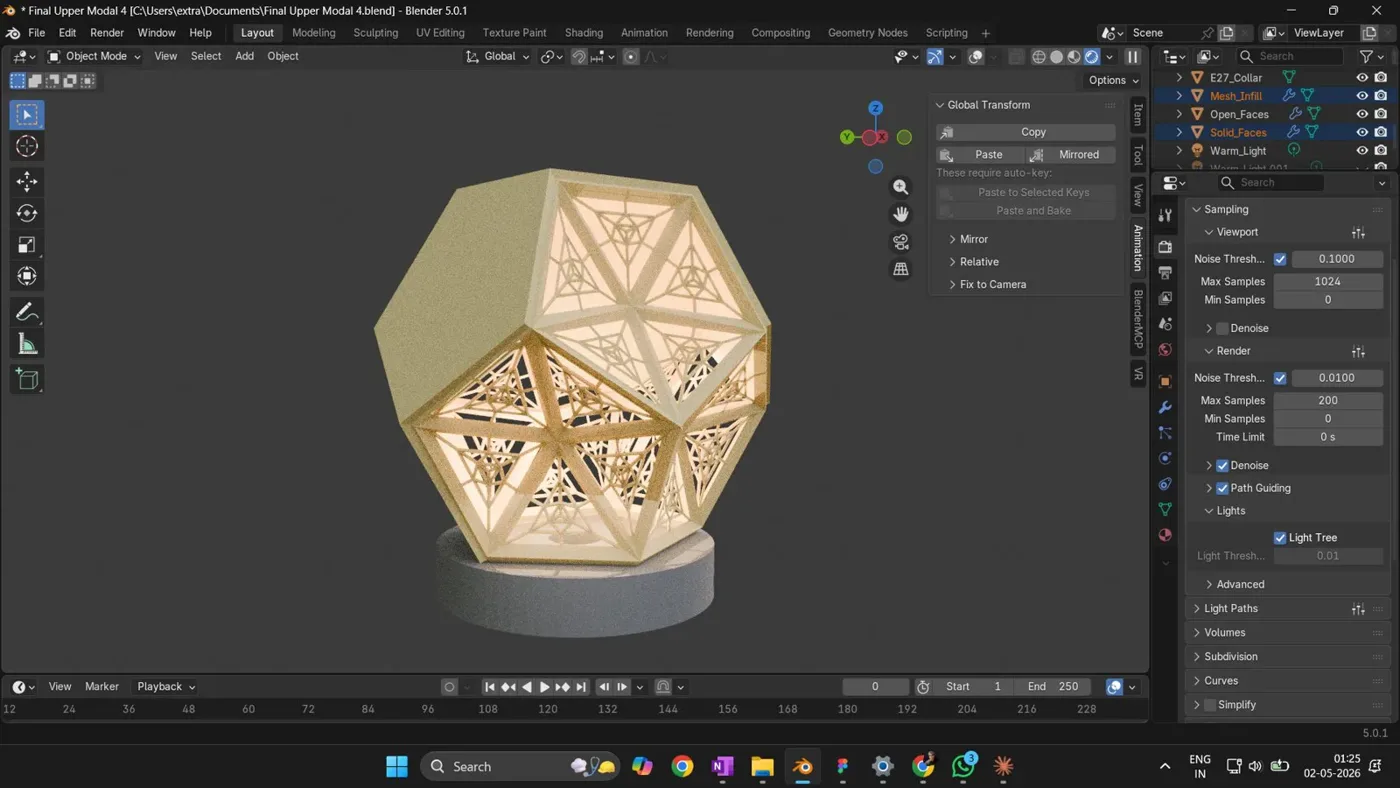
Geometry as function
The twelve pentagonal faces frame the light openings on their own.
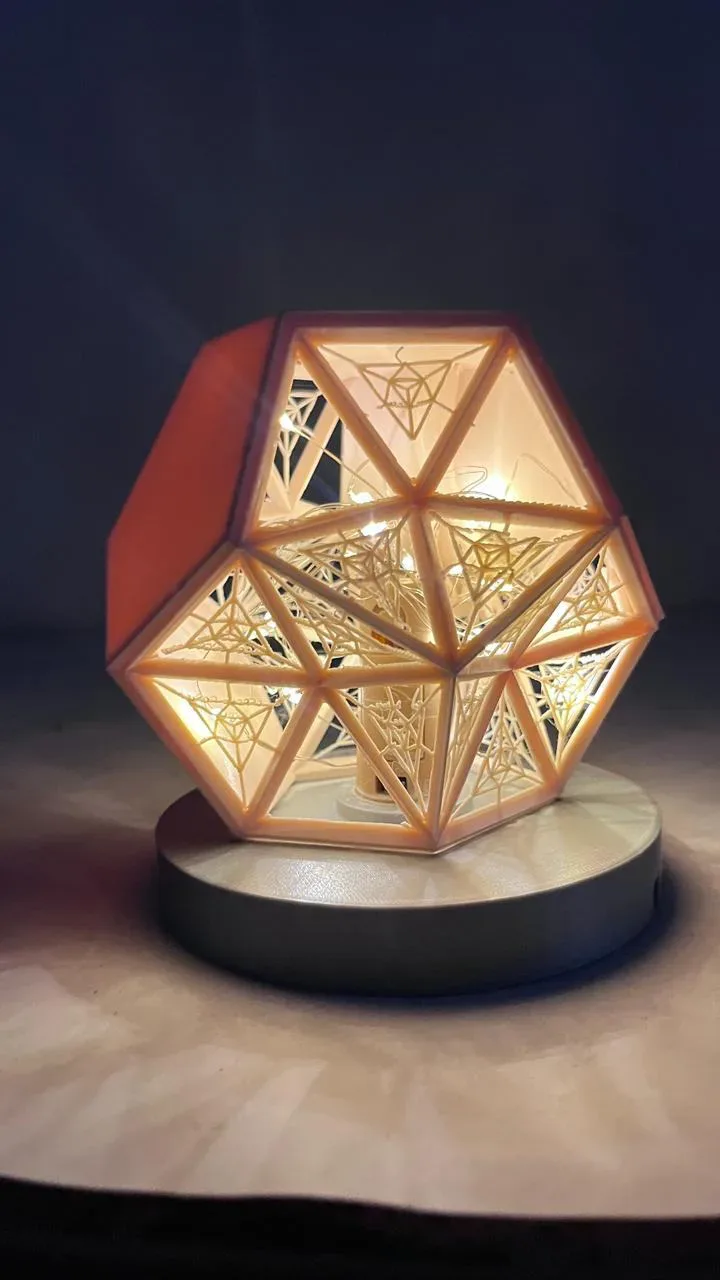
A table lamp grown from a Platonic solid, whose inner lattice throws patterned shadows.
Starting from an excavated dodecahedron, its twelve pentagonal faces pushed inward, I explored hanging, pendant and table configurations before settling on a self-standing lamp with a cylindrical LED base.
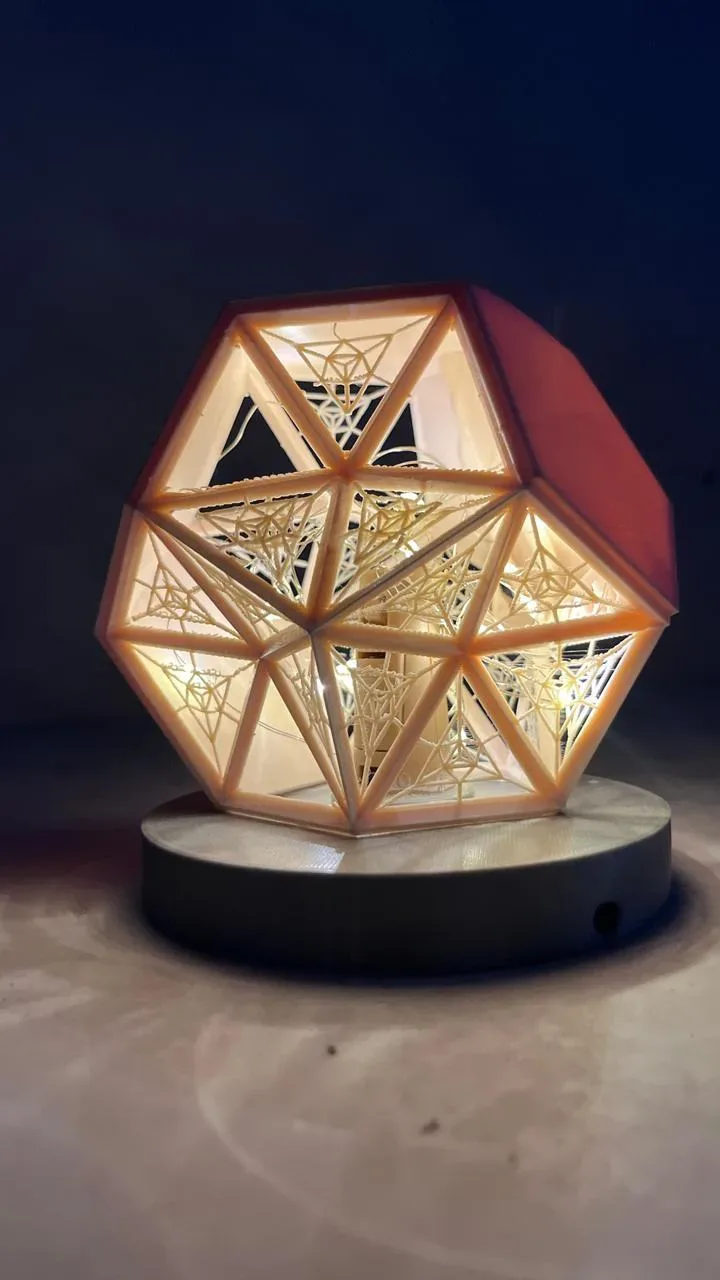
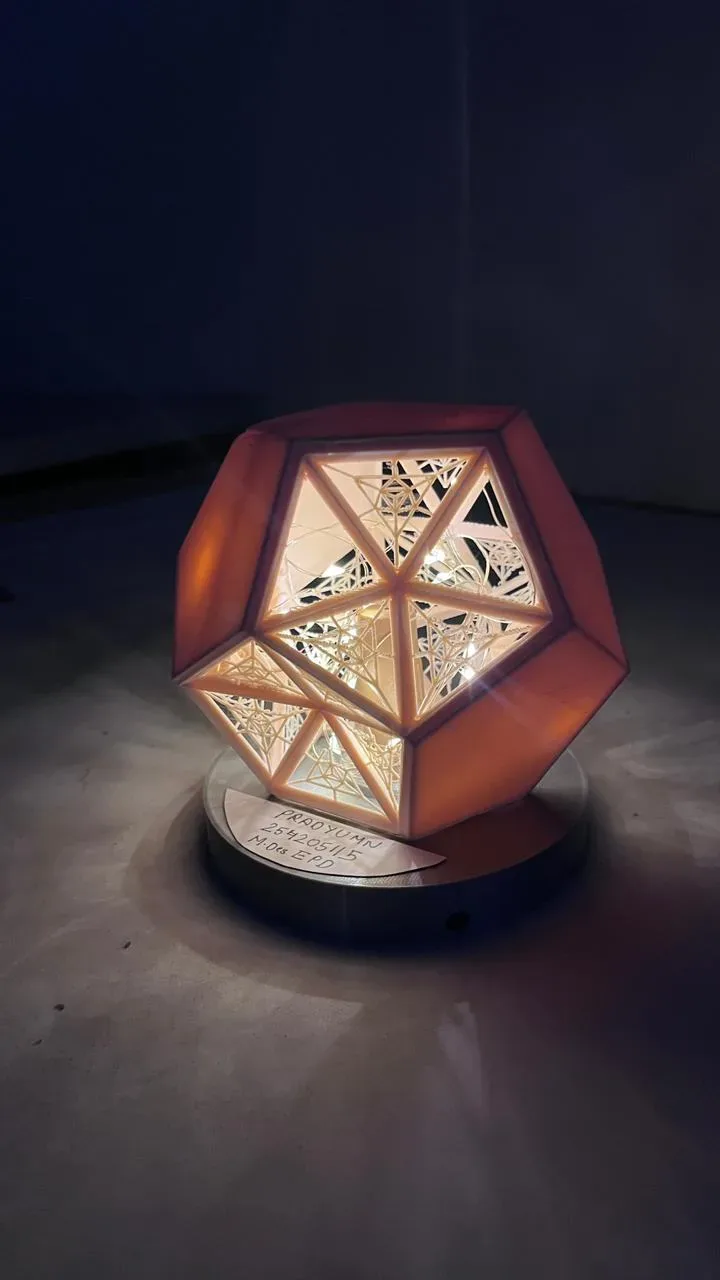
The twelve pentagonal faces frame the light openings on their own.
The inner lattice casts patterns onto nearby walls.
Splitting the shell in two removed overhangs and kept the surfaces clean.
Translucent PLA spreads the warm LED glow evenly across the faces.
Pages of sketches tried hanging lamps, pendants and table lamps, playing with how much of each pentagonal face to cut away and how an inner fractal lattice might throw shadows.
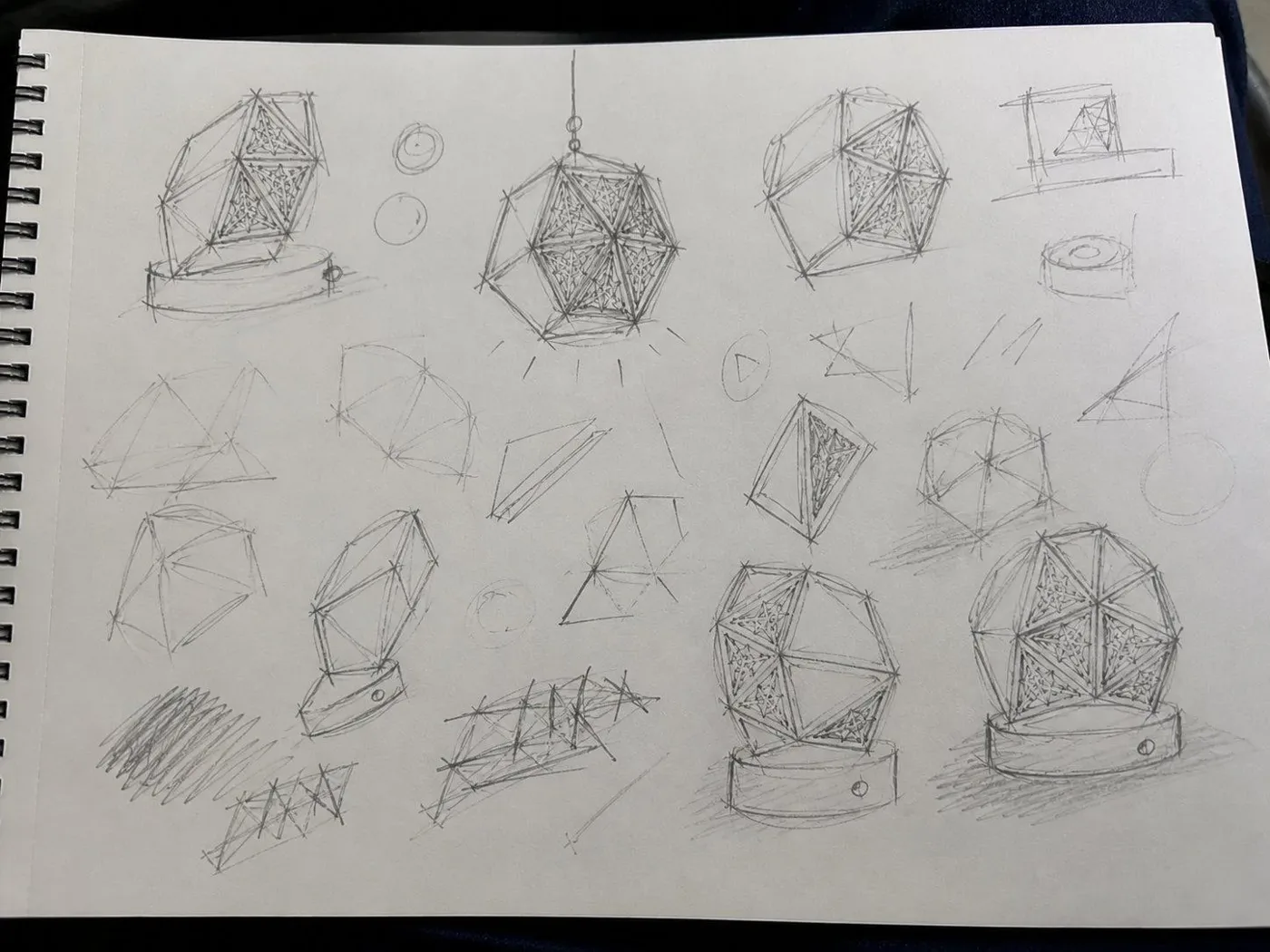
A single closed shell would need heavy supports and spoil the inner lattice. Splitting it into an upper dome and an open lower cage removed the overhangs and let the two parts snap together cleanly after printing.