01 · Phase 1
First explorations
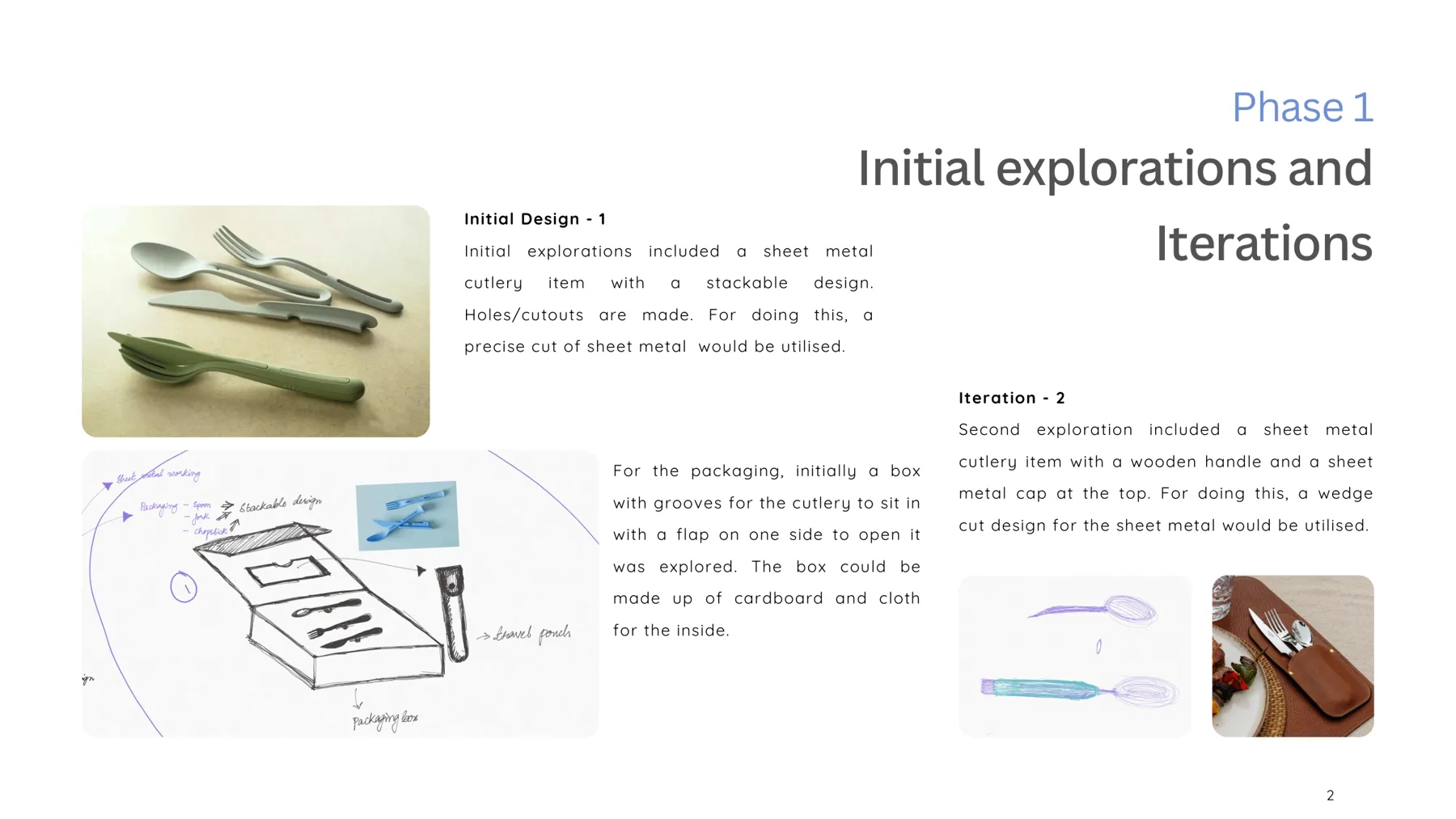
We started with stackable all-metal cutlery with cut-outs, packed in a grooved cardboard-and-cloth box. The second iteration moved to a wooden handle with a sheet-metal cap, using a wedge cut.
A cutlery set that pairs the strength of sheet metal with the warmth and insulation of wood.
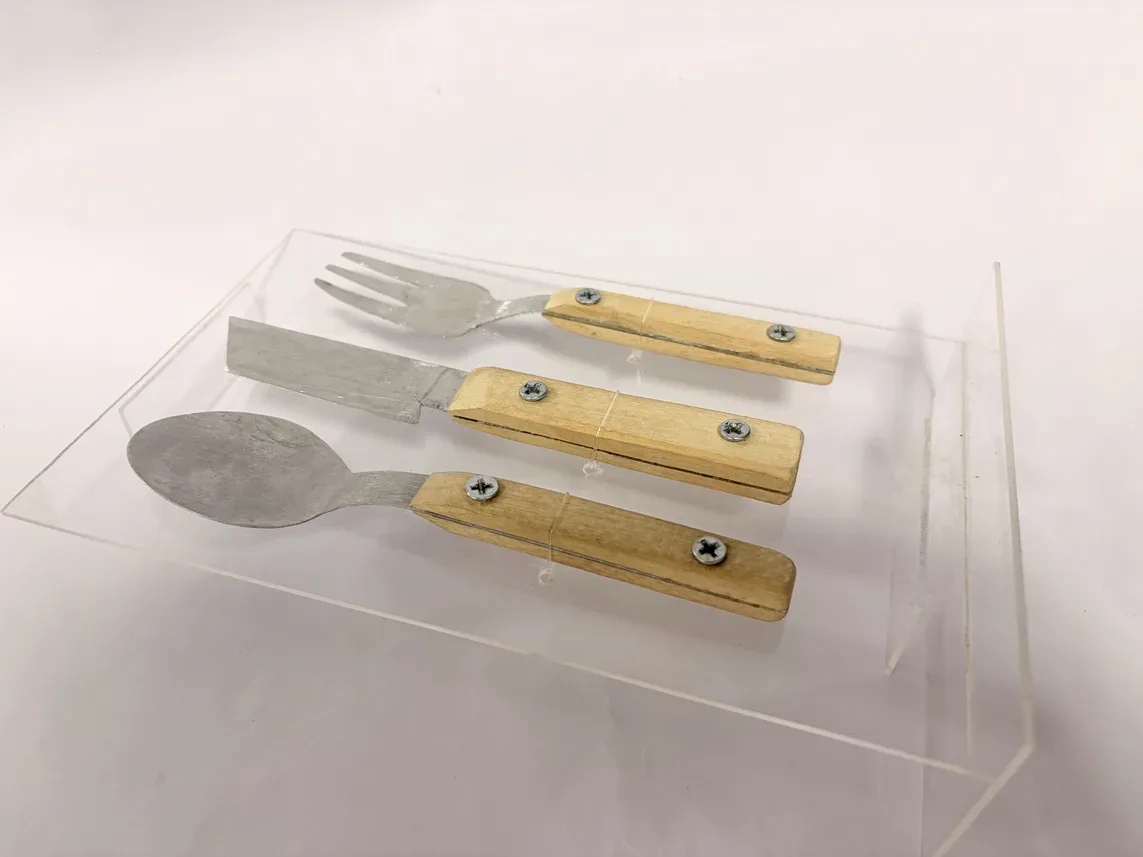
Thin and light yet strong, easy to cut and bend, and isotropic, so its strength is predictable in every direction.
Softens the hard edges of metal, feels warm in the hand, and insulates against heat from hot food.
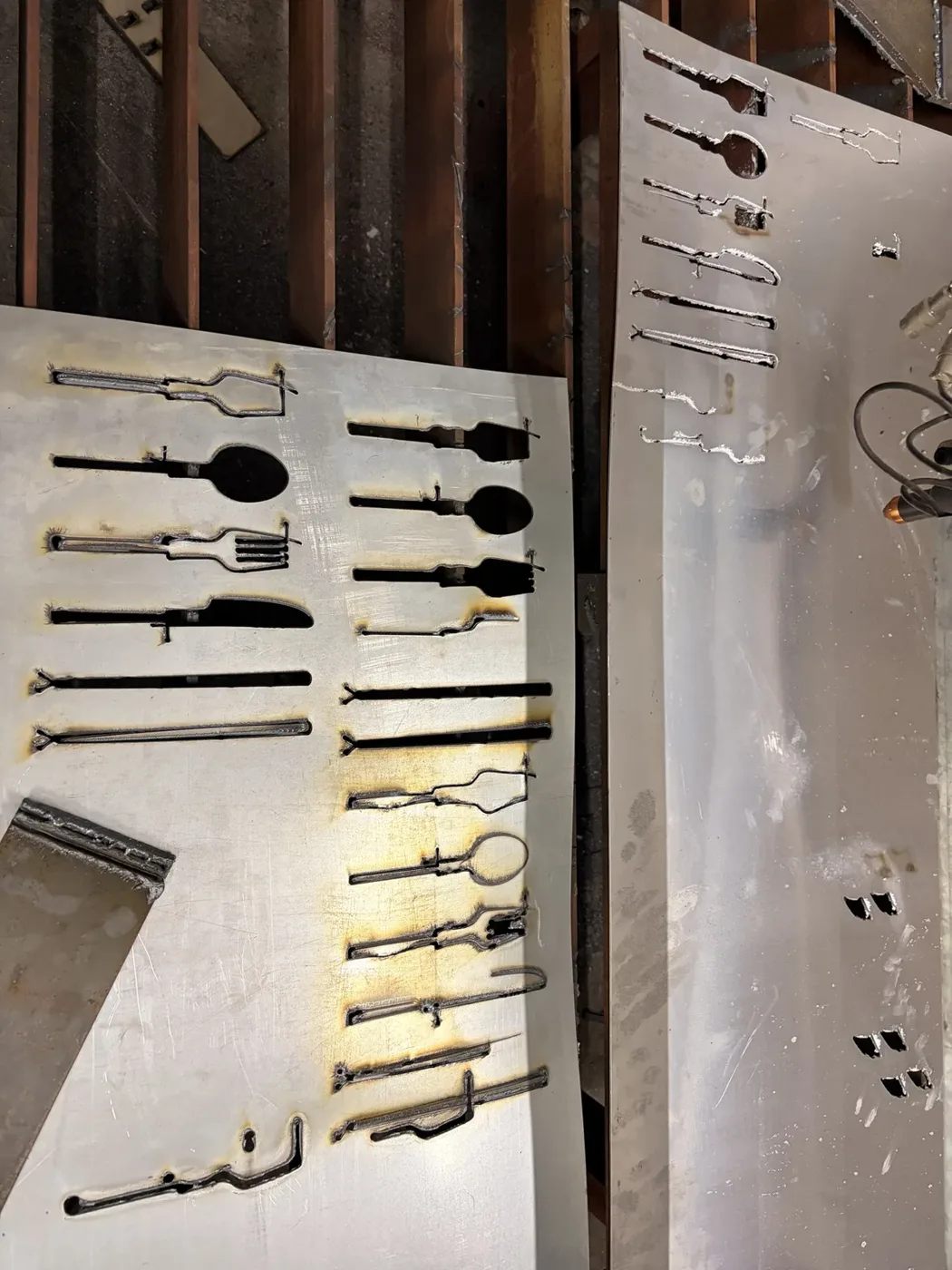
The laser didn’t fully penetrate the sheet and left parts fused, so we finished the cuts by hand with sheet-metal pliers. Our first lesson in designing for the real machine, not the ideal one.
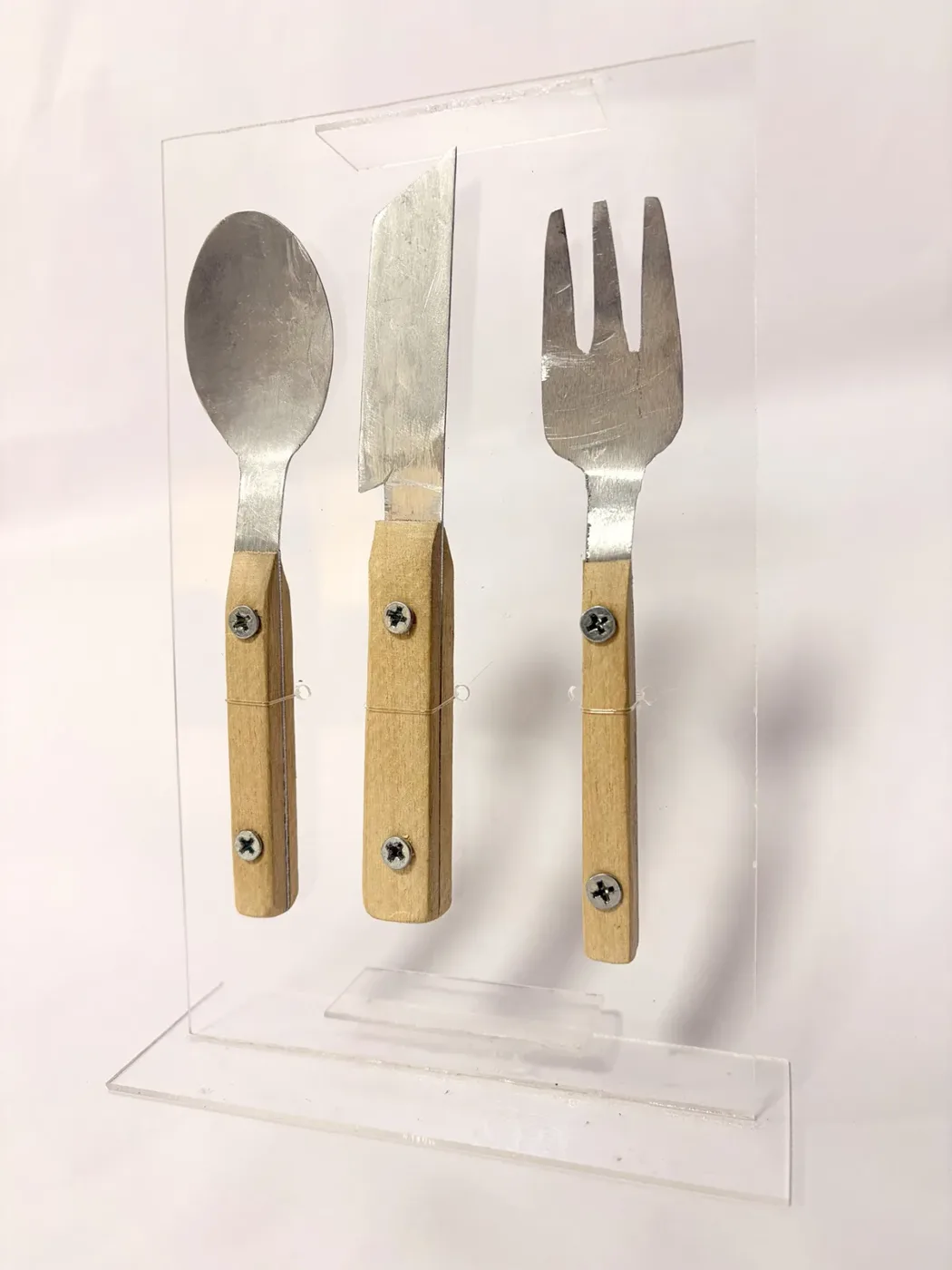
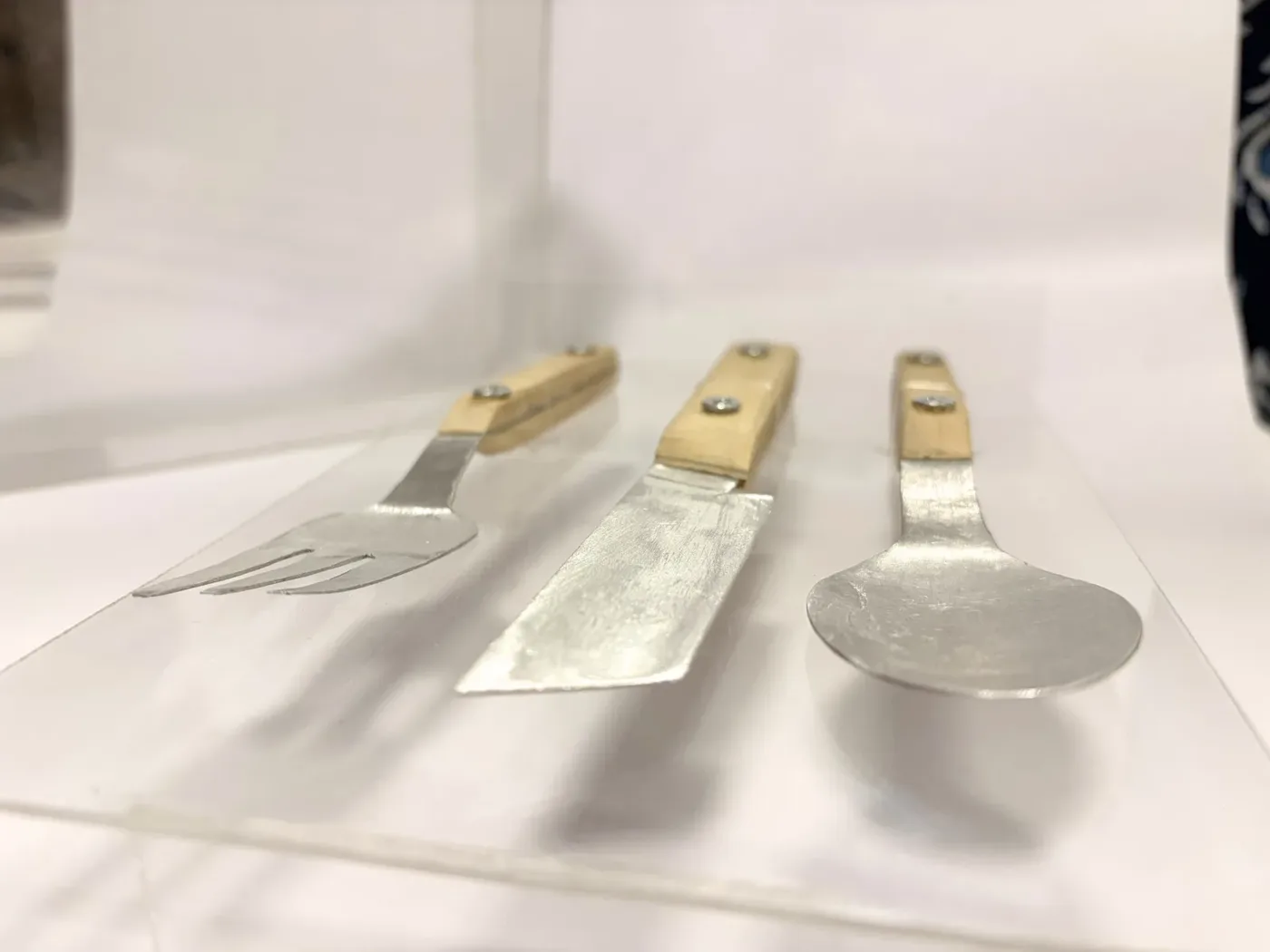
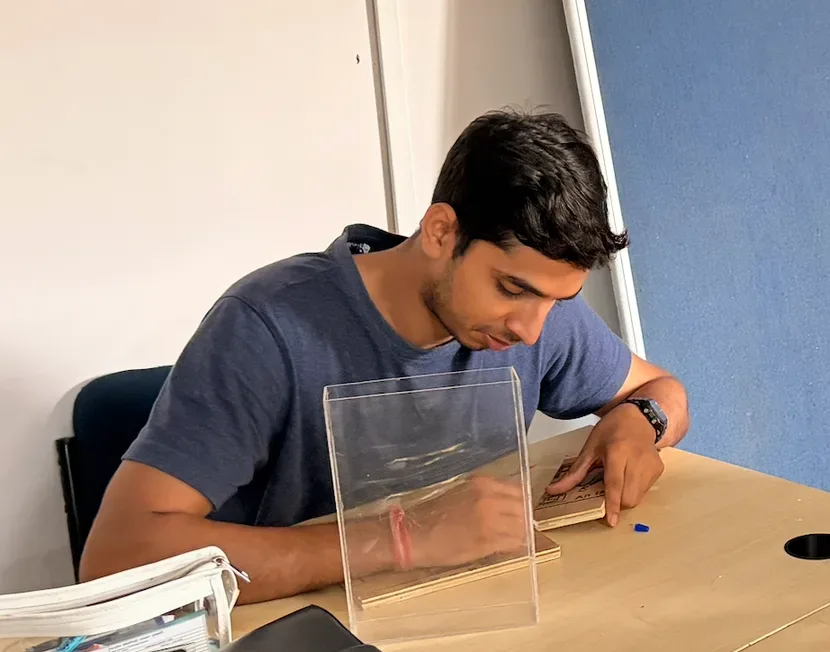
A riveted wood-and-metal set and display packaging, built by hand from laser-cut parts.
We started with stackable all-metal cutlery with cut-outs, packed in a grooved cardboard-and-cloth box. The second iteration moved to a wooden handle with a sheet-metal cap, using a wedge cut.
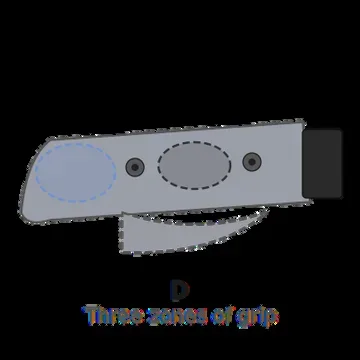
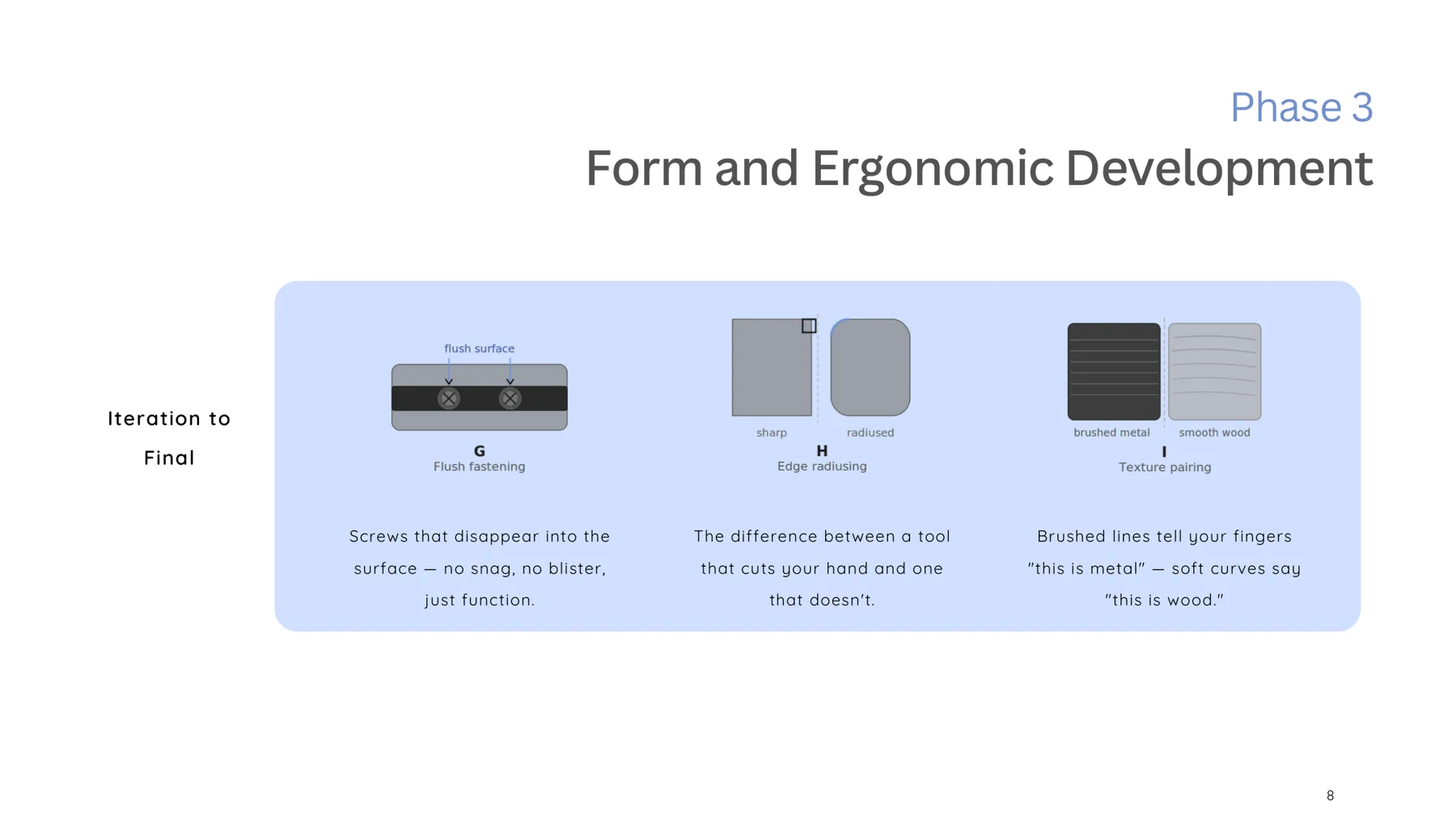
A sandwich construction puts a dark metal spine between two wooden scales, joined at a tapered neck. Diagrams worked through geometric contrast, visual balance, material transition, three zones of grip, weight and balance, thermal barrier, flush fastening, edge treatment and texture pairing.


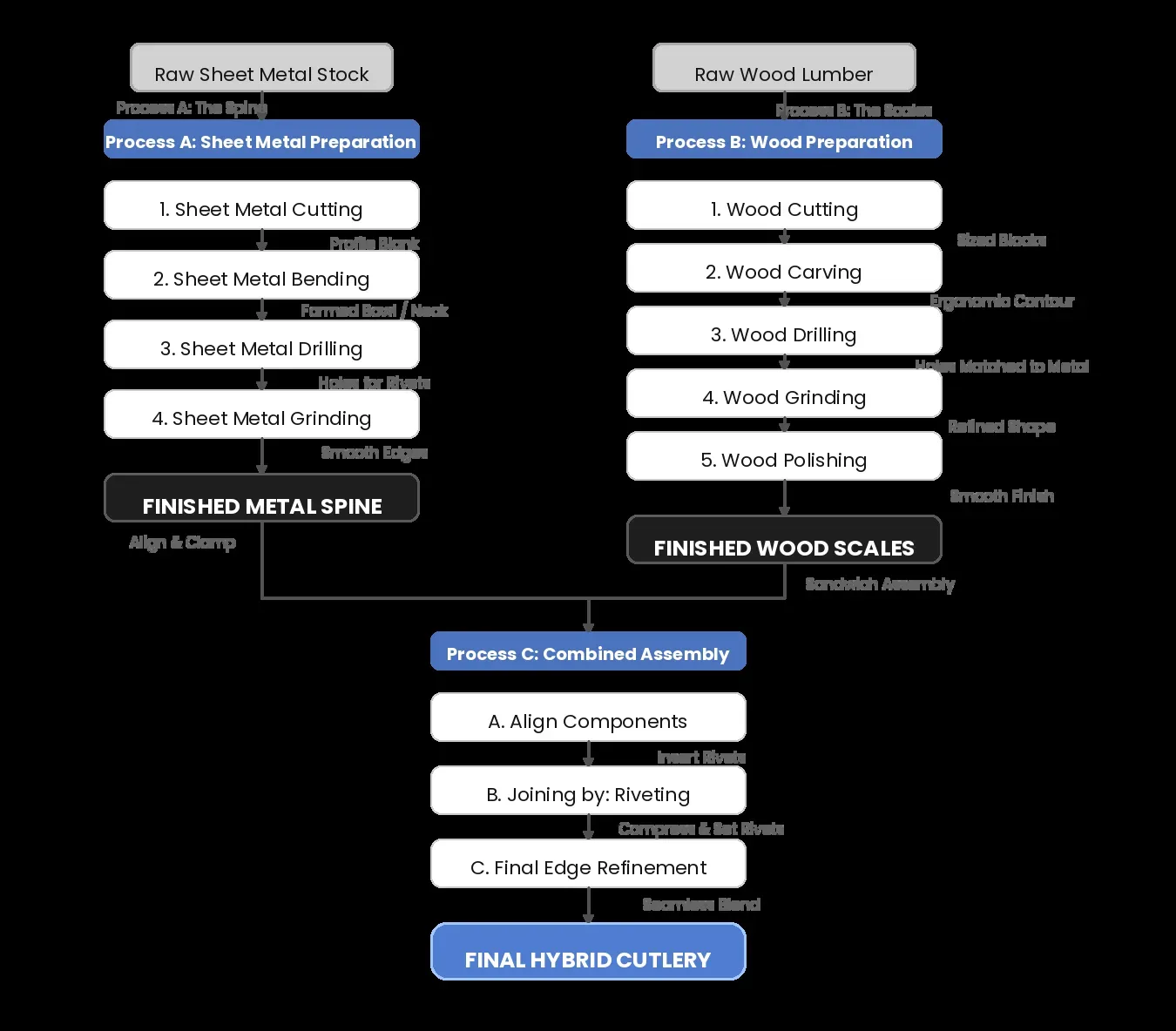
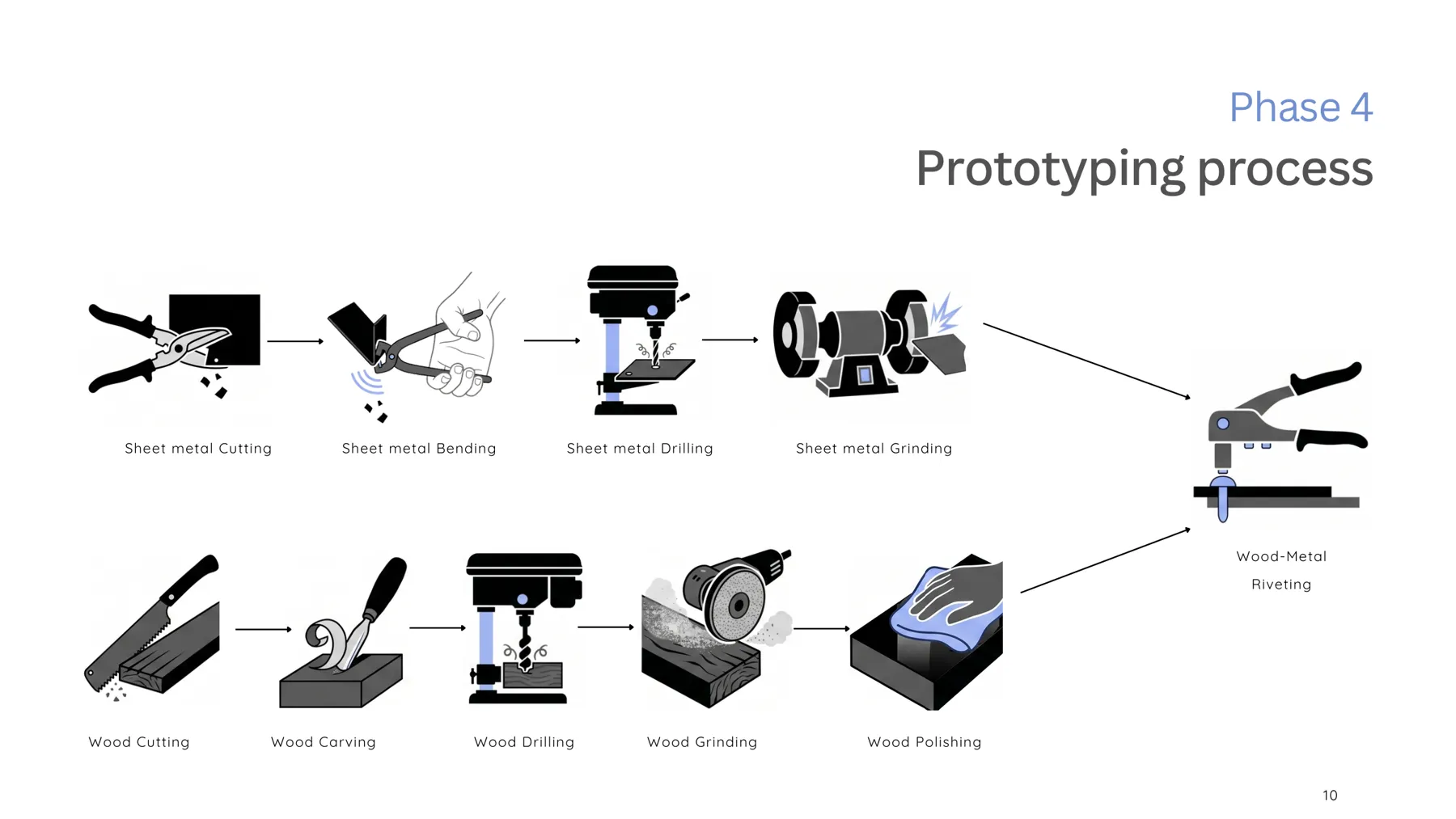
Sheet-metal preparation (cutting, bending, drilling, grinding) and wood preparation (cutting, carving, drilling, grinding, polishing) ran in parallel, then came together in assembly: aligning, riveting and refining the edges.