01 · Research
Literature and products
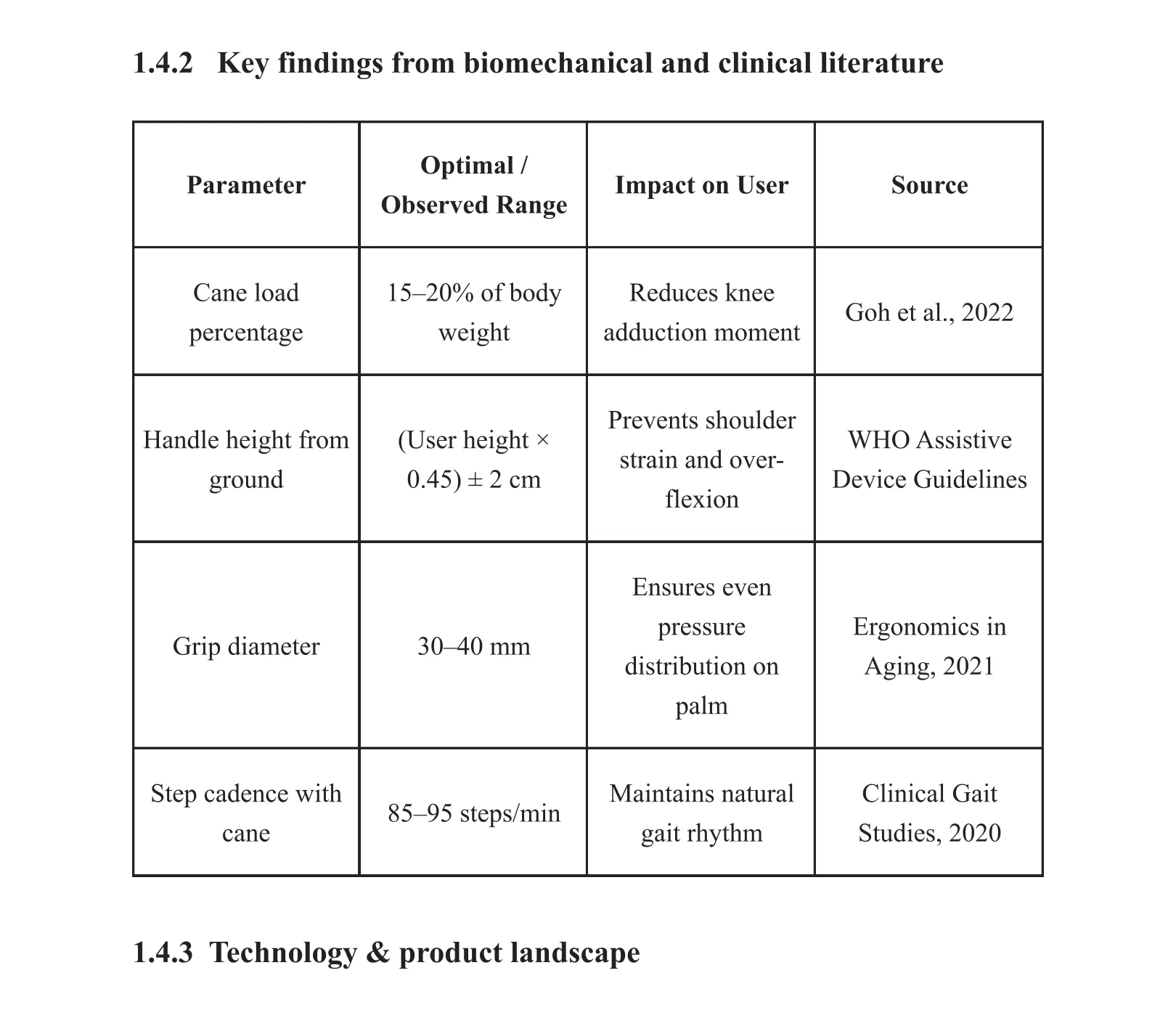
Clinical studies set the targets (cane load 15–20% of body weight, grip diameter 30–40 mm, handle height ≈ 0.45 × user height). Smart canes on the market focus on navigation for blind users, not load feedback.
A walking cane for elderly people with knee osteoarthritis that shows whether they’re loading it correctly.
Most elderly users with knee osteoarthritis under-load their canes or use them on the wrong side, because nothing tells them whether they’re doing it right.
Clinical studies set the targets (cane load 15–20% of body weight, grip diameter 30–40 mm, handle height ≈ 0.45 × user height). Smart canes on the market focus on navigation for blind users, not load feedback.
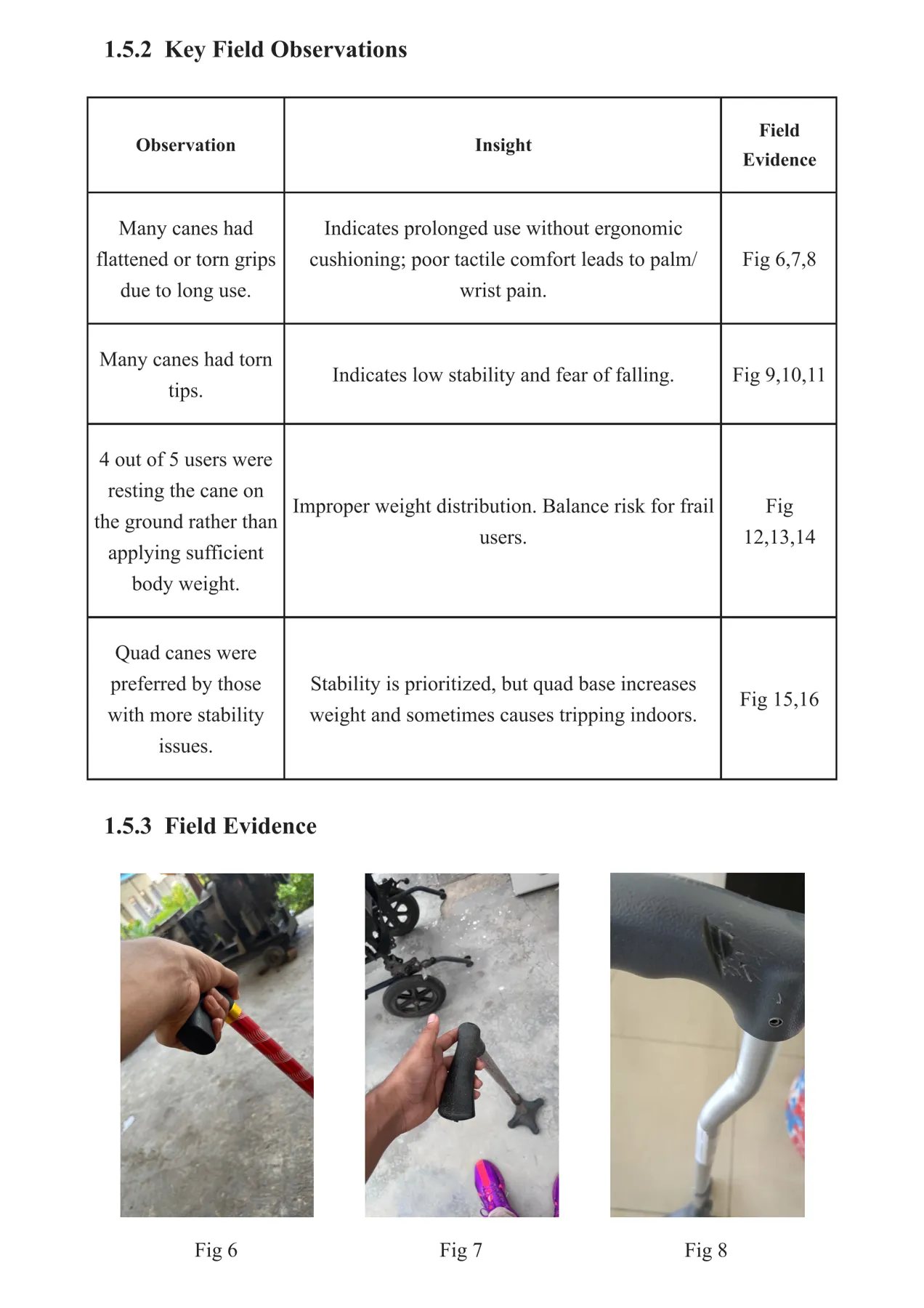
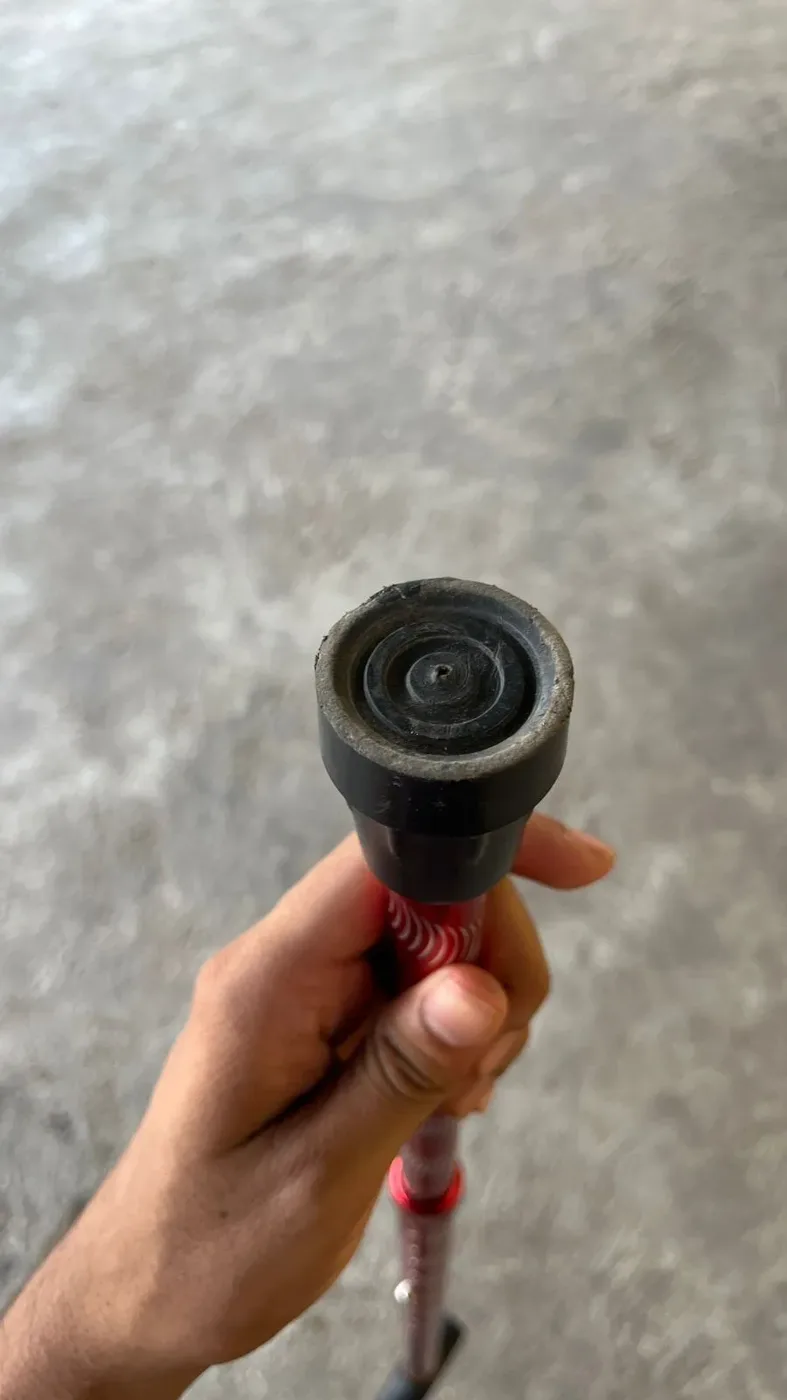
Field visits and interviews with elderly users and an orthopaedic doctor showed torn grips, worn tips, sore palms, and canes used as a light balancing stick, often in the wrong hand.
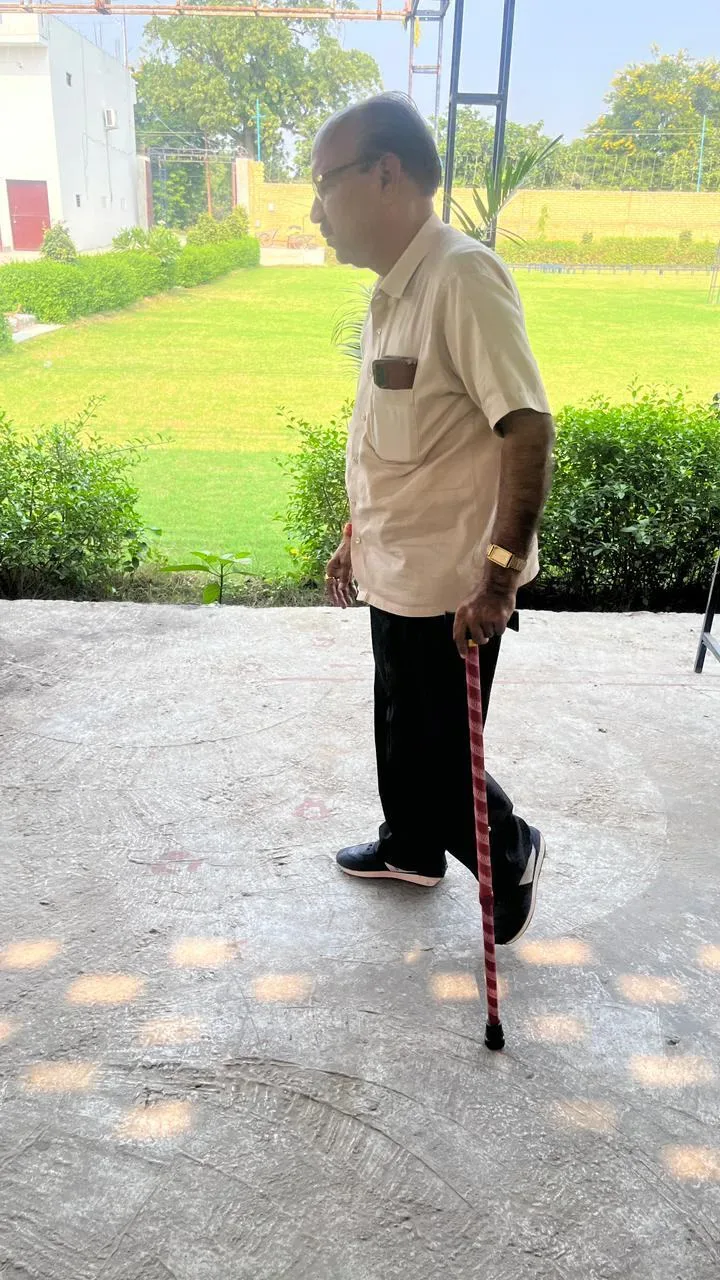
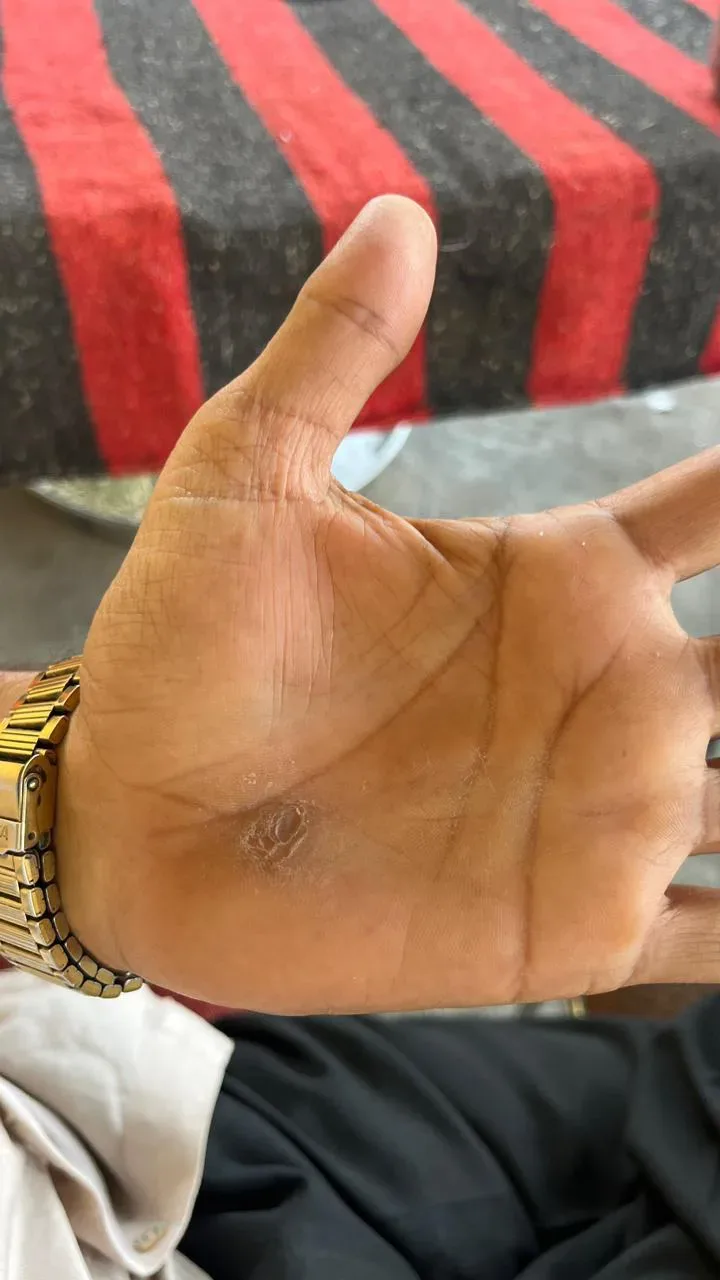
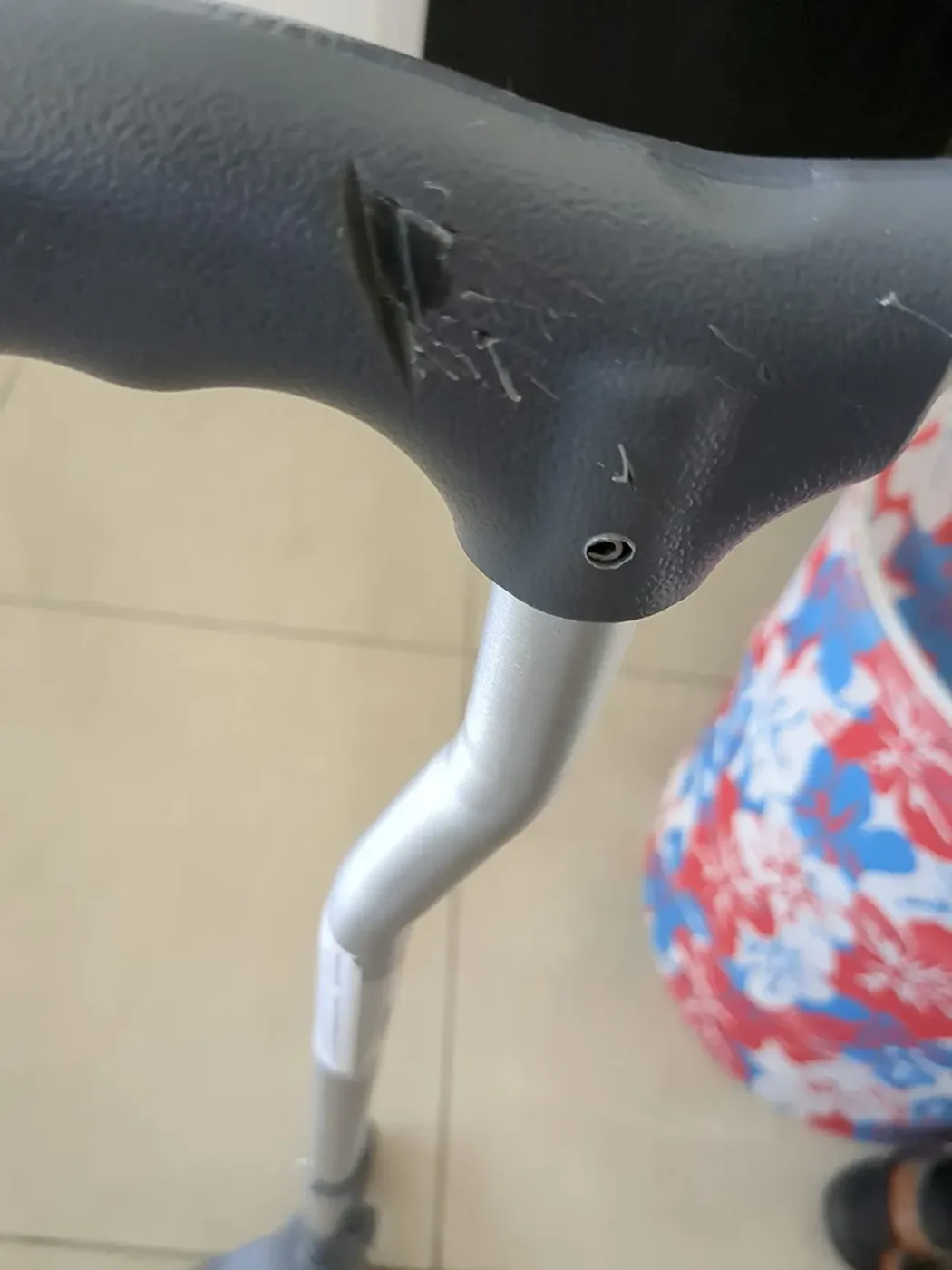

Mapping turned observations into one problem: users need an intuitive, comfortable cane that gives real-time feedback on loading.
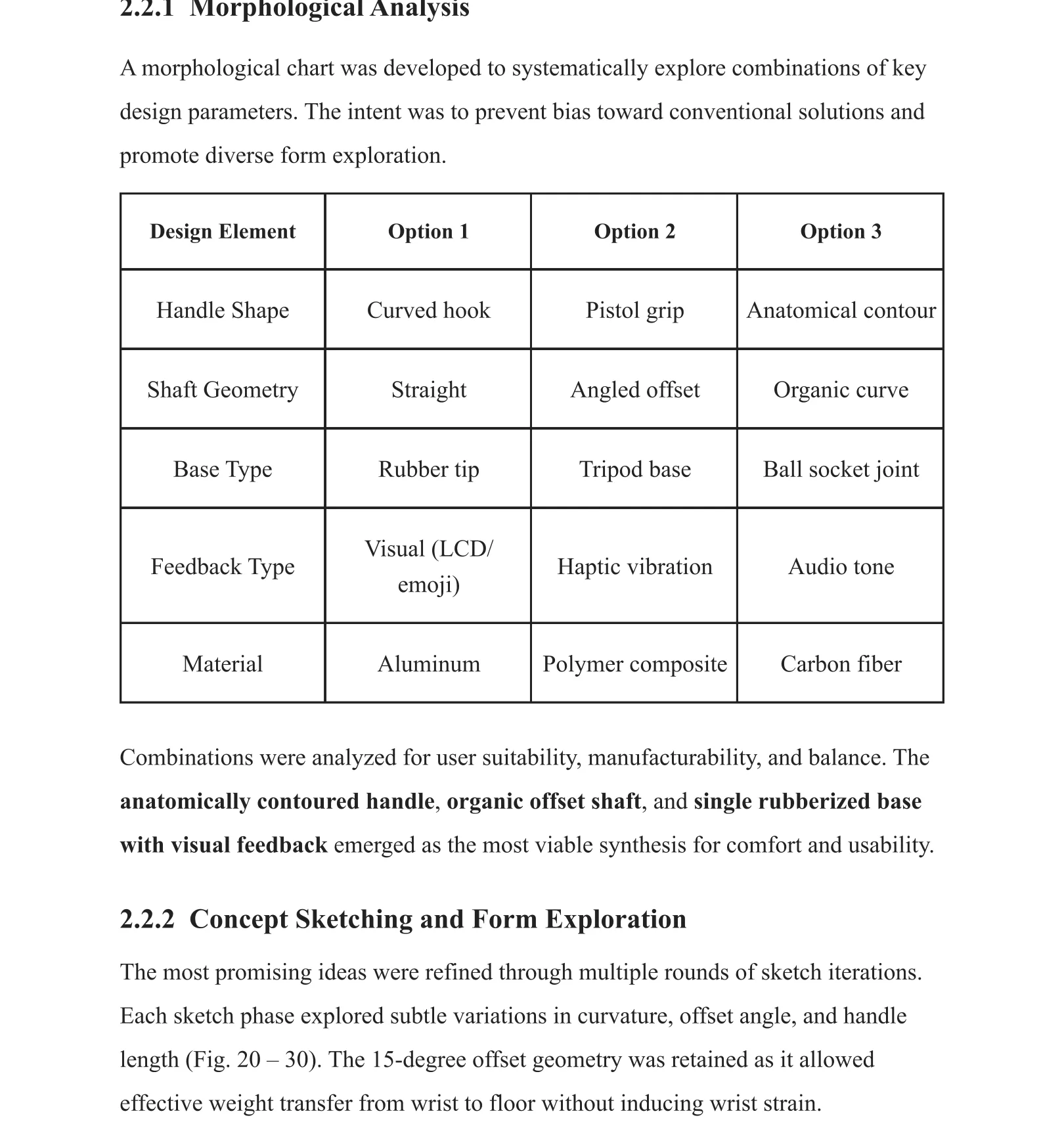
A morphological chart combined handle shapes, shaft geometries and bases. Sketches explored grips that keep the wrist straight.
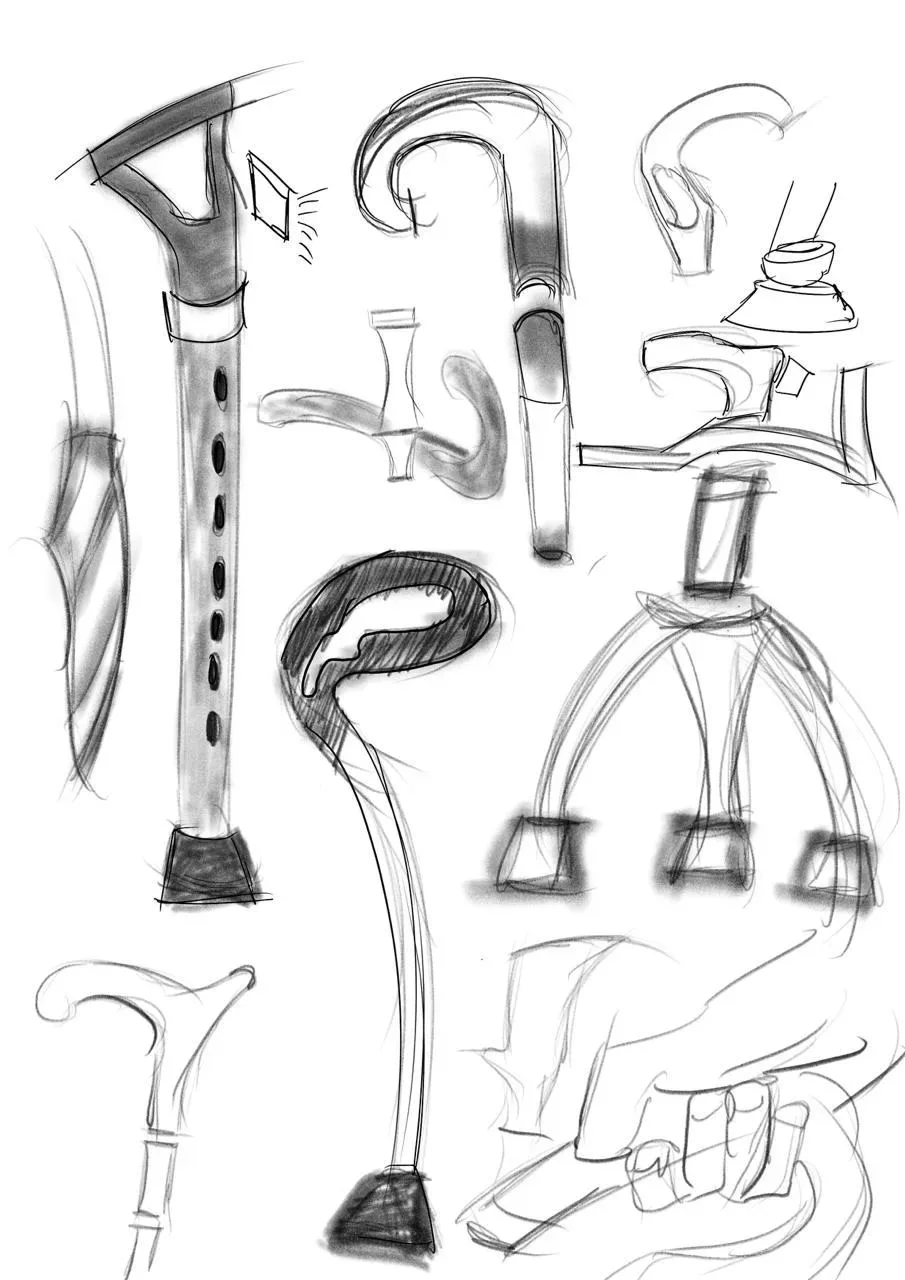
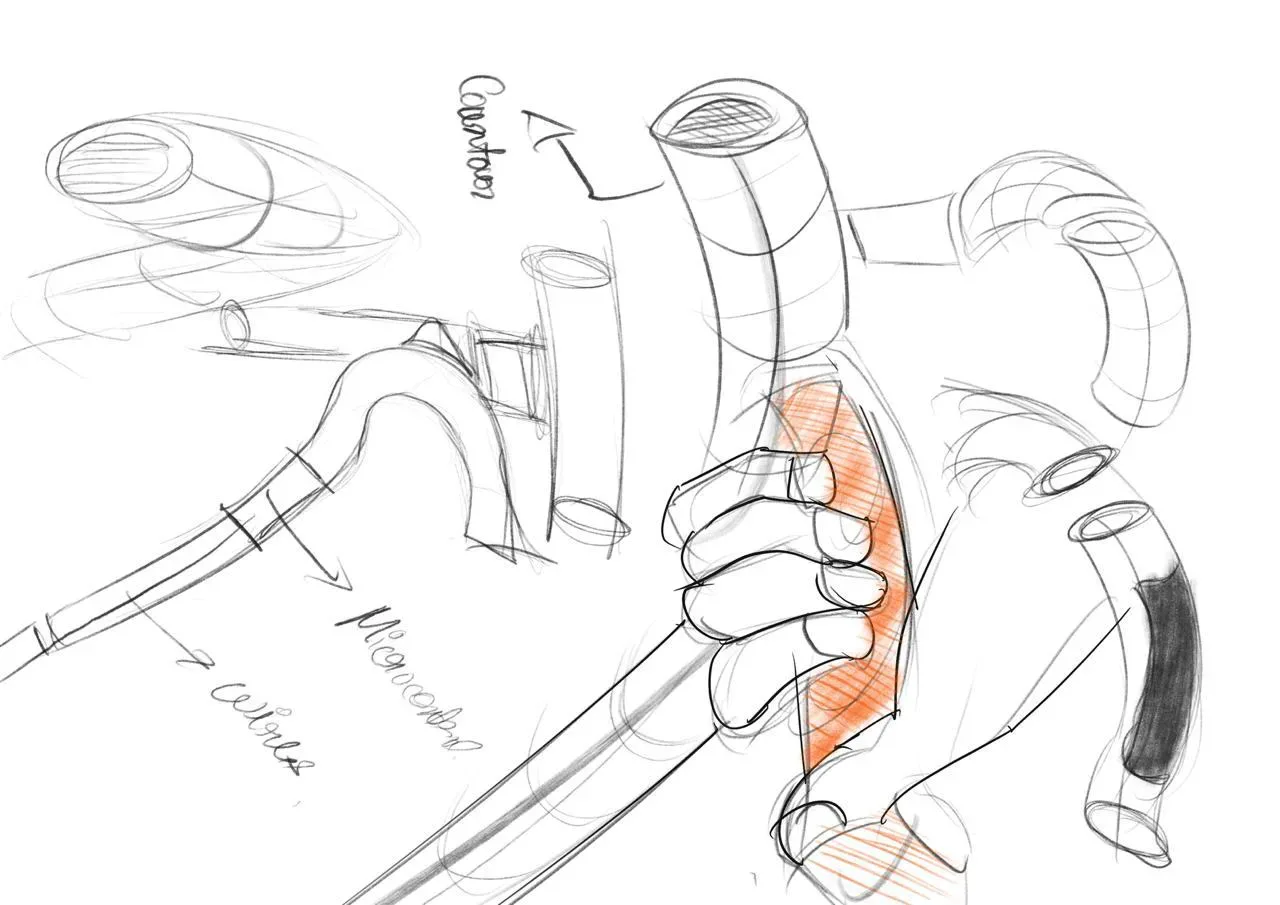
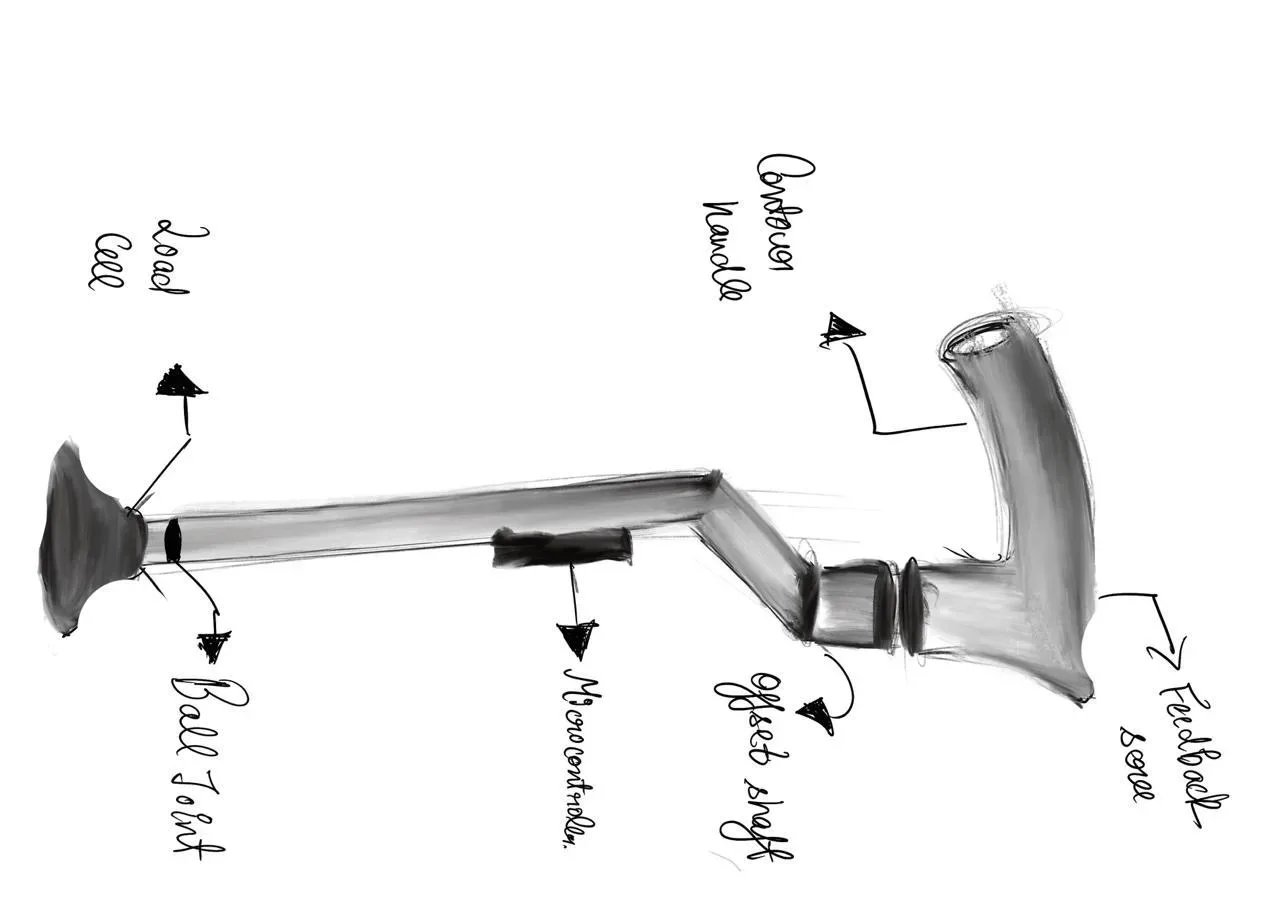
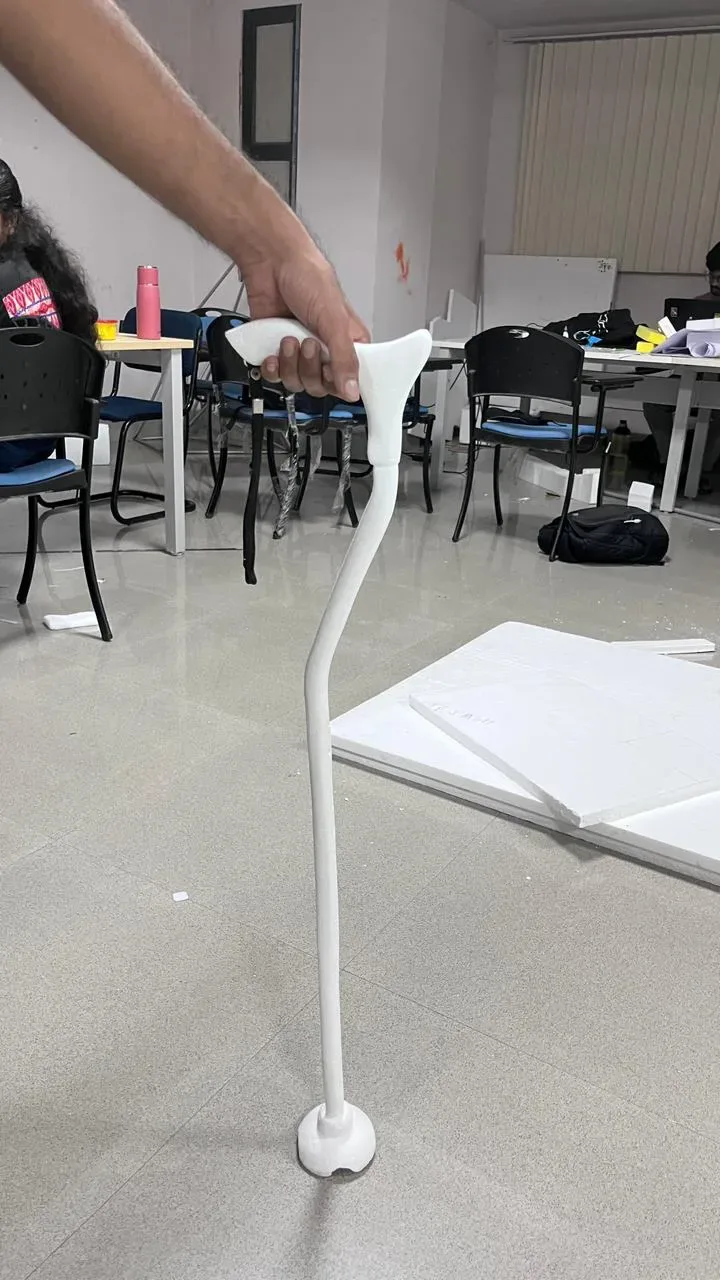
A 15° offset shaft for load transfer, a contoured handle for wrist alignment, and a simple smiley/sad indicator showing whether pressure is right.
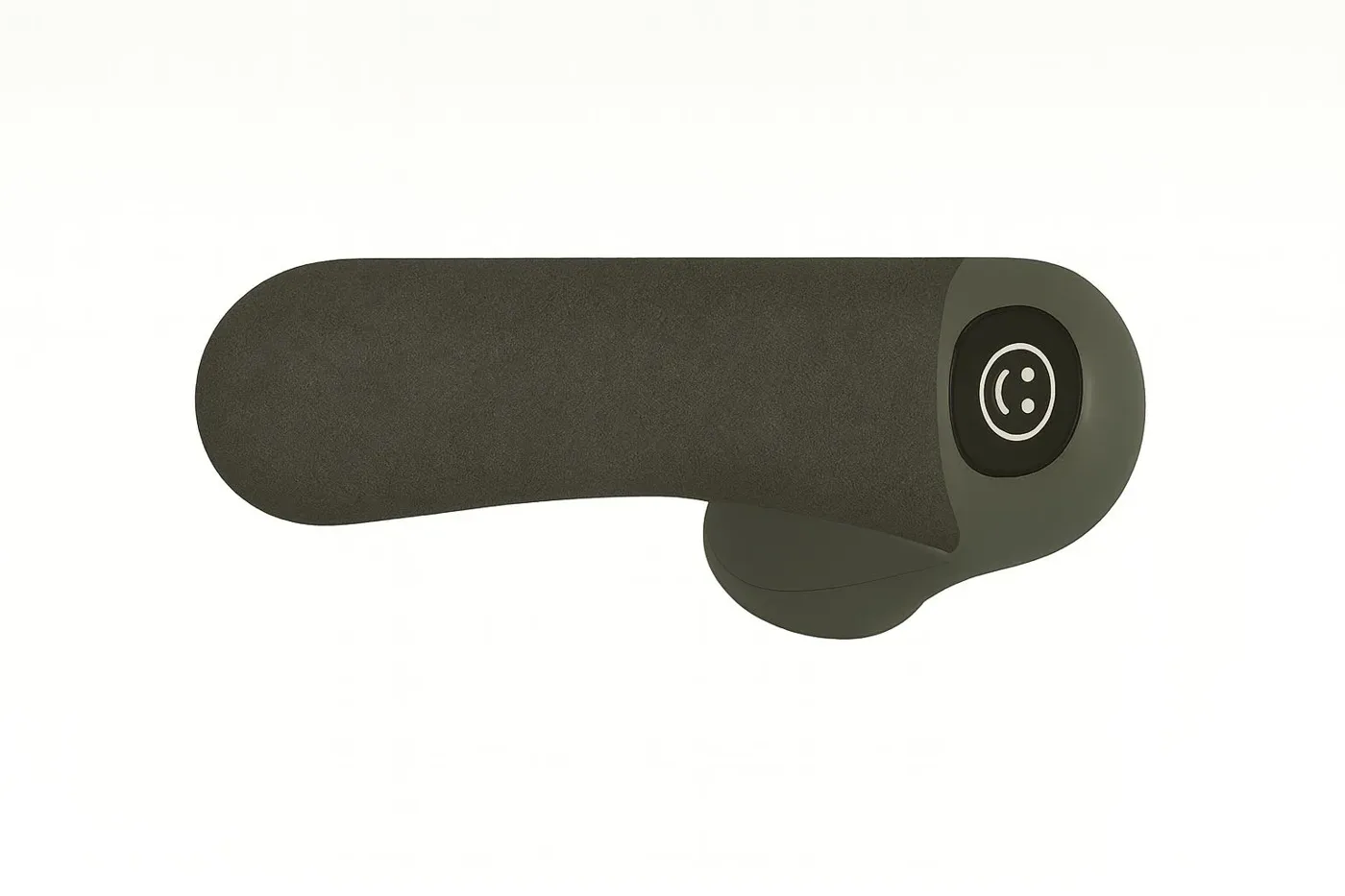
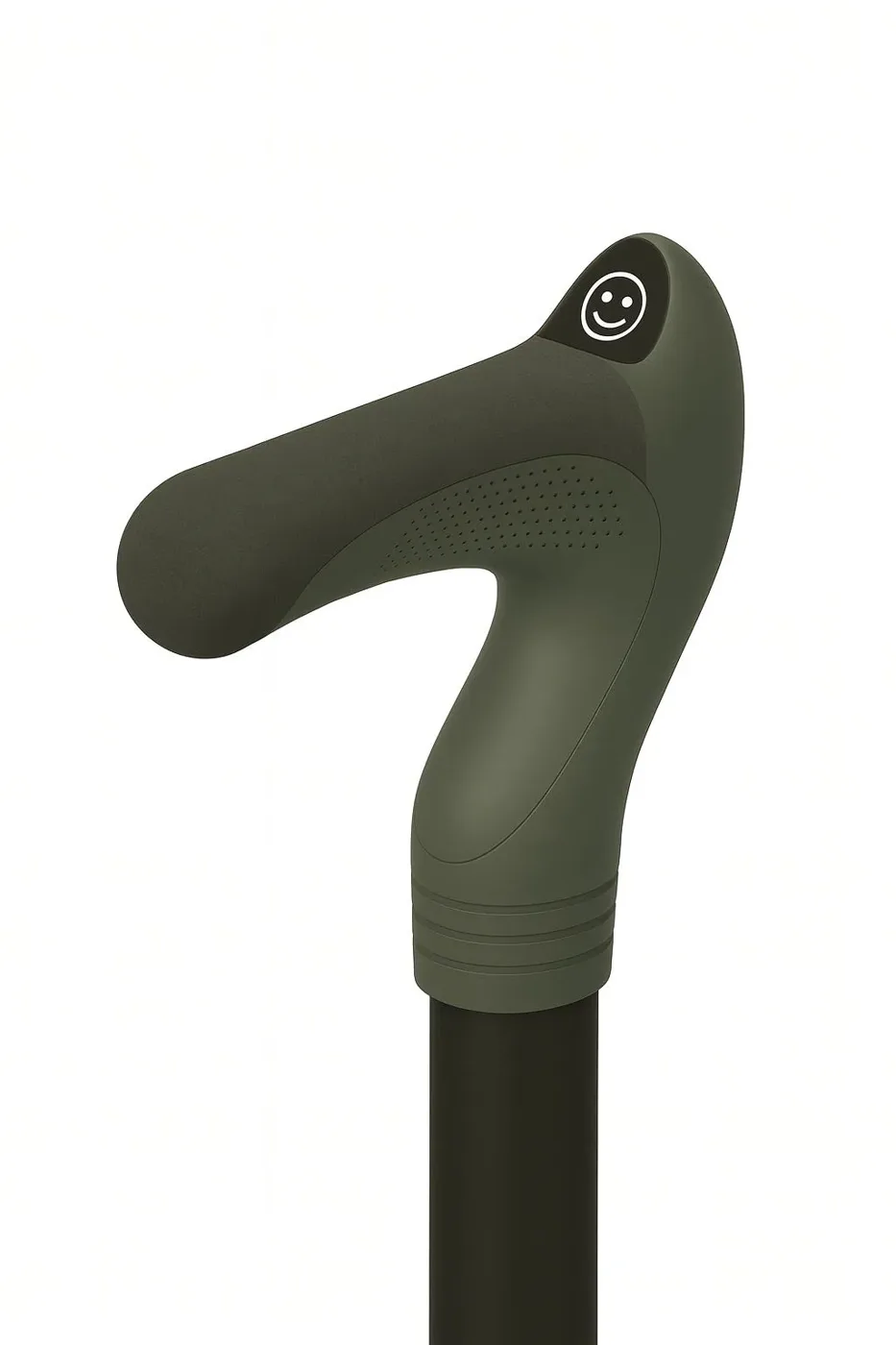
Hot-wire cut, sanded and refined foam, tested for grip comfort and weight perception, then exhibited.
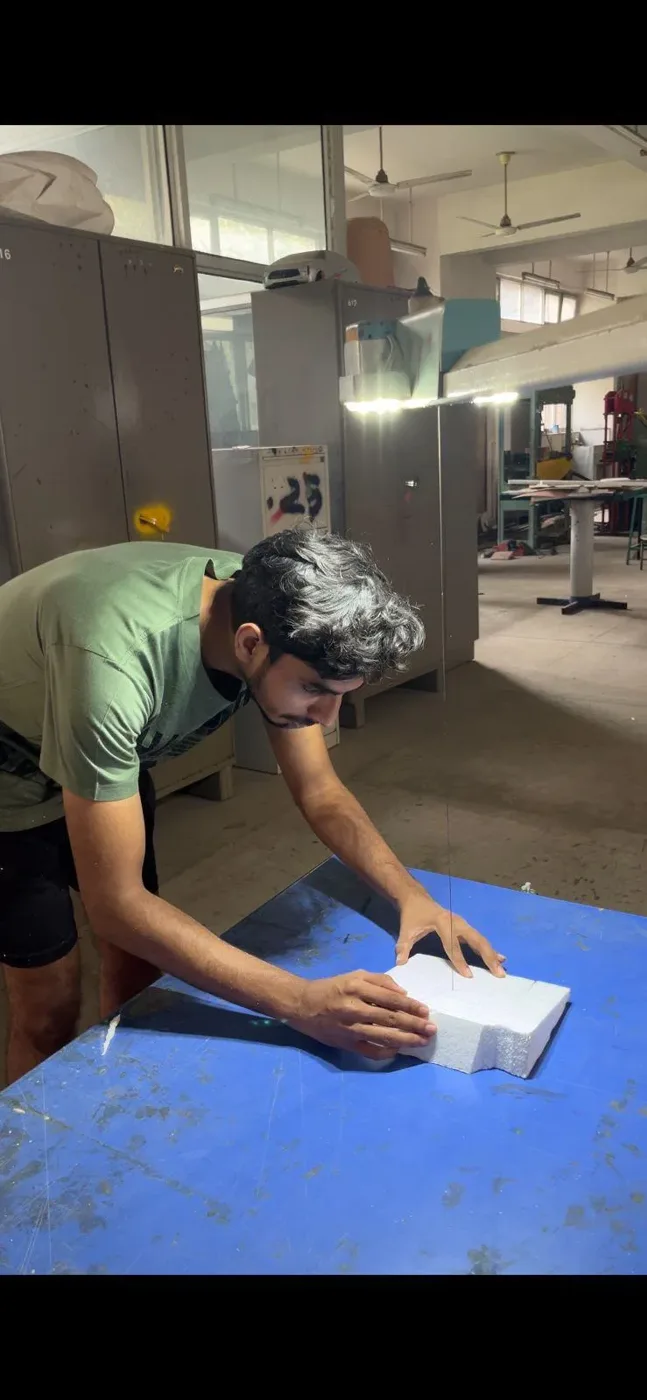
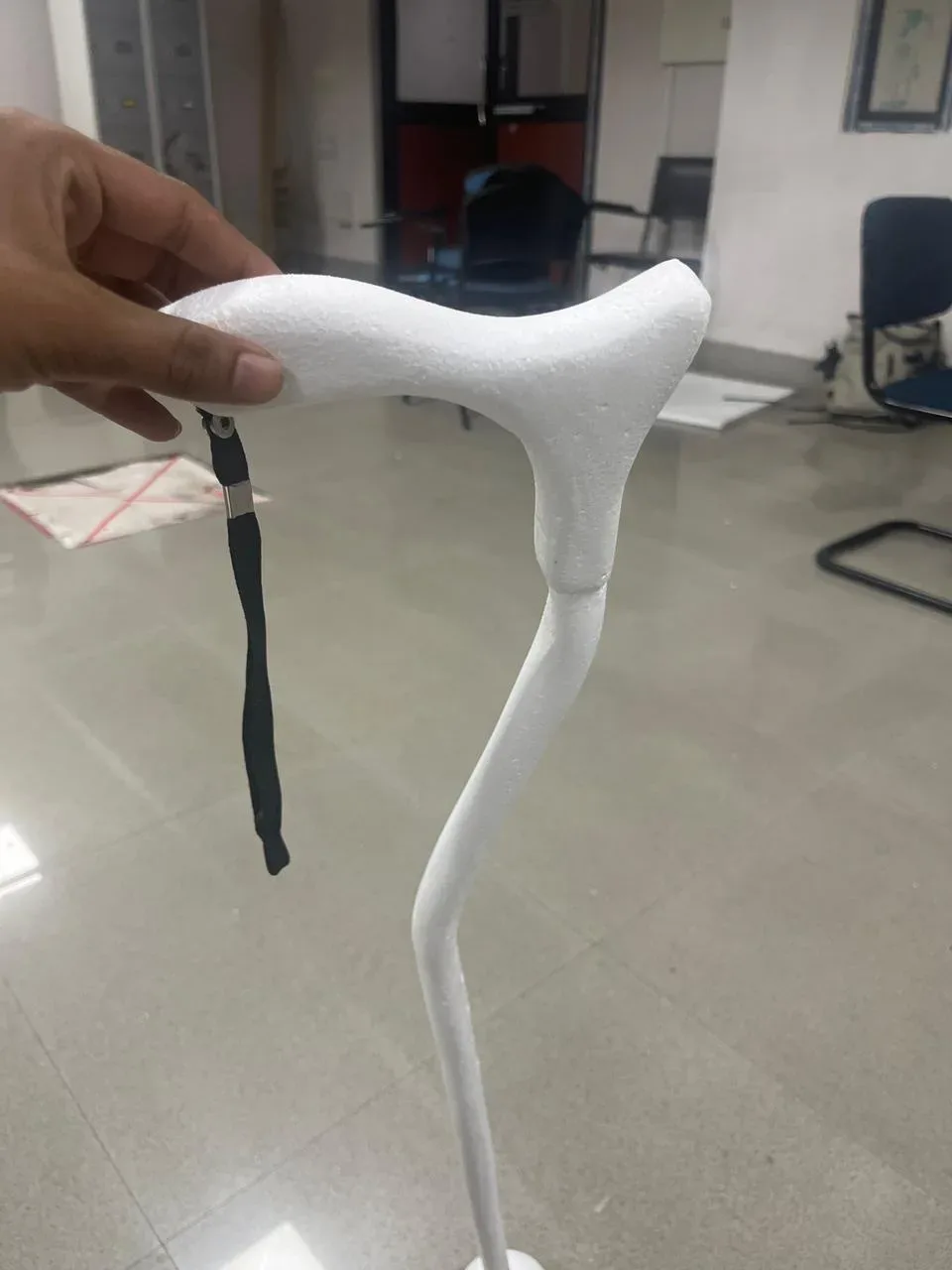
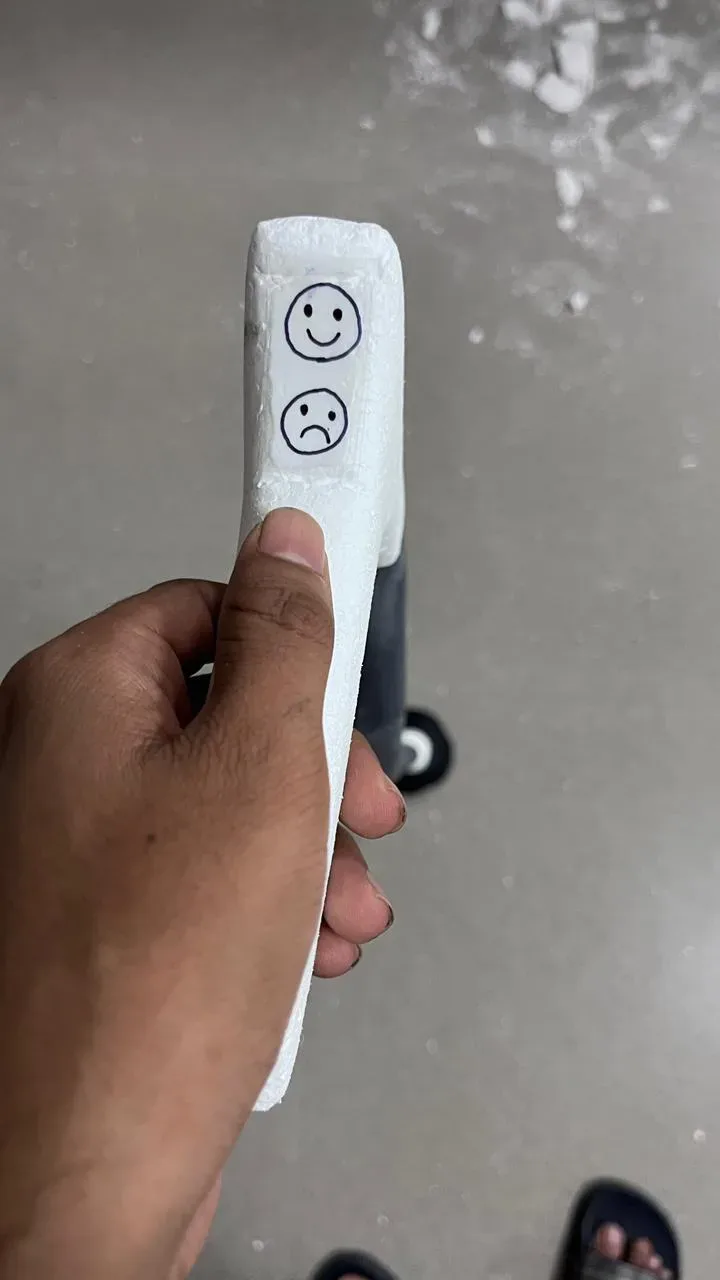
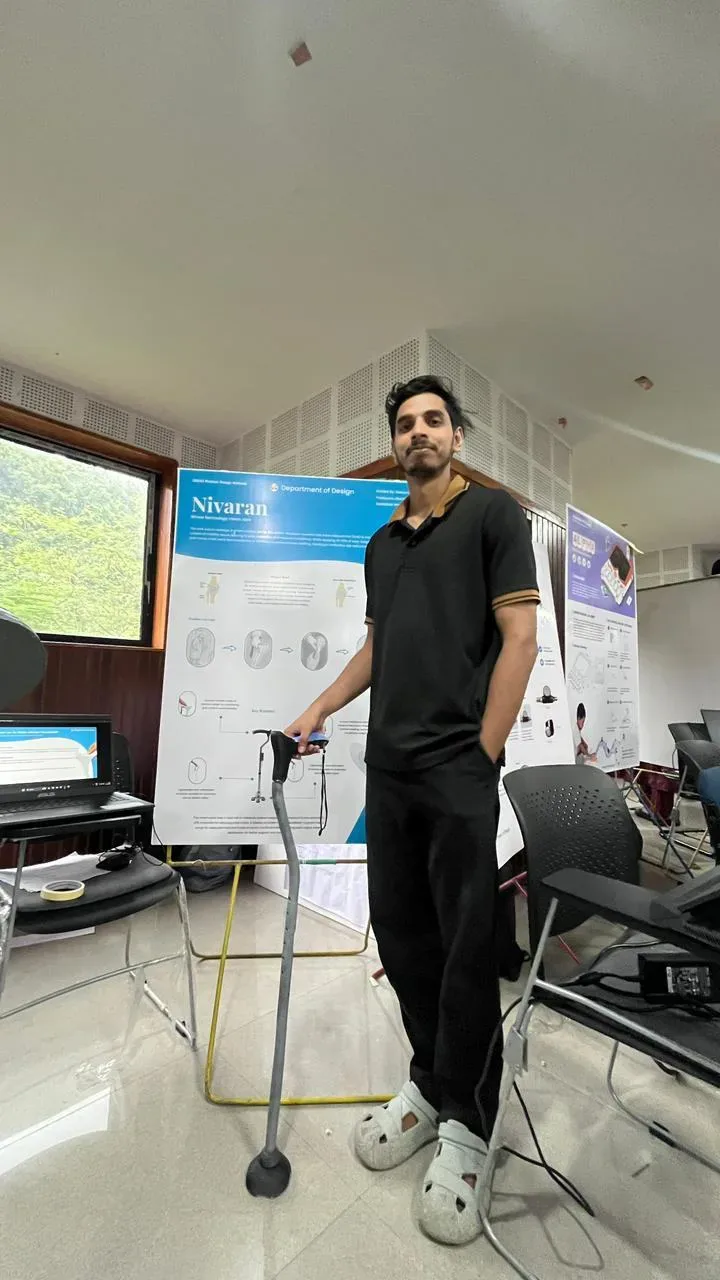
The pre-final prototype validated form and grip. The project showed how a familiar aid can become a feedback device that teaches correct use.
Before field work I collected clinical targets, so the design had numbers to aim for.
Field observation with elderly cane users at home and in clinics, contextual interviews, and expert input from an orthopaedic doctor, then empathy and affinity mapping to make sense of it.
Interviews surfaced more than ergonomics.
Handle (hook, pistol, anatomical), shaft (straight, angled offset, organic curve), base (rubber tip, tripod, ball joint), feedback (visual, haptic, audio) and material were crossed in a chart. An anatomical handle, organic offset shaft, single rubber base and visual feedback came out strongest. SCAMPER and brainwriting fed the sketches.