01 · Thinking
Fix the cause, not the symptom
The strip exists because water spills from the basins. Instead of a better barrier, the redesign stops water at the source and drains it under the basins, so the floor can stay level for everyone.
A raised strip meant to stop water near a hand-wash area that ends up tripping people. Diagnosed and redesigned.
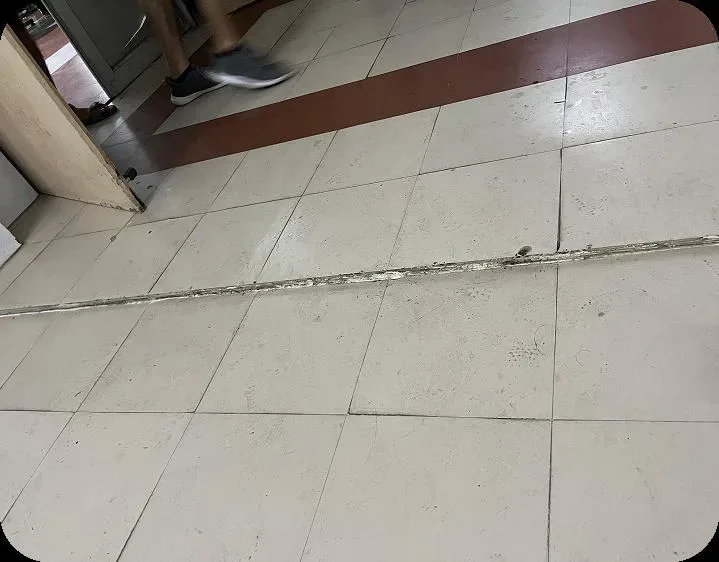 As found
A raised tile strip near a hand-wash area is meant to block water, but it causes tripping because of poor visibility, an uneven surface and no accessibility.
Take the raised strip out entirely.
A 1–2% slope towards a concealed drain under the basins, with anti-clog covers.
Angled basin edges or splash guards, and sensor taps.
Non-slip tiles, with a contrasting colour around the drain.
A level floor, with tactile strips before the wet area.
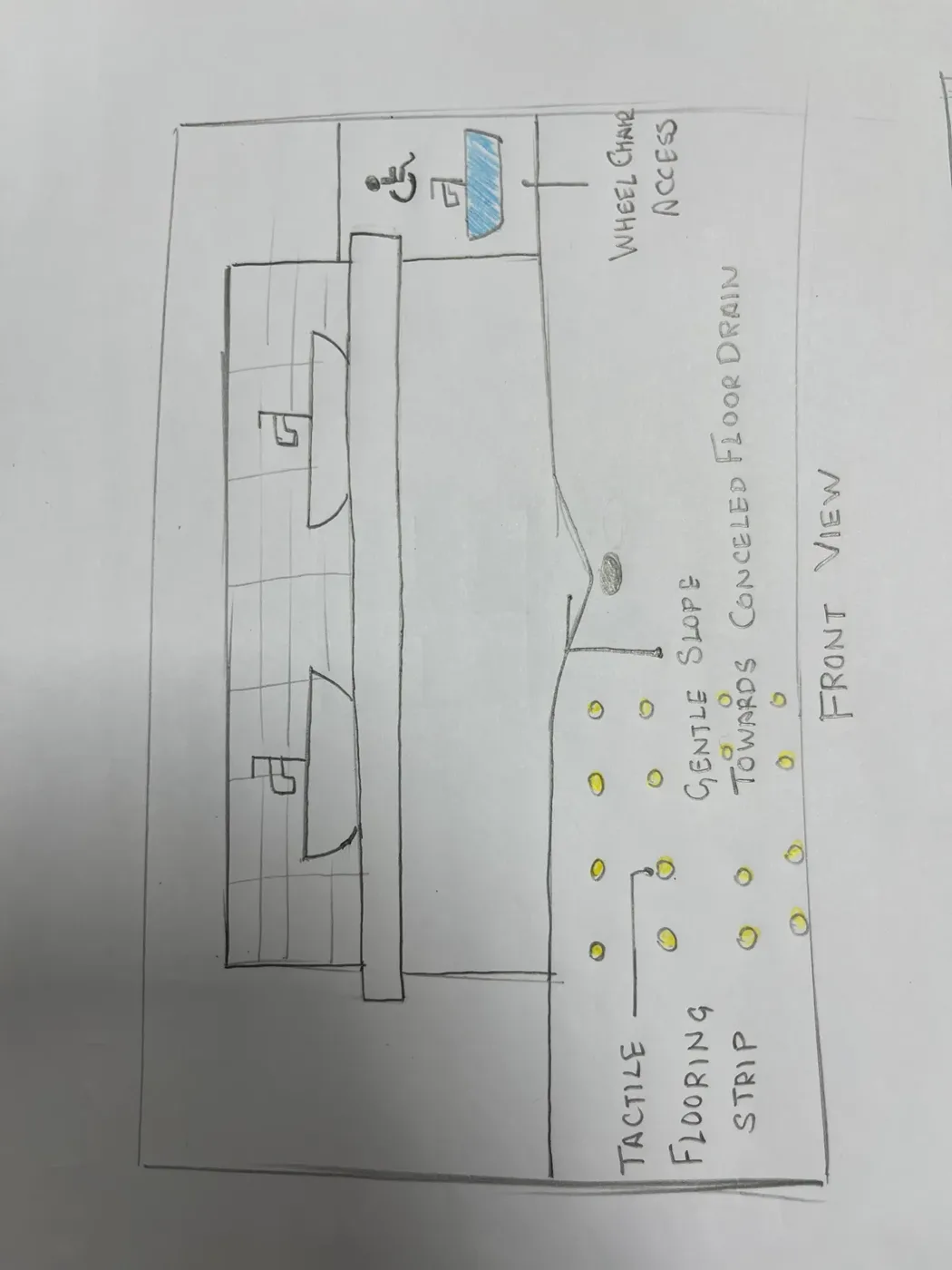
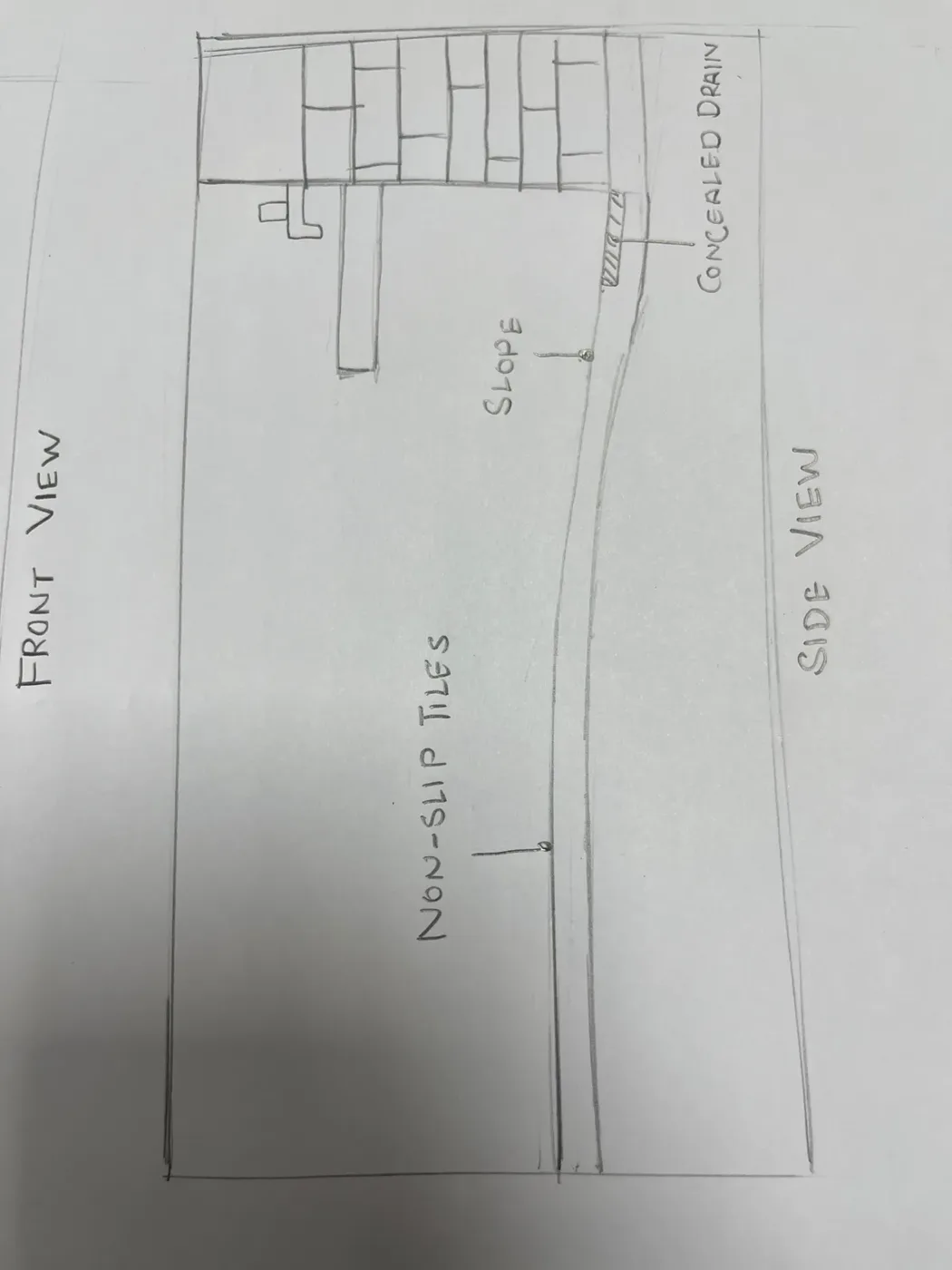
The strip exists because water spills from the basins. Instead of a better barrier, the redesign stops water at the source and drains it under the basins, so the floor can stay level for everyone.