Integration
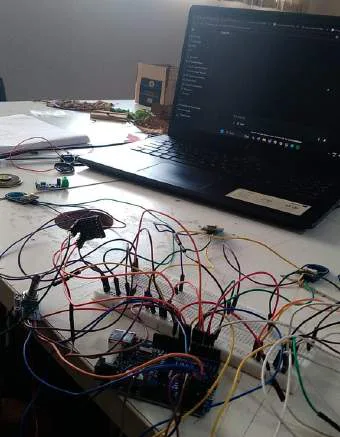
Making sensors and sound generation work smoothly needed careful calibration and a lot of debugging.
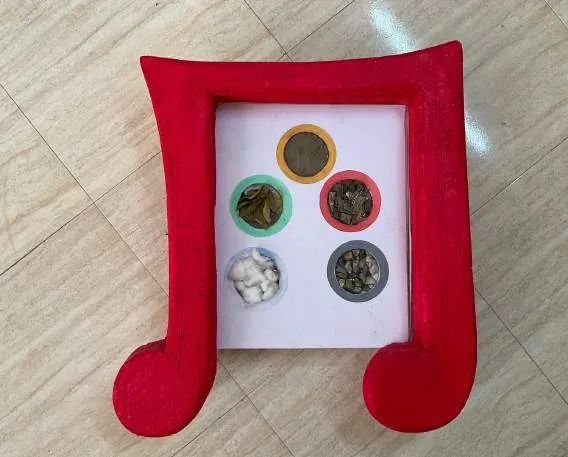
A musical instrument played by touching nature, where music moves from calm to energetic as textures go from soft to hard.
Build an electronic instrument on an Arduino Uno where natural materials act as keys, each mapped to a music mood, with reliable touch detection and minimal delay.
Hover or tap: soft to hard, calm to energetic. Tones are a simple recreation of the mapping.
If soft textures trigger gentle sounds and rough textures trigger energetic ones, people will feel an emotional shift as their hand moves across the board, and touching real materials will feel more memorable than pressing plastic buttons.

Making sensors and sound generation work smoothly needed careful calibration and a lot of debugging.
Sensors behind different materials detected touch inconsistently and needed tuning.
The planned SD-card audio module had unstable SPI communication, so stored music samples were dropped.
The board arranges cotton, leaves, soil, bark and stones from softest to hardest. Each hides a touch sensor, and each maps to a music mood from soft to rock, so the hand travels a gradient of emotion.
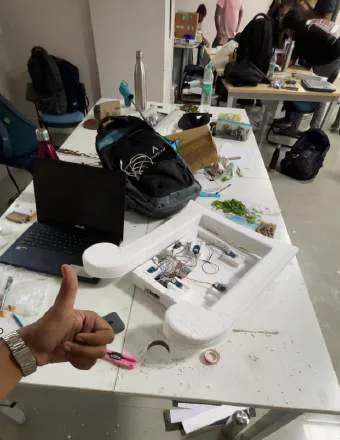
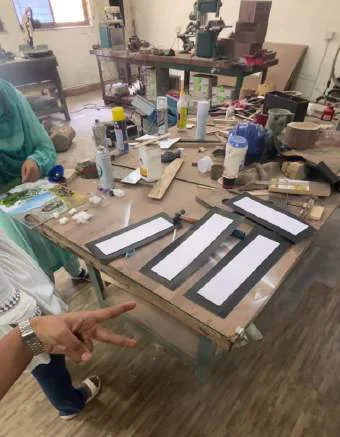
We listed materials with clearly different textures, drew a block diagram (surfaces, sensors, Arduino Uno, speaker), hid the sensors so nature seems to make the sound, and chose capacitive sensors that work through thin coverings.
Low-cost and expressive, the idea could become a museum exhibit, a therapy tool, a children’s learning toy or a public installation where touching natural materials creates soundscapes.