S
SprihaStudent
"I lost the meeting link."
What was really broken: Class information lived in a chat that scrolls away. The link was always somewhere above.
Our batch for UCEED and CEED (Common Entrance Examination for Design) ran on WhatsApp and Google Meet. In one week, three students and two teachers said the same thing in different words: the tools were getting in the way of learning. This is the web app I designed and built to fix that.
I prepared for CEED myself, so none of this was new to me. Laid side by side, each message pointed at a different broken tool, and all of them pointed at the same fear.
What was really broken: Class information lived in a chat that scrolls away. The link was always somewhere above.
What was really broken: Papers sat in scattered PDFs, and answers were buried in hour-long videos.
What was really broken: Papers came one year at a time, so weak topics stayed invisible.
What was really broken: Every class depended on one laptop's screen share, and prep took seven tools.
What was really broken: Homework had no home, so feedback came late or never.
Nothing tracked their performance. Practice, classes and feedback lived in different places, so effort never added up to visible progress. That fear, more than any single tool, was the real problem.
Every past paper, by year or by topic, free.
Classes, homework and doubts in one place, not in a chat.
A dashboard that shows how they're doing.
Coaching chains, independent design studios, one-to-one mentor marketplaces and free past-paper sites. Each solves one slice well. None connects practice → feedback → progress in one place a student opens every day.
| Coaching chainsBRDS · Pahal · Silica | Design studiosKaphal · Divergent | 1:1 mentorsTopmate | Past-paper sitesPW · Careers360 | BeforeMeet + WhatsApp | Dnerd Studio | |
|---|---|---|---|---|---|---|
| Every past paper, solvable online | — | — | — | ◐ PDFs | — | ● |
| Practise by topic across years | ? | ? | — | — | — | ● |
| Drawing marked up by a mentor | ◐ in class | ◐ in class | ◐ per call | — | ◐ manual | ● 72 h |
| Mock on a real exam-style screen | ◐ some | ? | — | — | — | ● free |
| Classes, homework, doubts in one place | ◐ | ? | — | — | ◐ scattered | ● |
| Price visible before talking to anyone | ◐ enquiry | ◐ enquiry | ₹1–5k/call | free | — | ● free core |
Coaching costs around ₹35,000 a year and runs on a fixed timetable. Mentors cost ₹1,000–5,000 an hour with no memory between calls. The gap wasn't content. It was continuity.
Anyone can register and practise. A batch student gets the whole classroom. Mentors run the classes. An admin keeps the content and the people right. Each door opens only what that person needs.
Free. Log in only to save progress.
Everything in Door 1, plus the classroom.
Ganesh, me and the other mentors.
Keeps everything true.
Community, streaks and a leaderboard exist too, but they're secondary. This case study follows the four doors.
These are the calls that mattered most: what was on the table, what I chose, and what it cost.
An anxious 17-year-old won't create an account to find out if we're any good. Trust has to come before the ask.
A wrong answer is the most valuable moment in practice. Showing the answer instantly throws it away.
The real exam is pencil on paper. Practising on a tablet would train the wrong skill.
I first promised 48 hours. Then I did the maths on three mentors who have exams of their own, and changed it.
Many students are minors. Feedback should feel personal without ever becoming private.
Real screens from the live product, scene by scene. Scroll, and the screen follows the story.
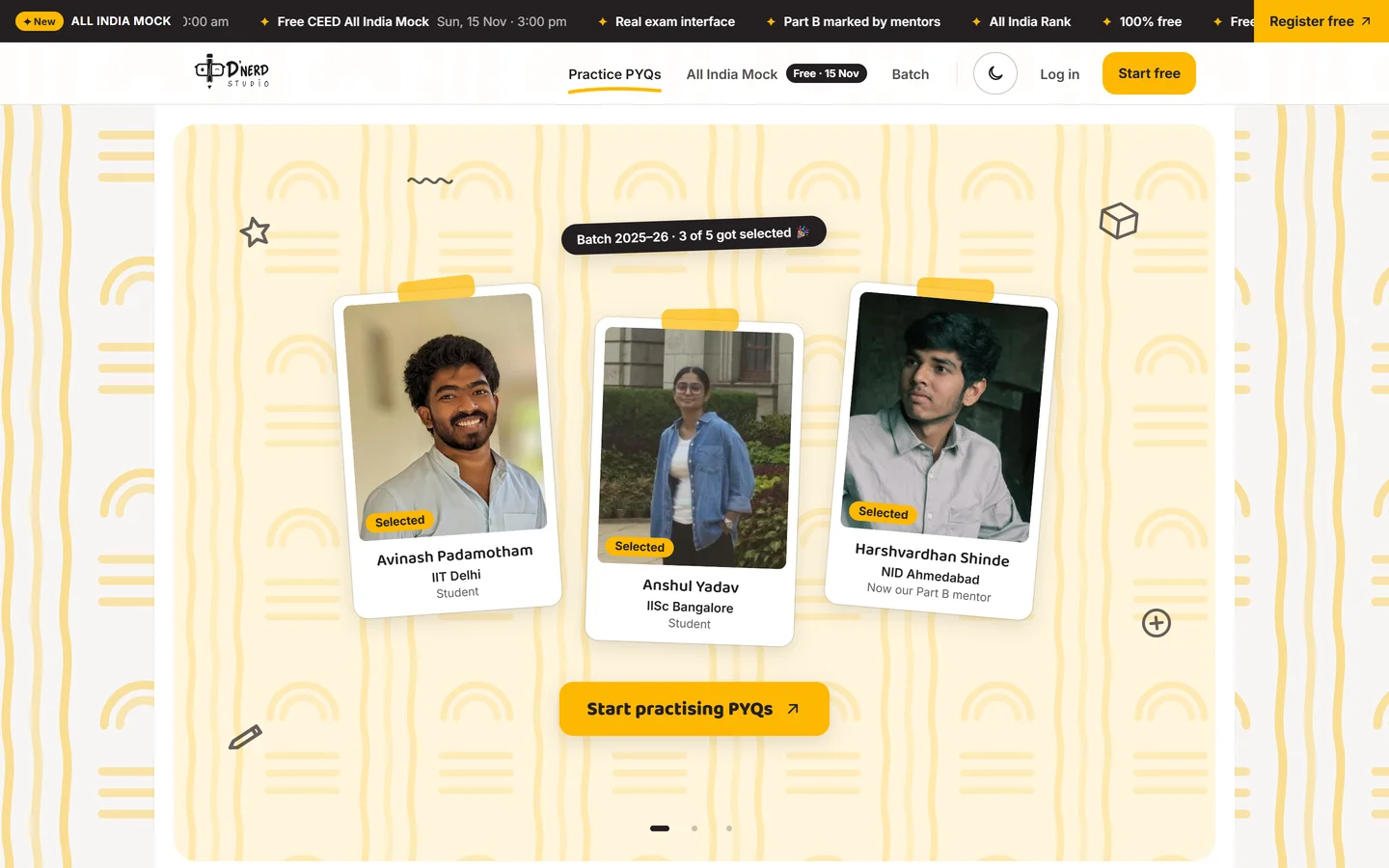
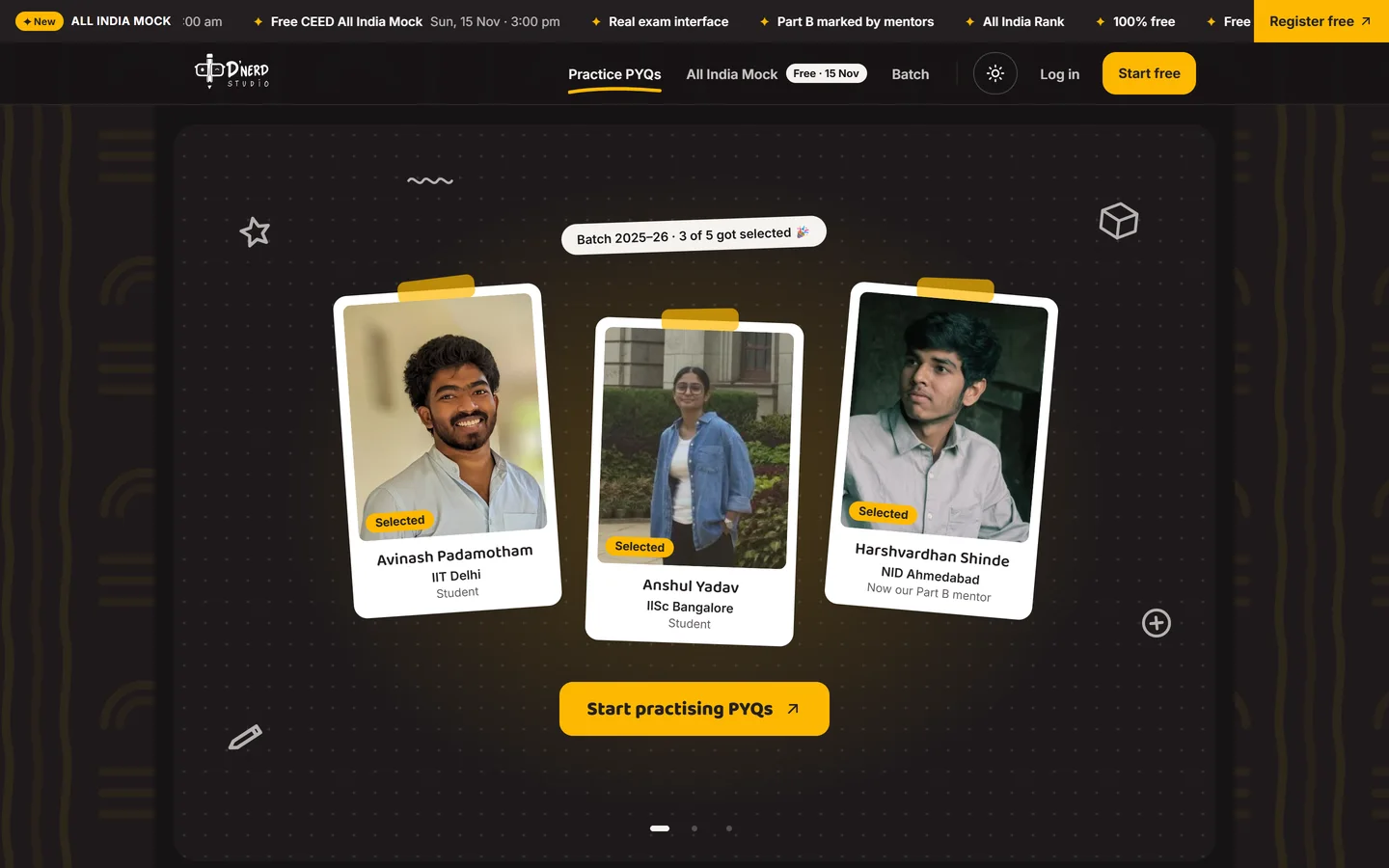
The main button on the home page is "Start practising PYQs". No sign-up wall in front of it.
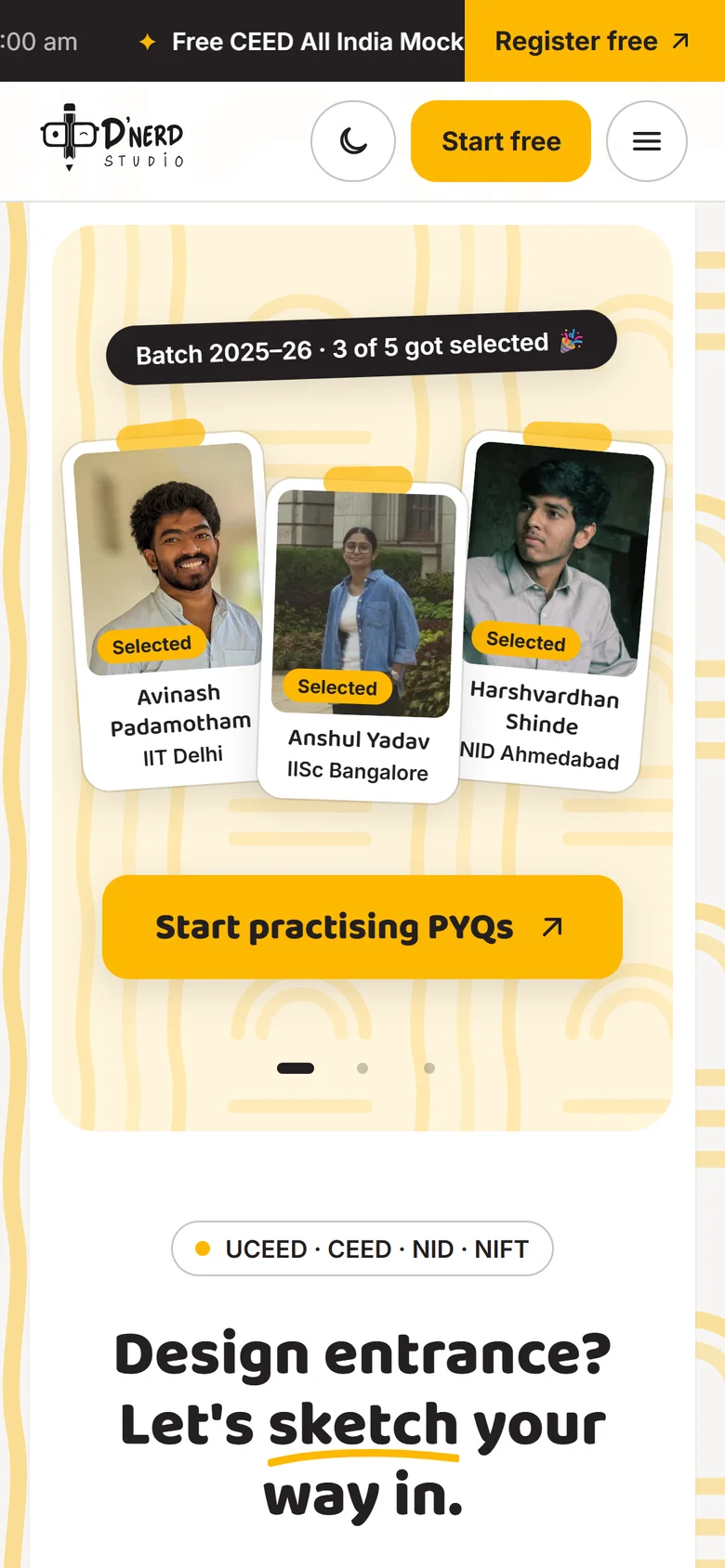
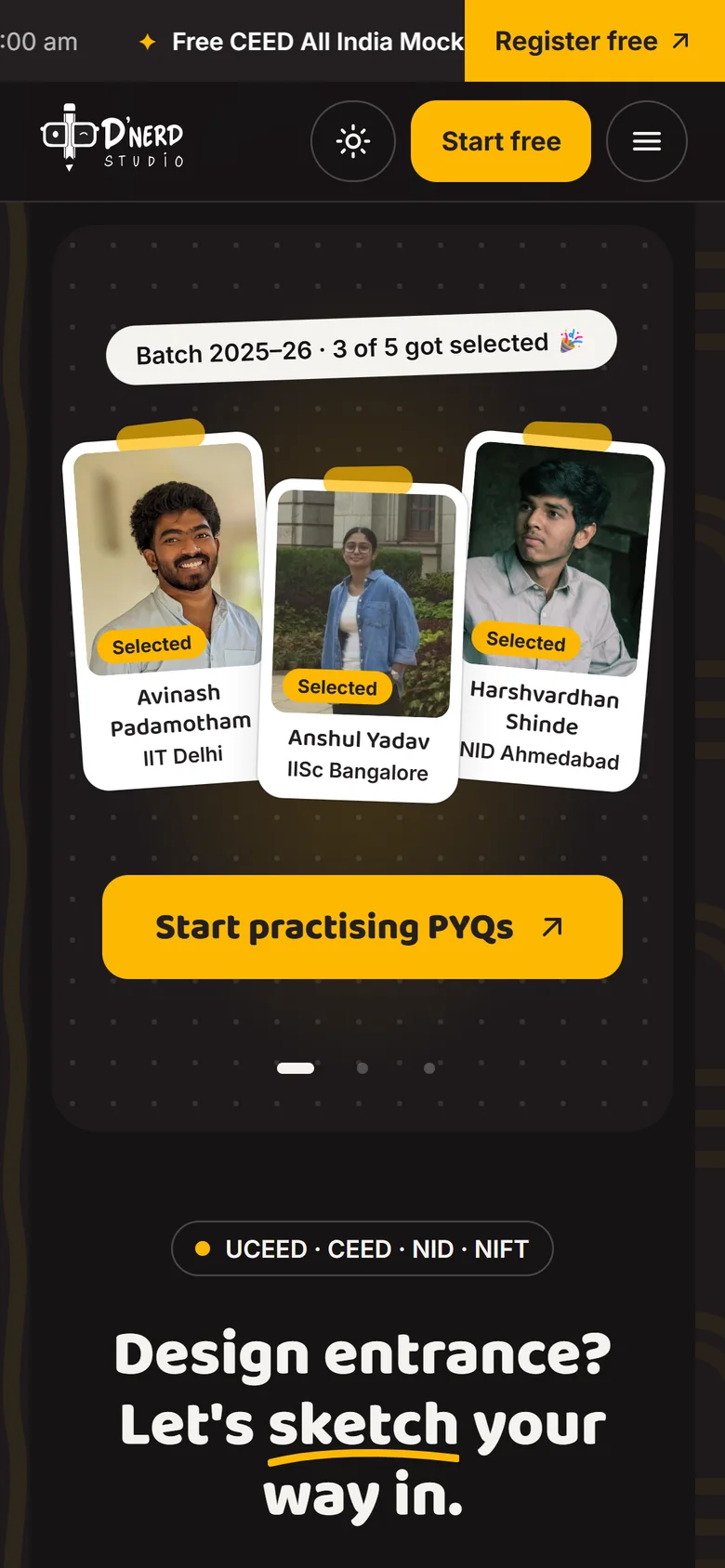
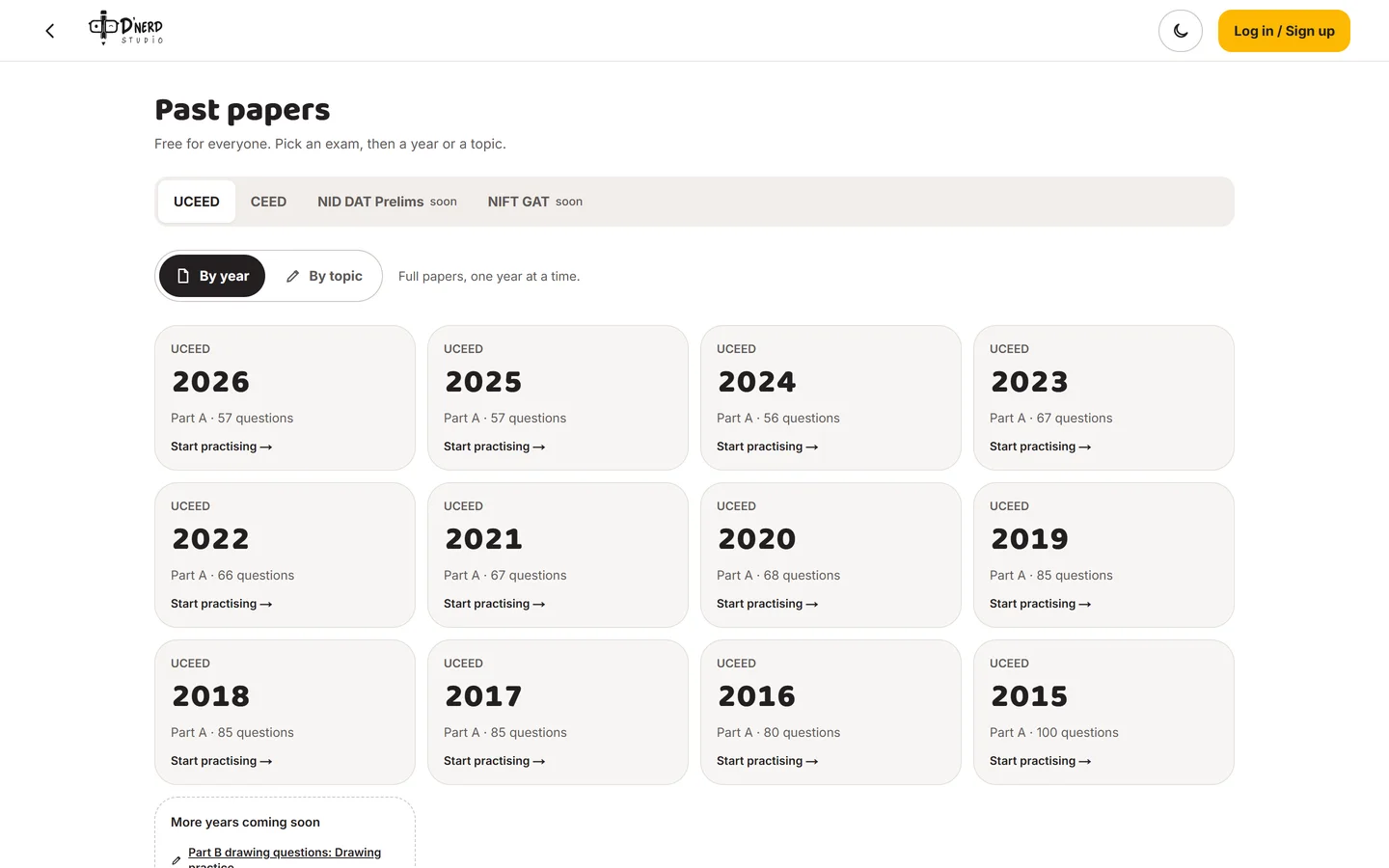
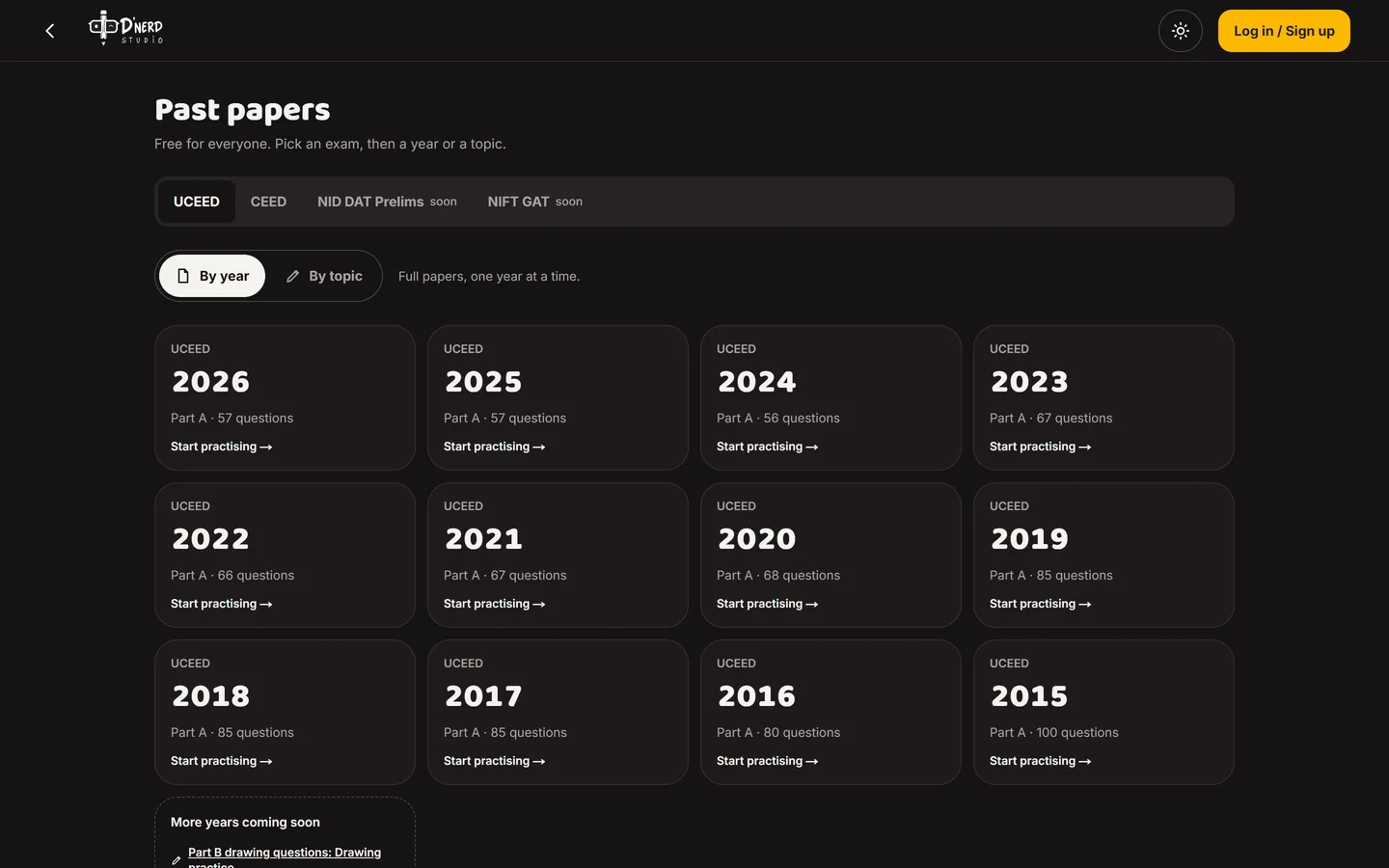
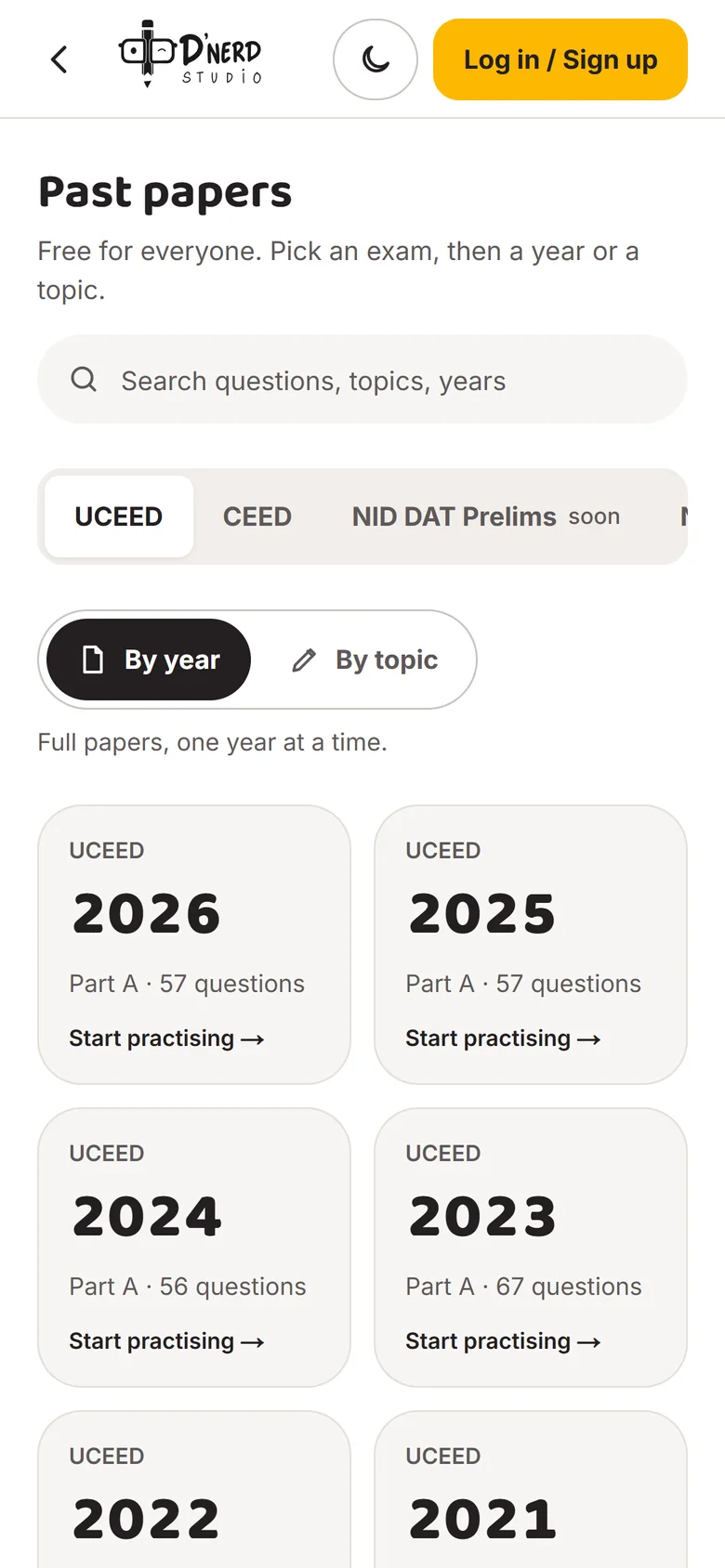
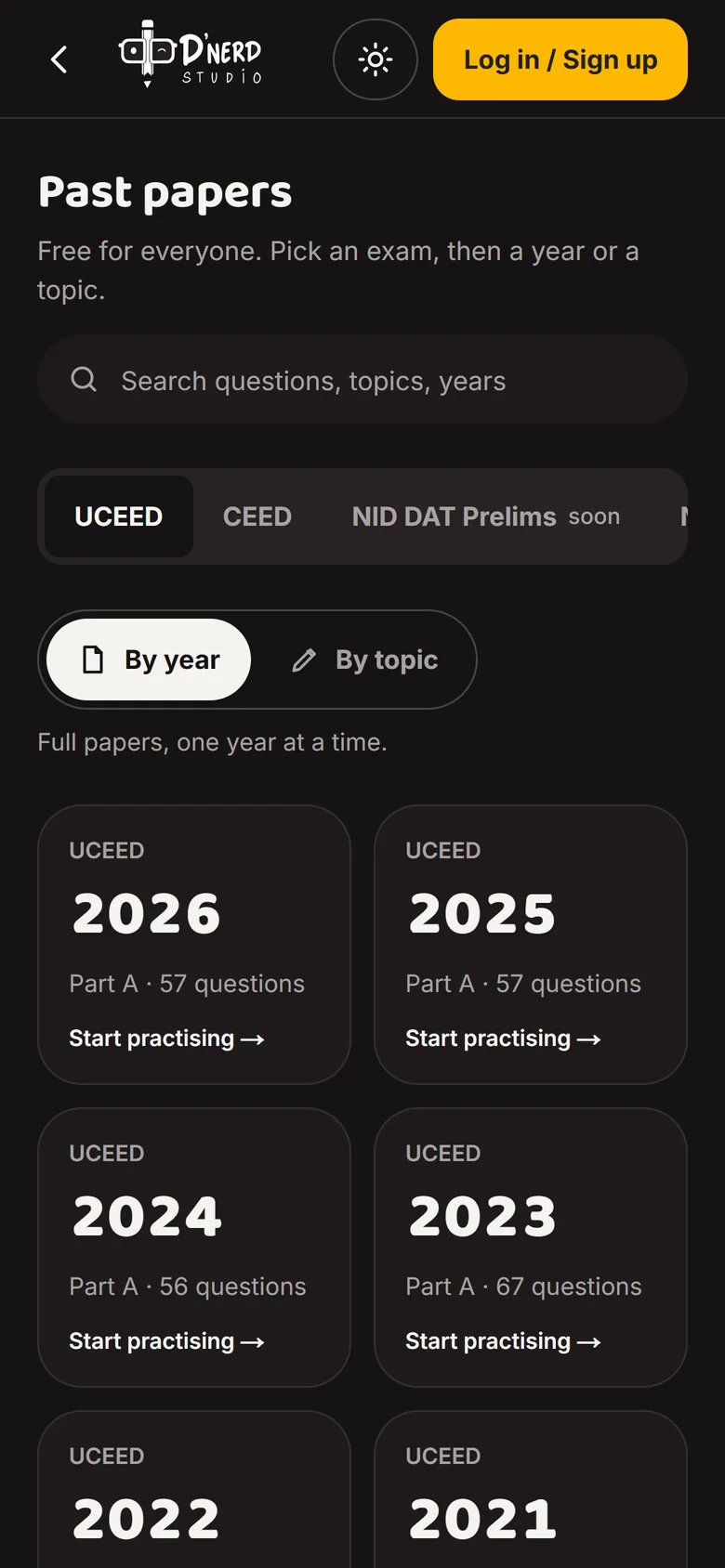
Every UCEED paper since 2015, one card per year. This is how students already think about papers.
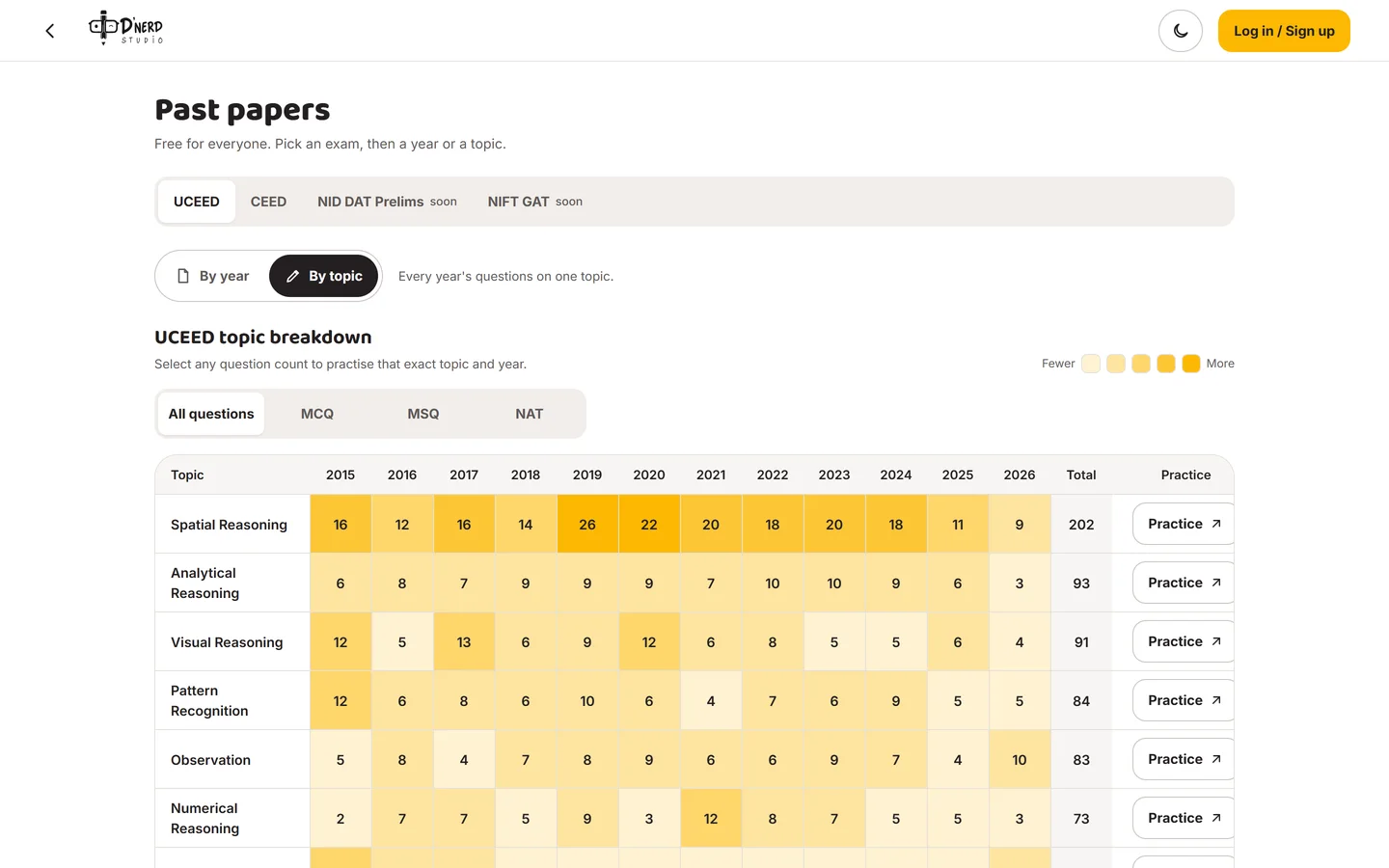
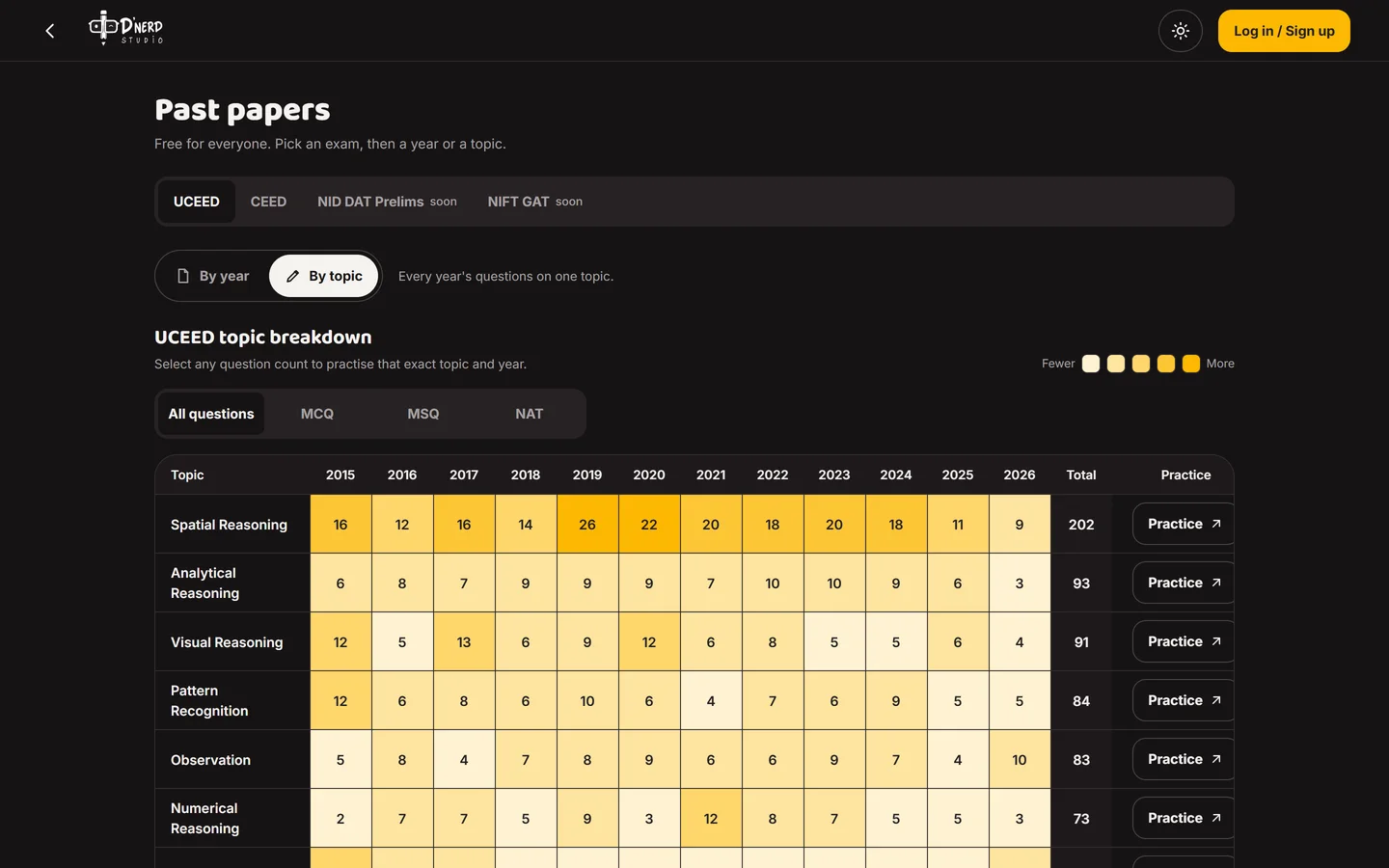
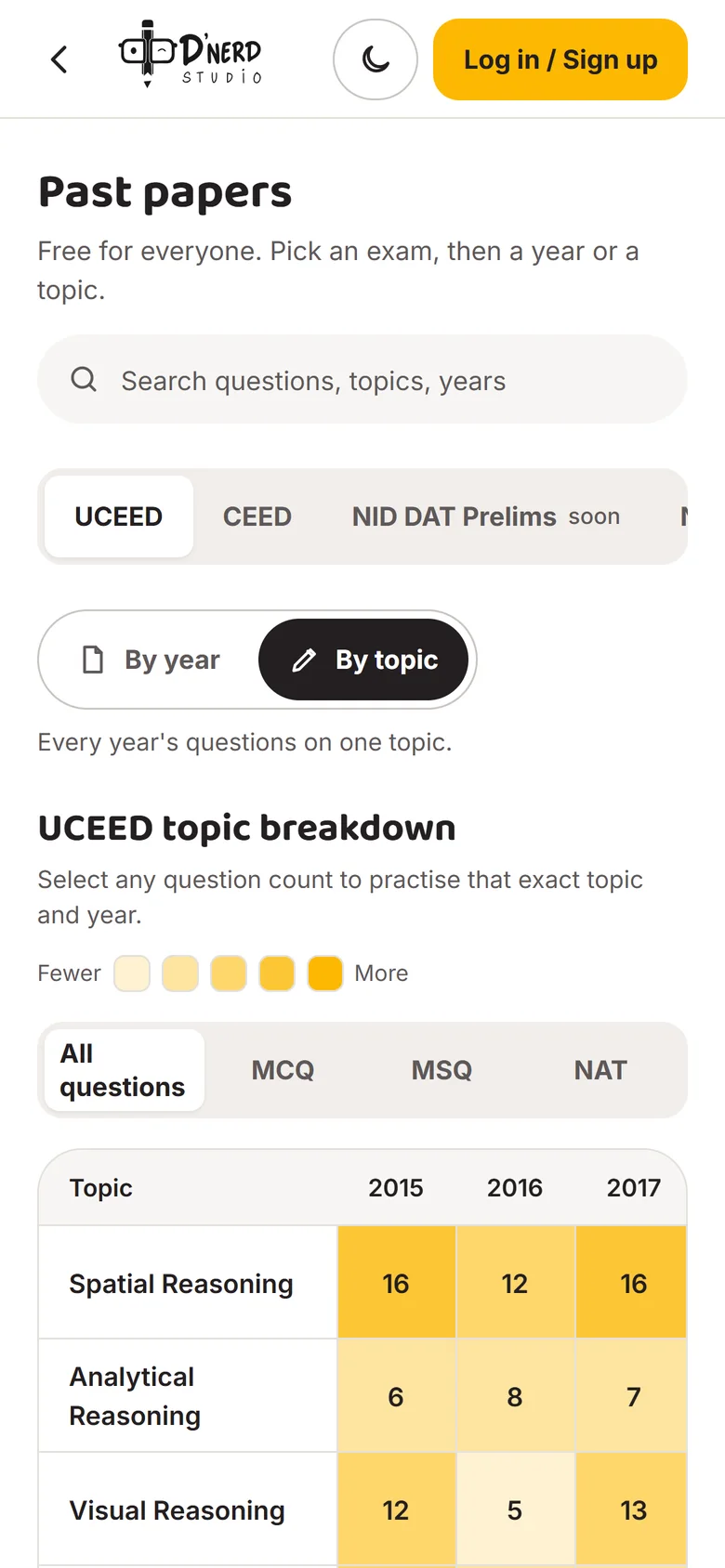
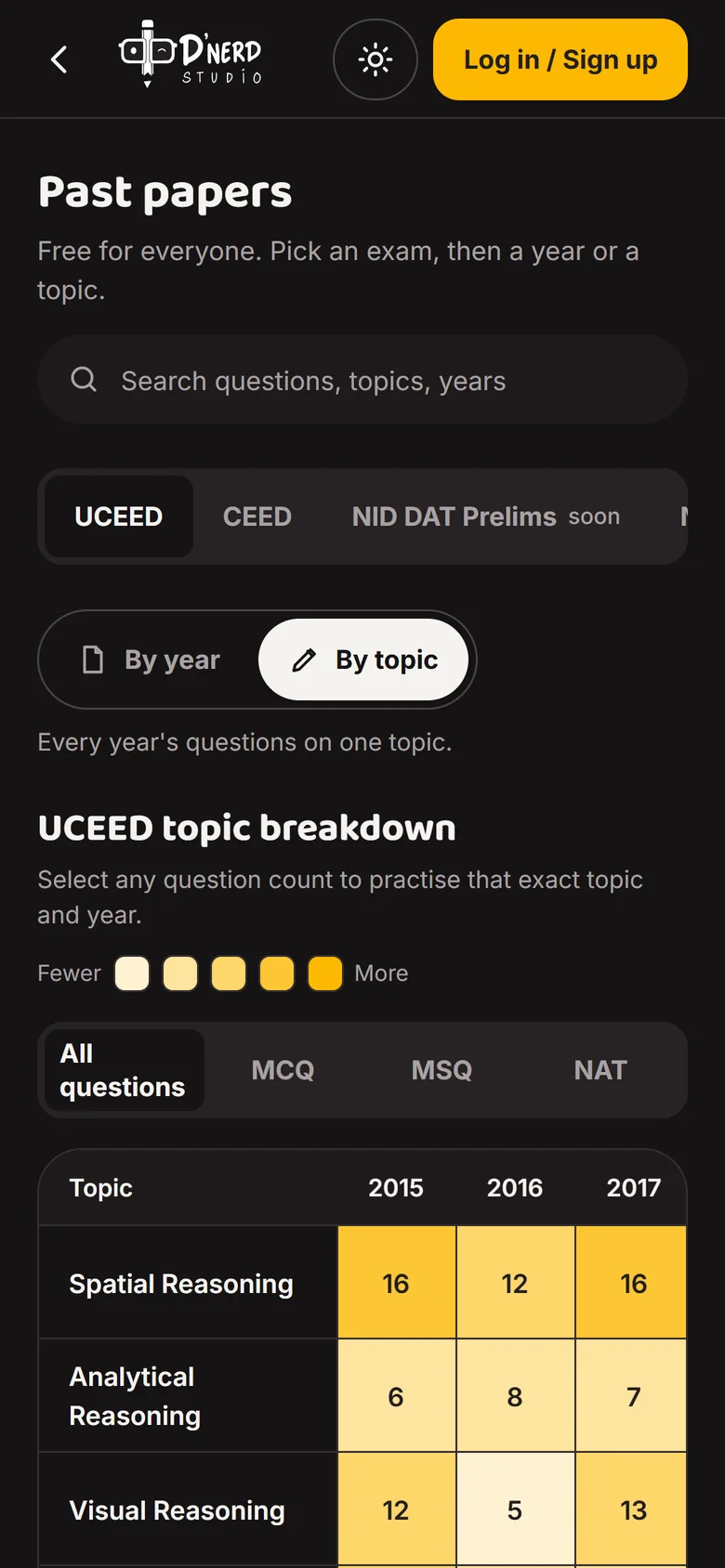
The same questions, regrouped. Rows are topics, columns are years, and darker squares mean the exam asks it more. Spatial Reasoning stands out at once.
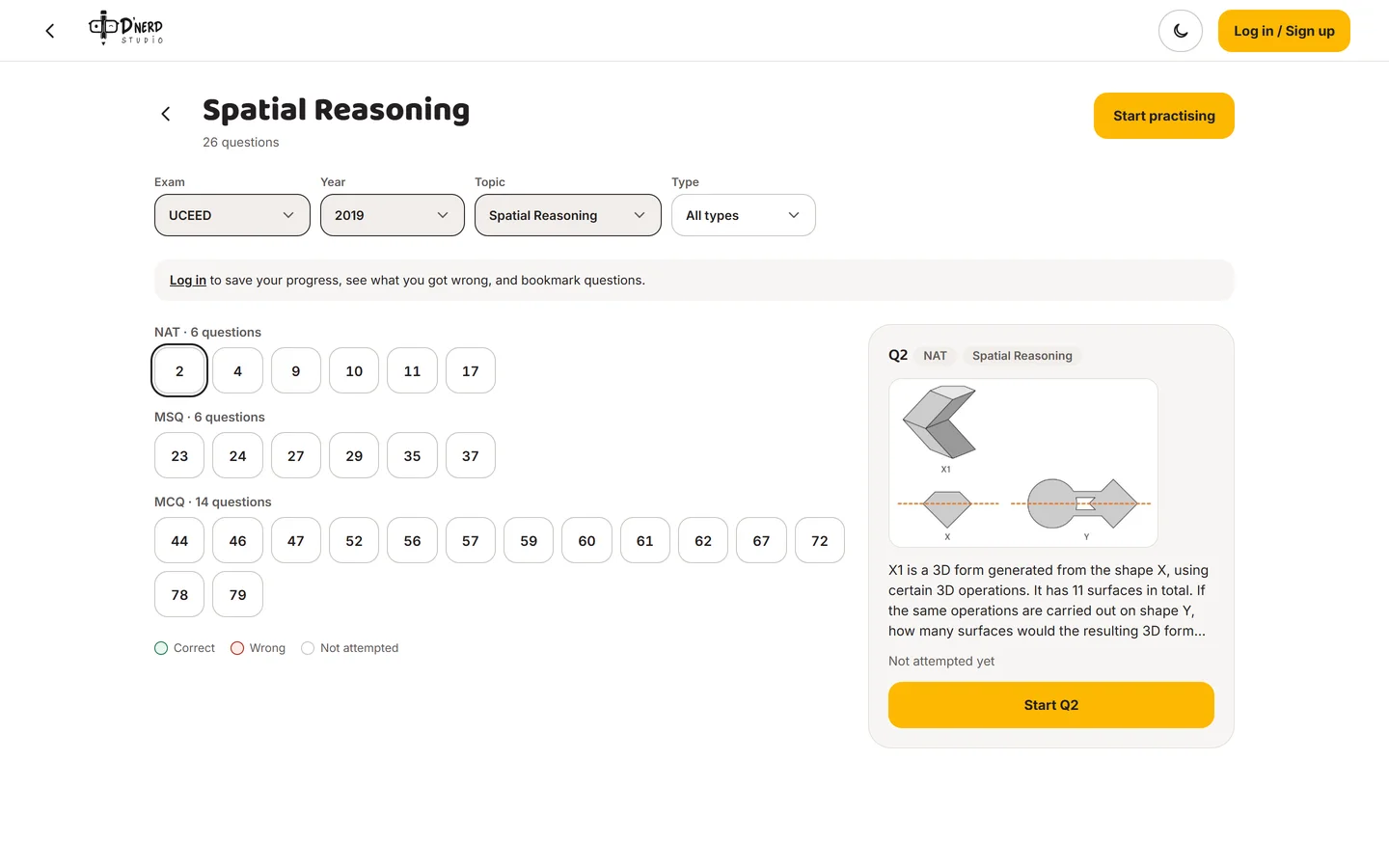
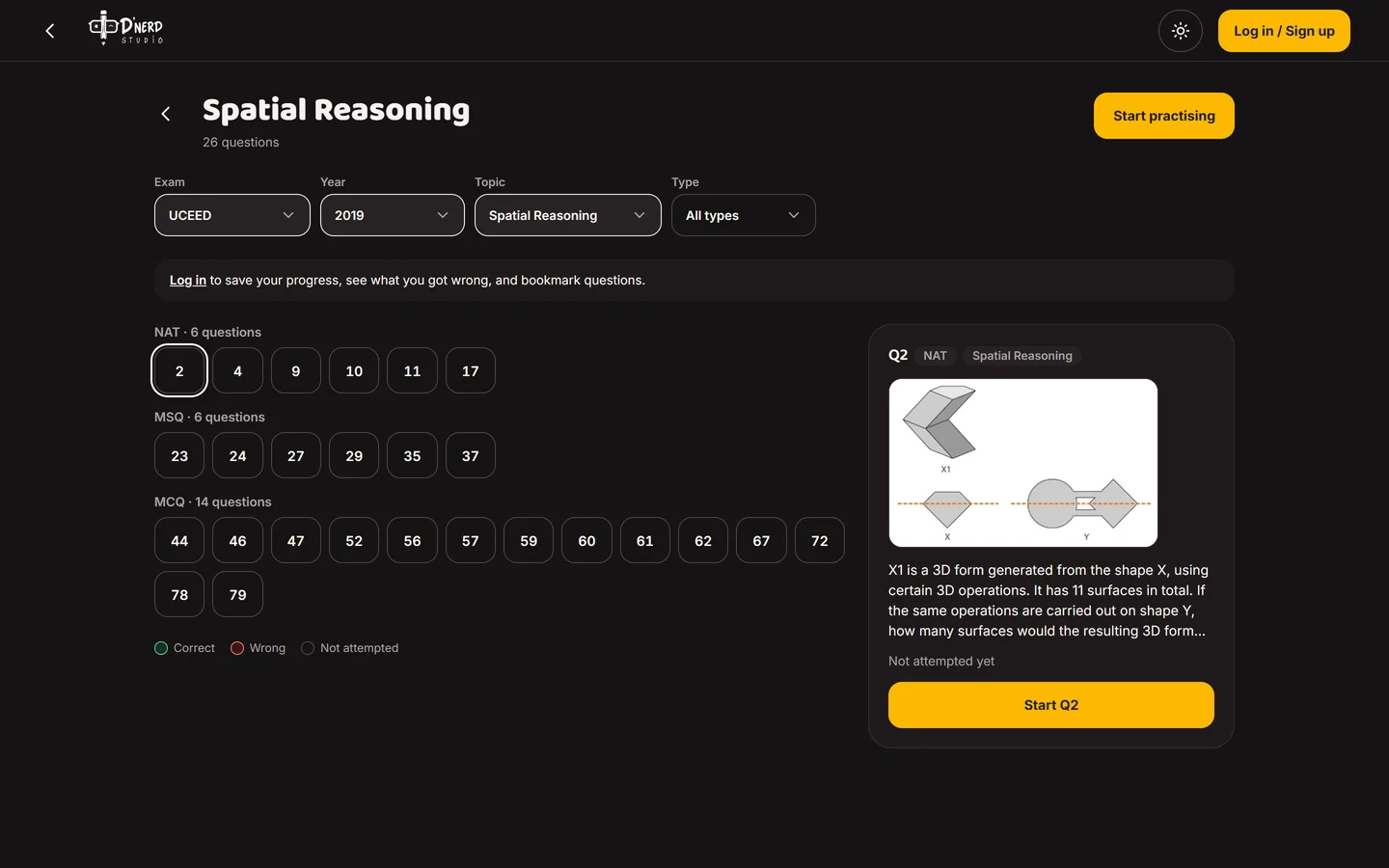
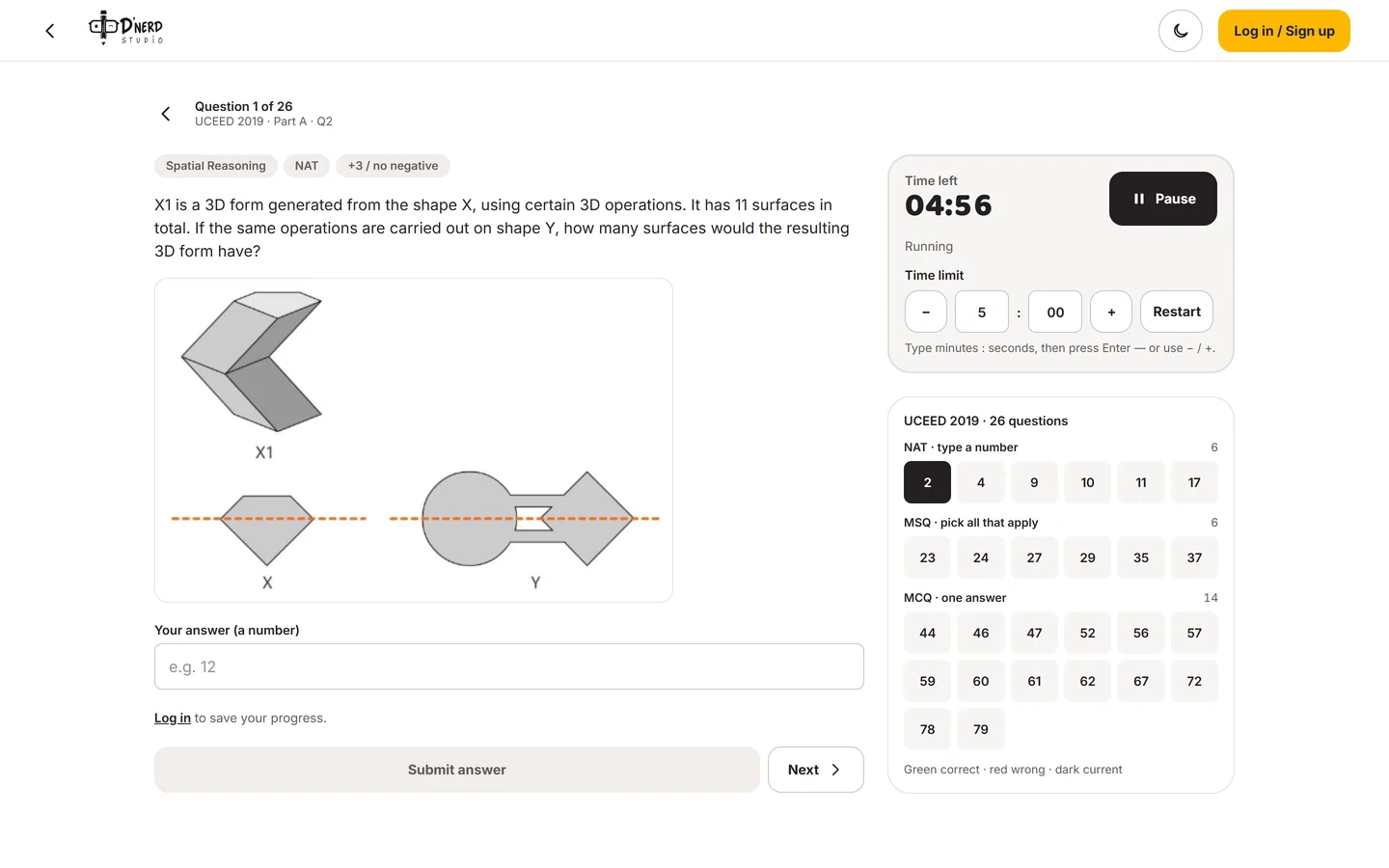
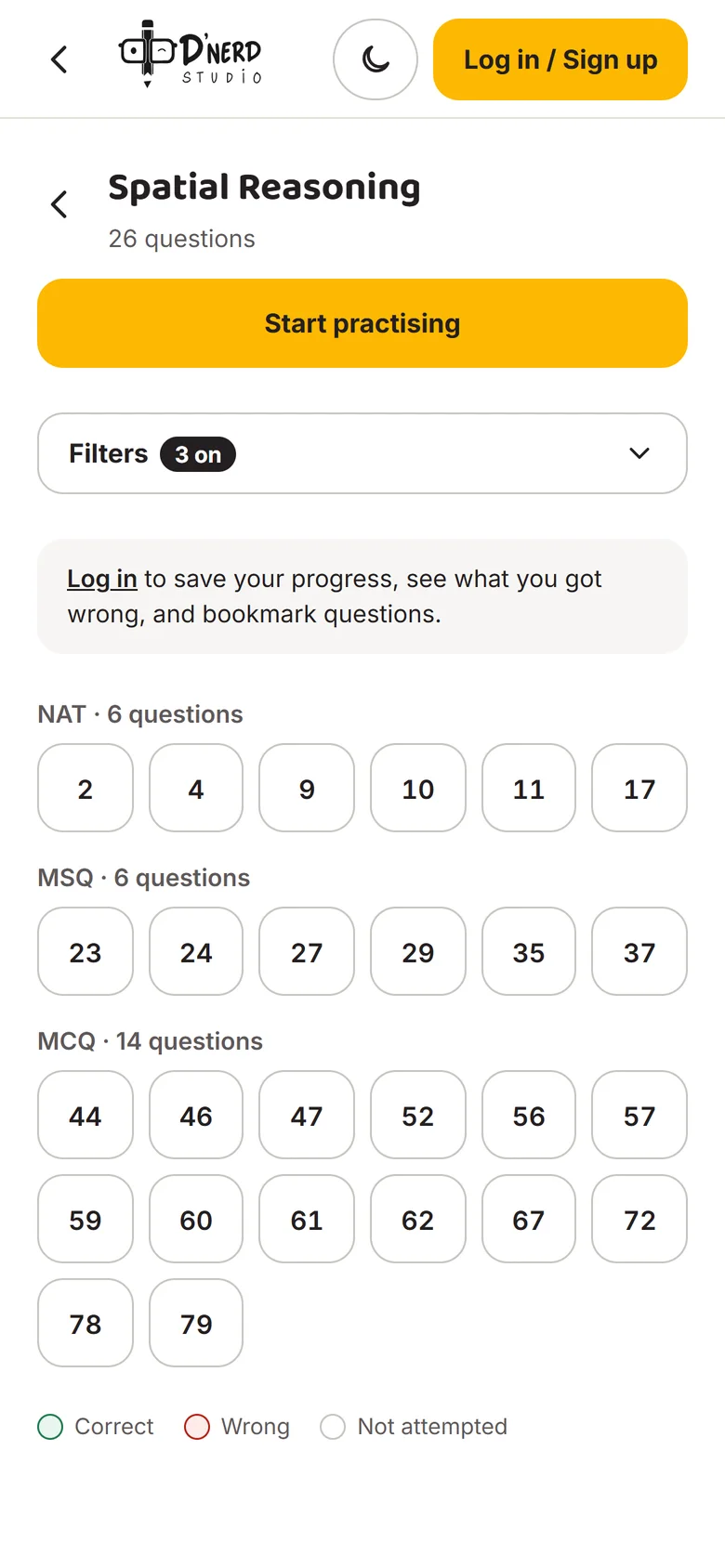
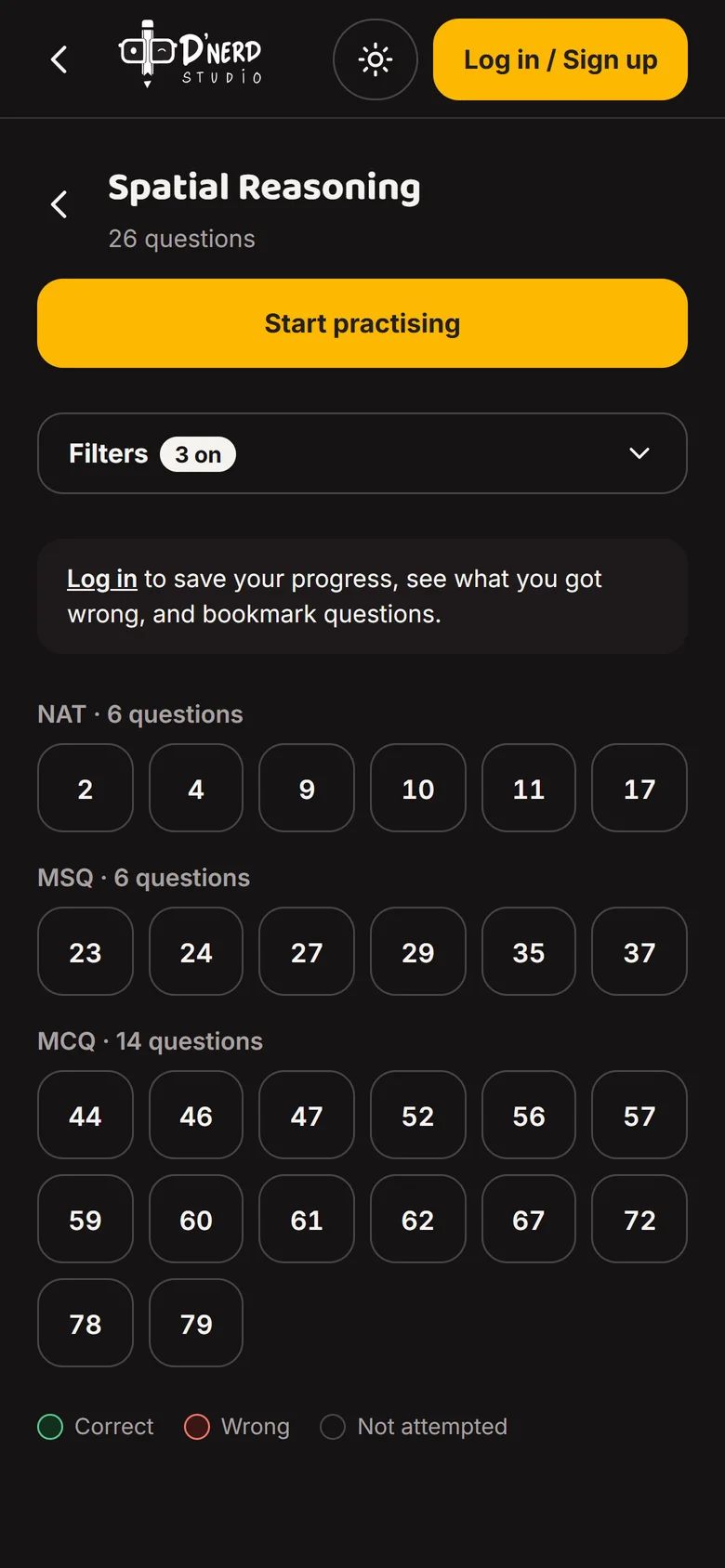
Spatial Reasoning, 2019: 26 questions, sorted into NAT, MSQ and MCQ. Just that topic, just that year.
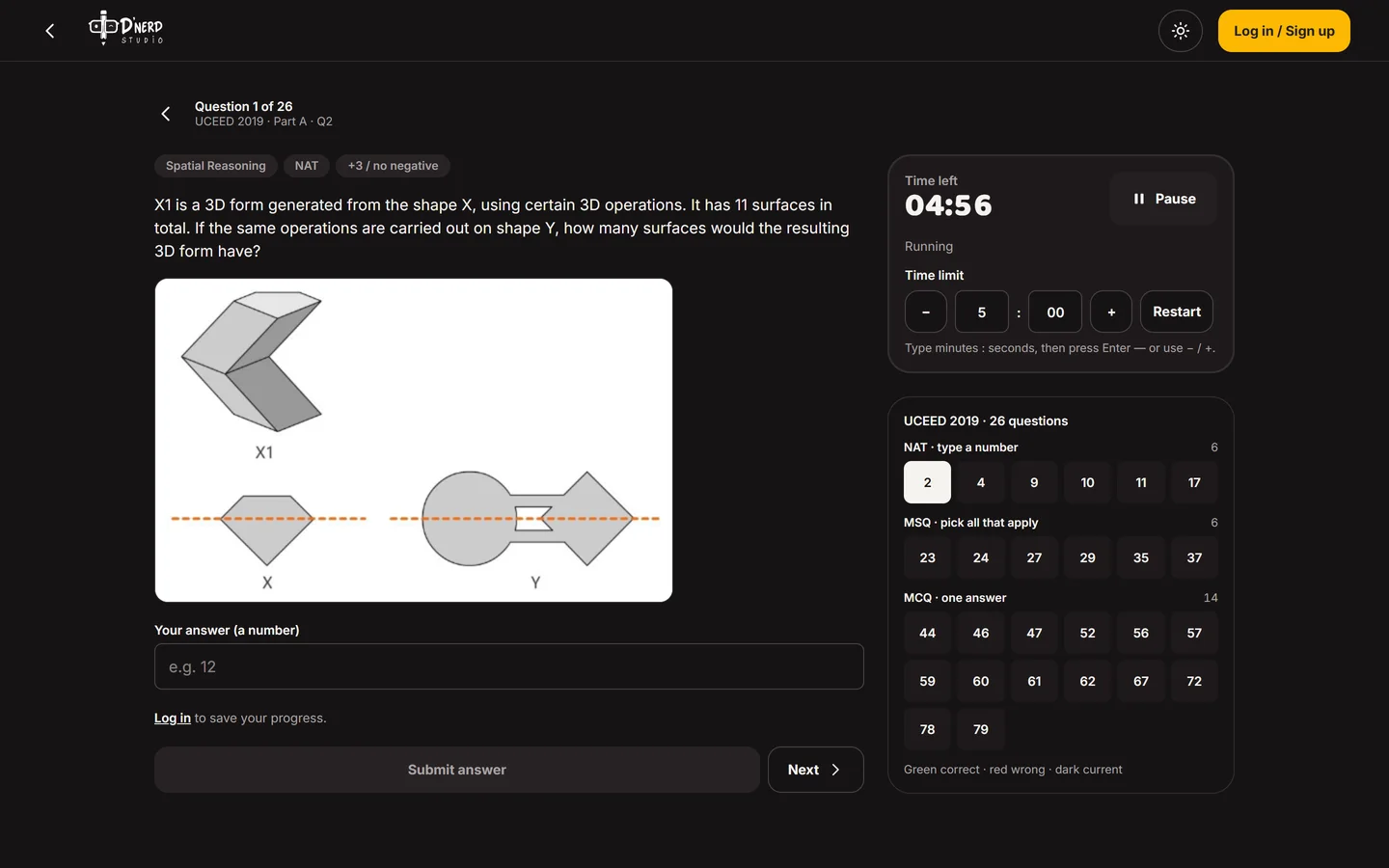
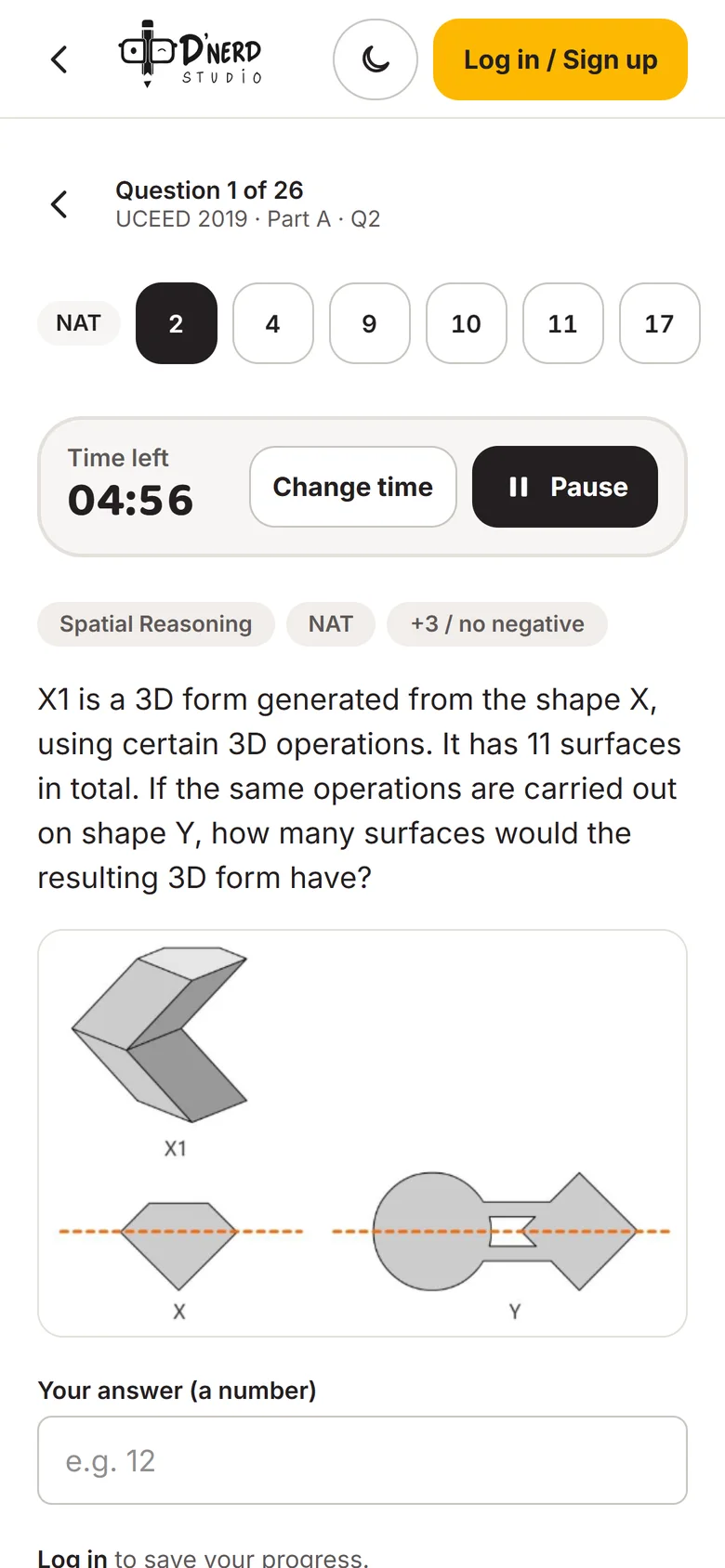
The real question with its marking, a question palette and a timer, exactly as the paper sets it.
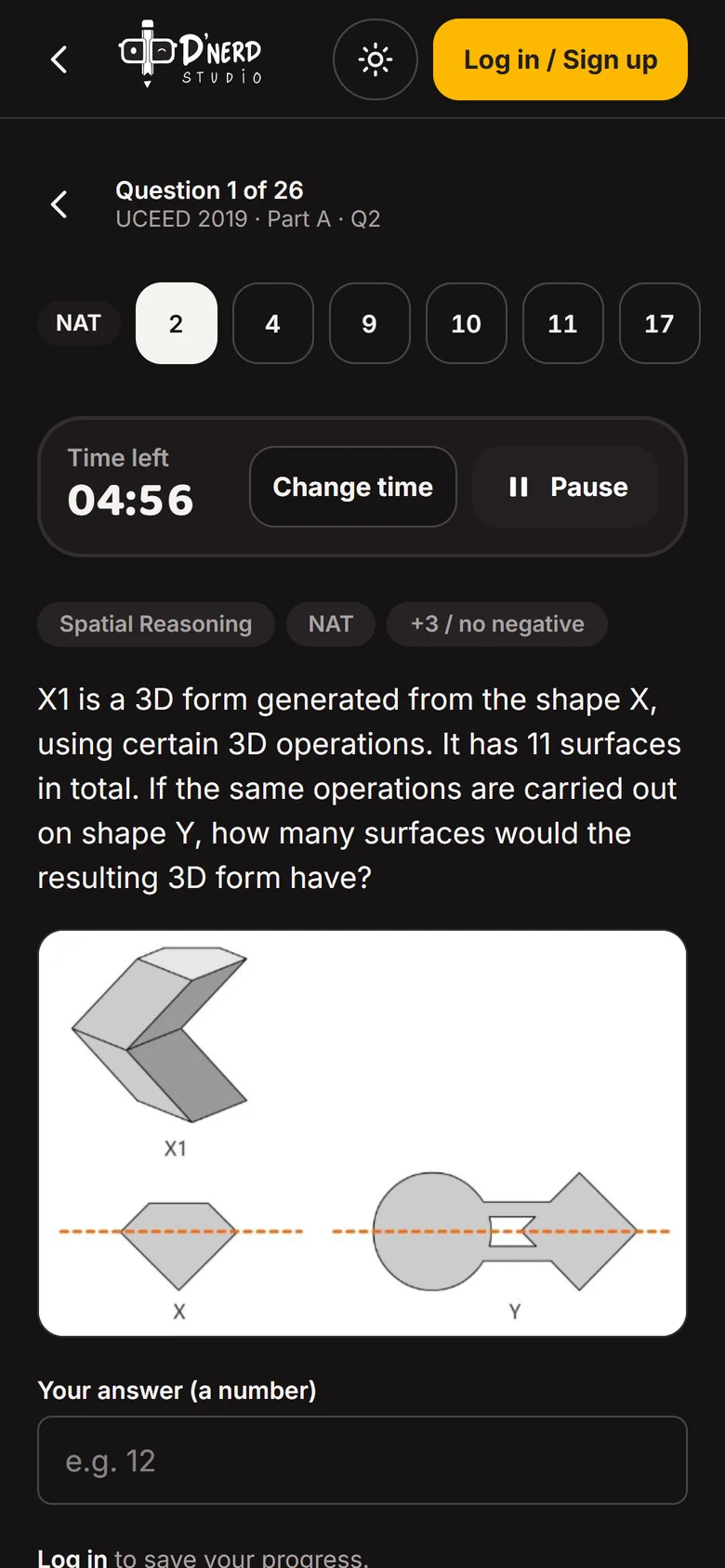
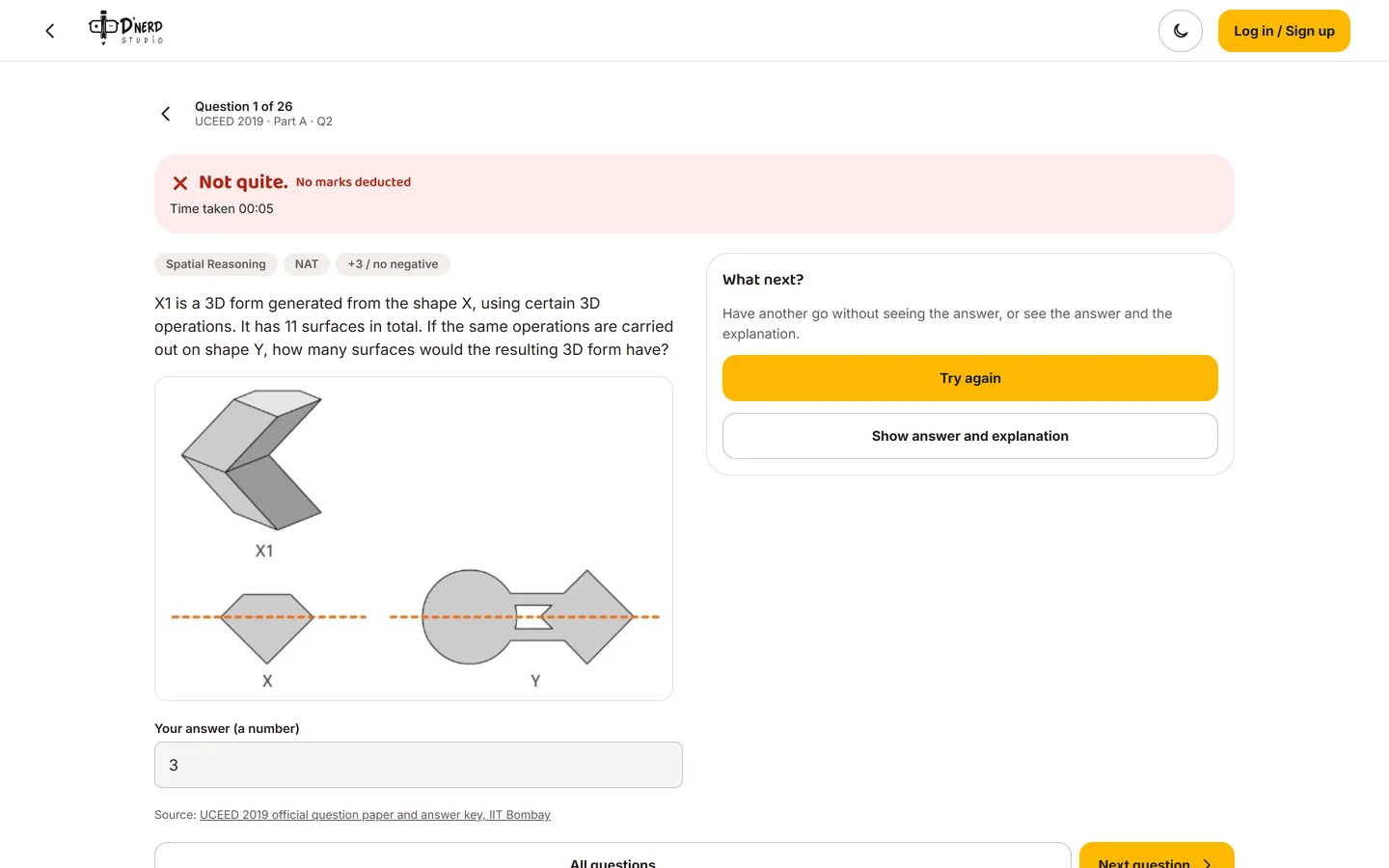
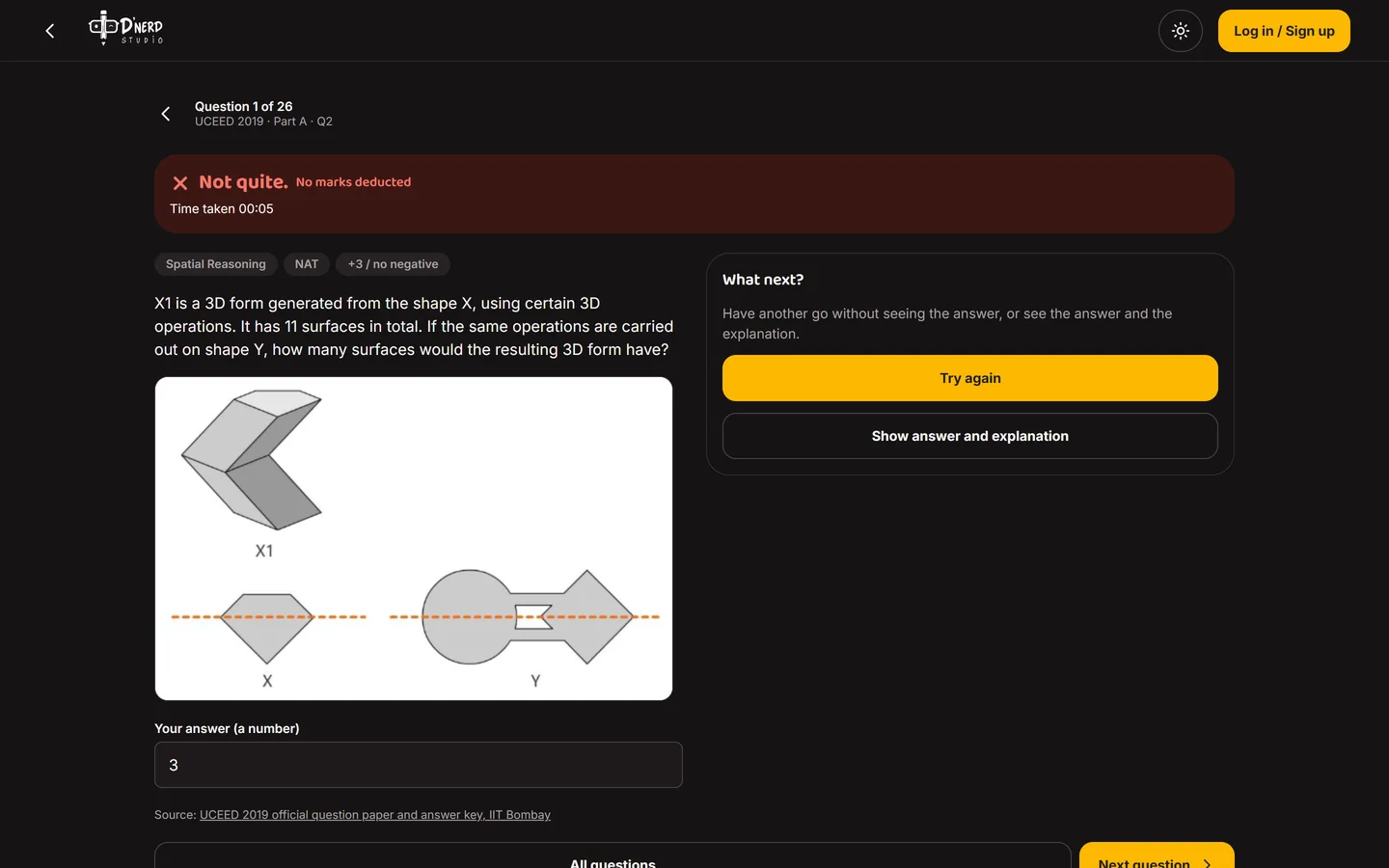
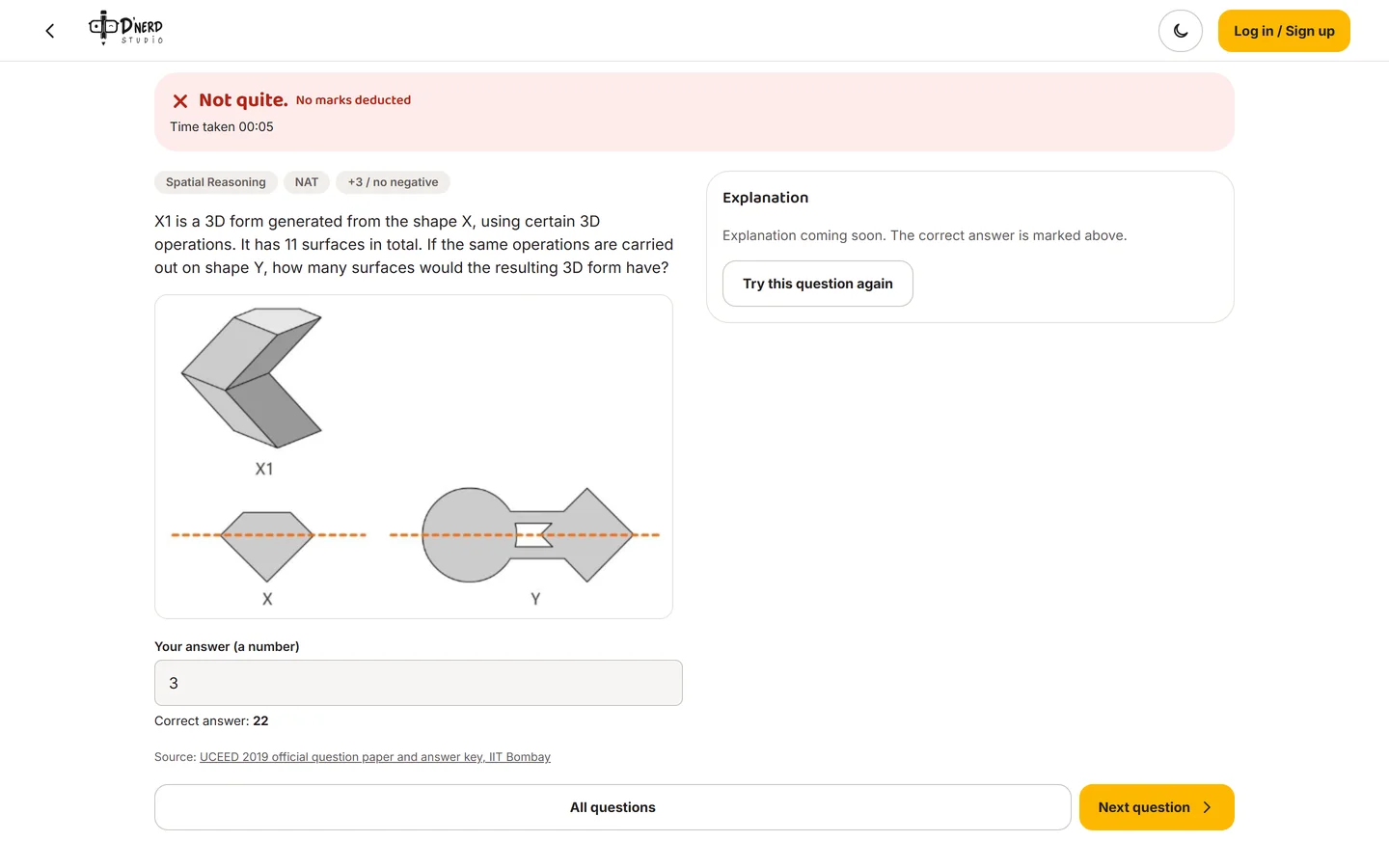
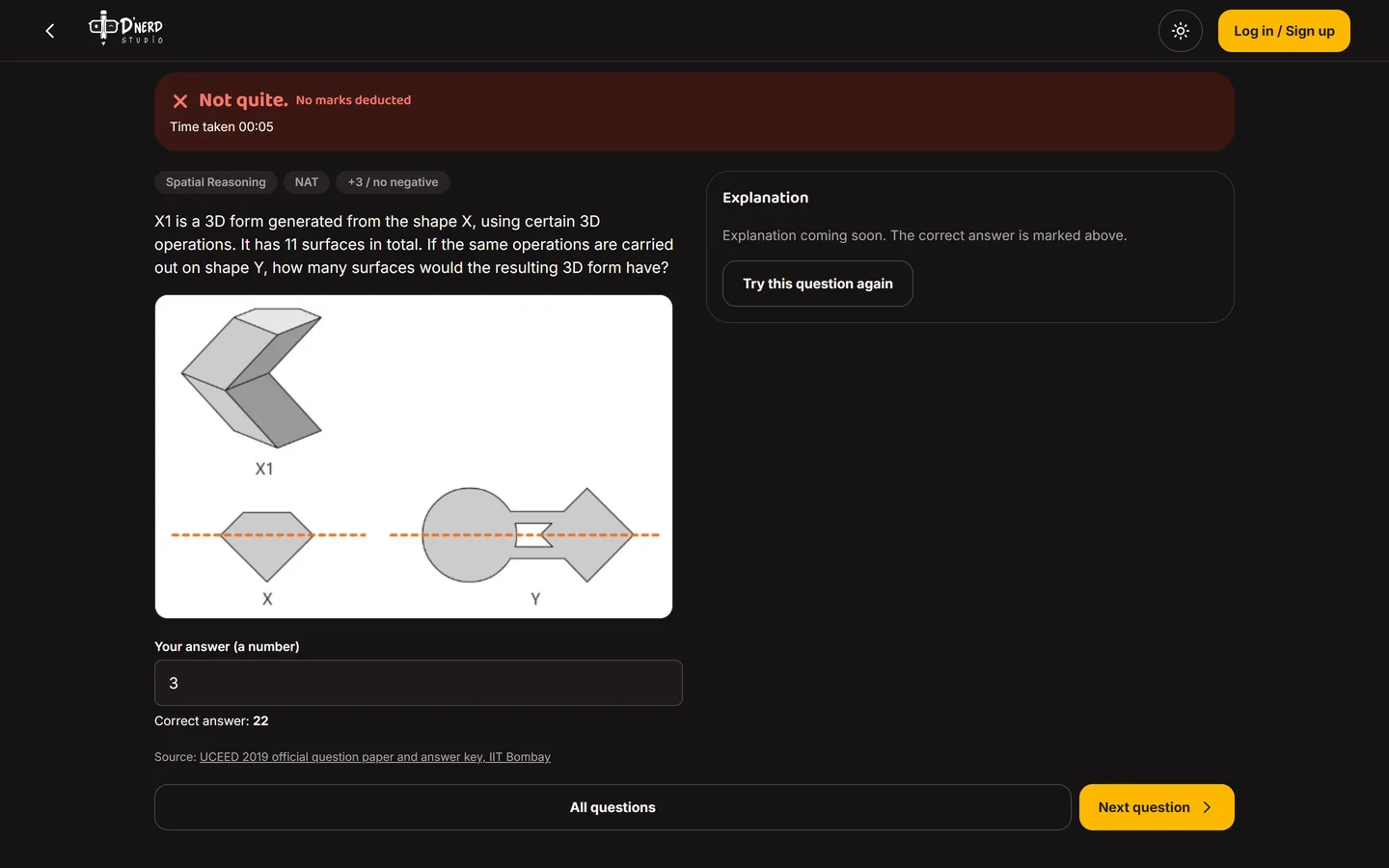
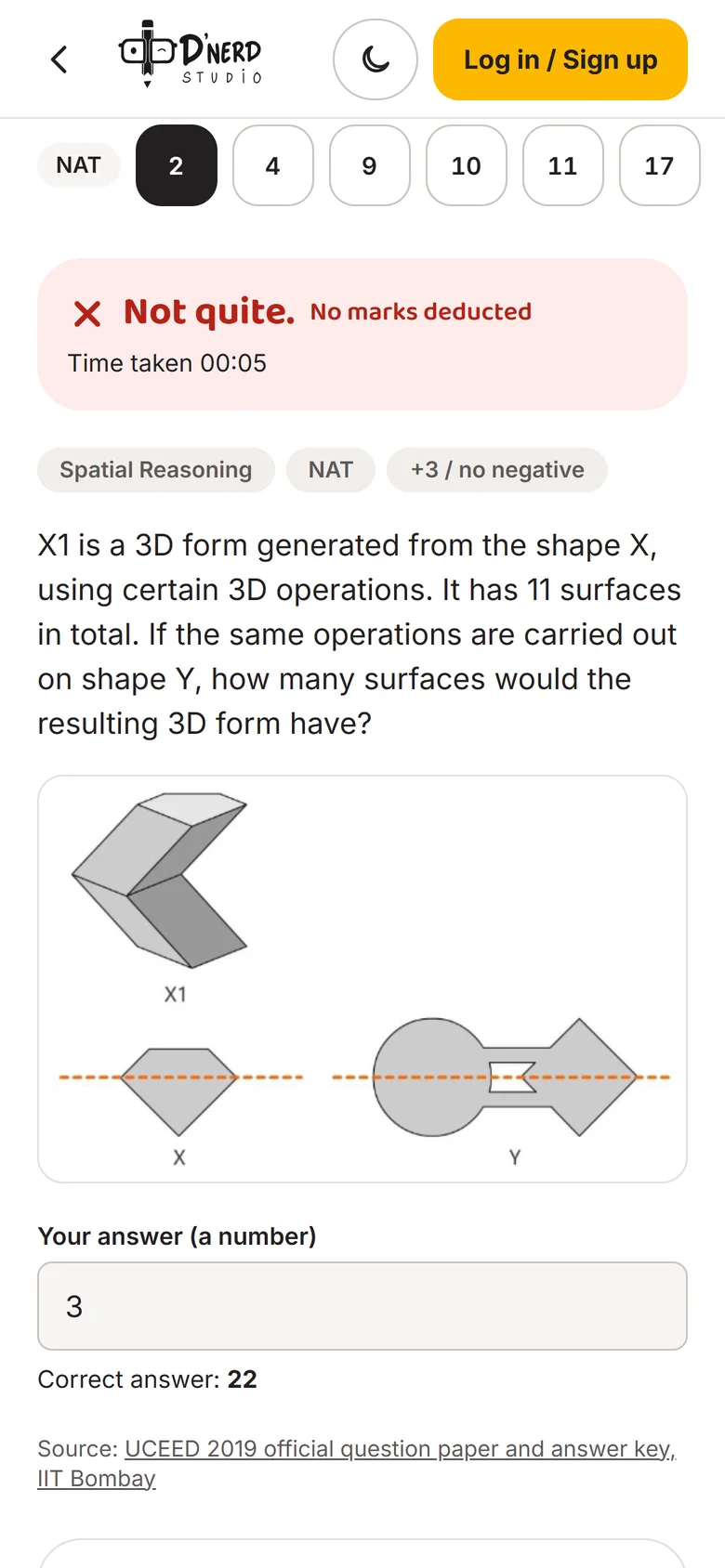
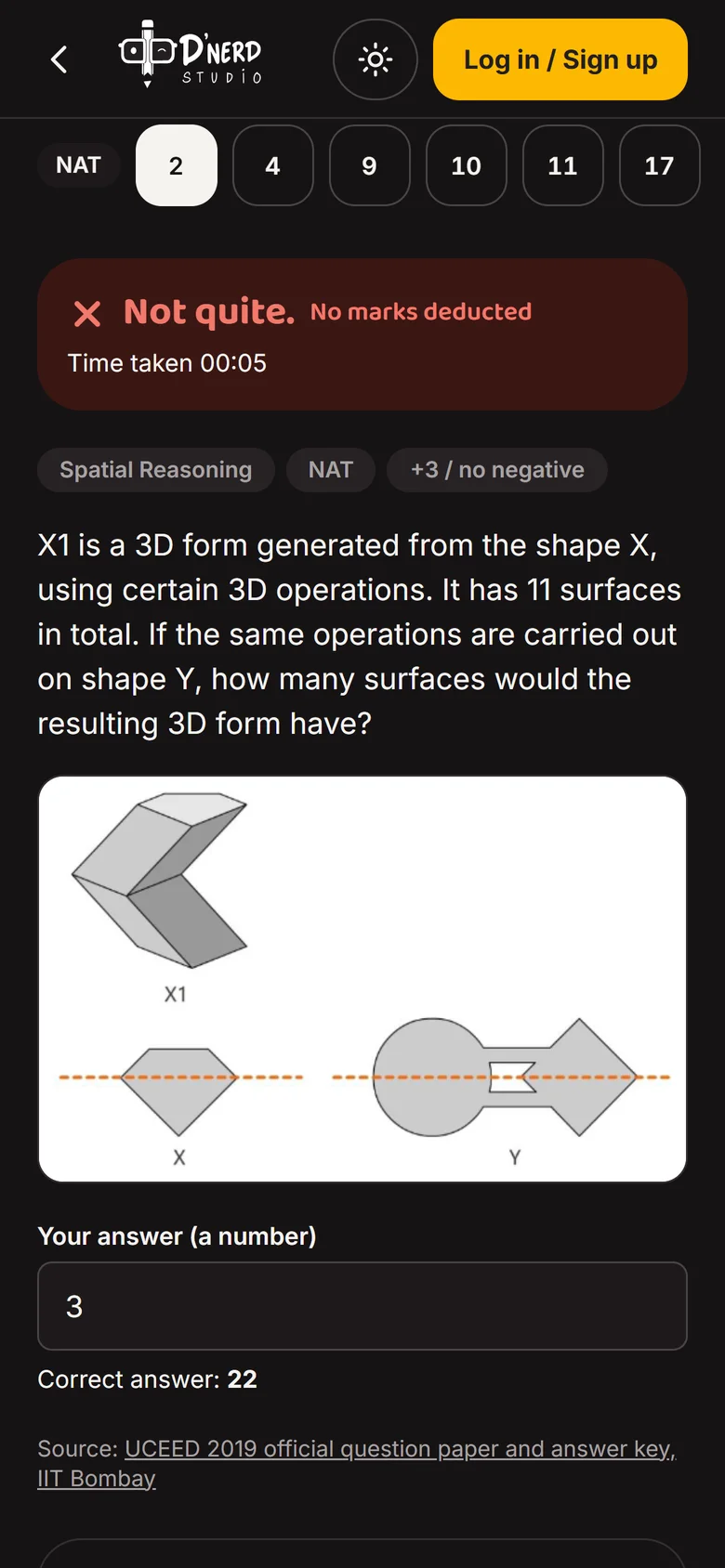
"Not quite. No marks deducted." The big button is Try again. The answer is the second choice, so the student keeps thinking.
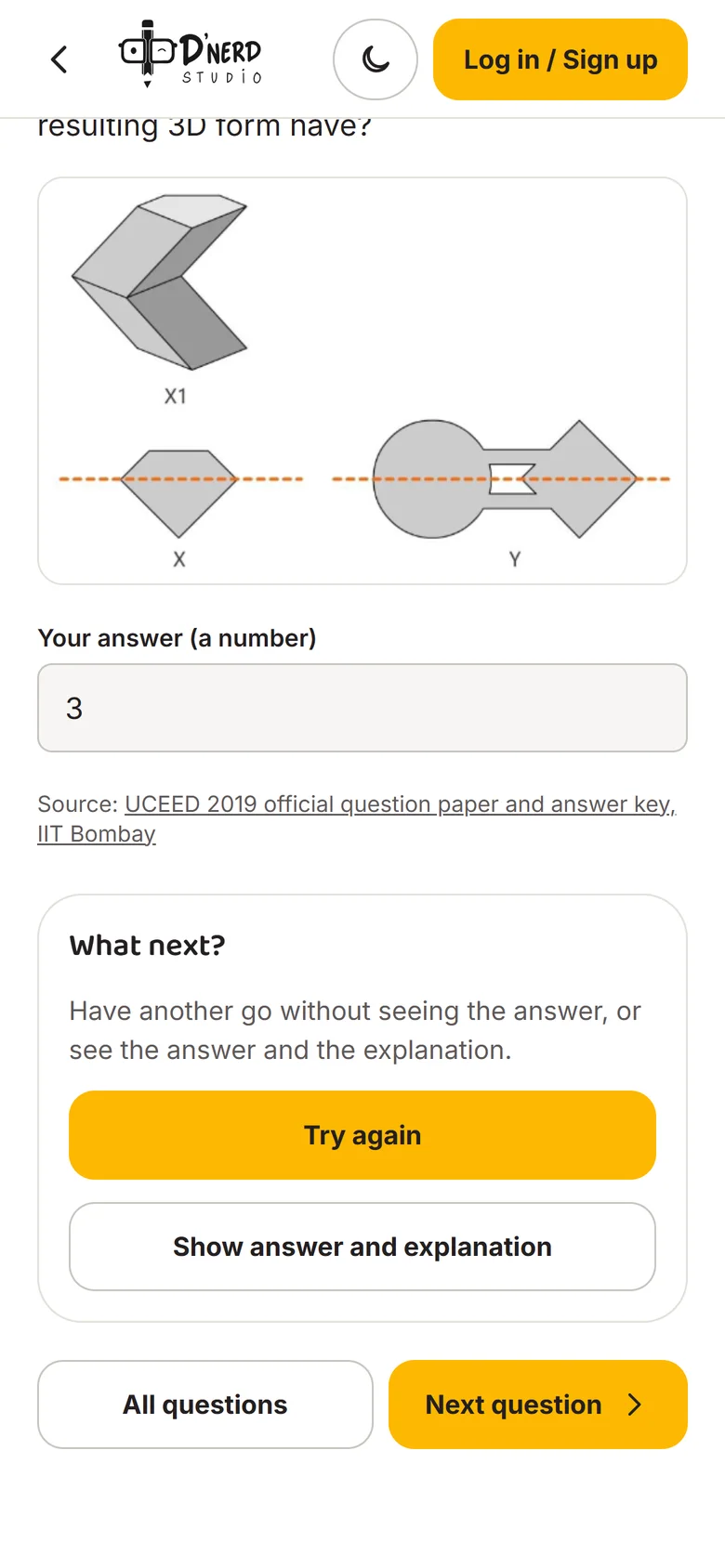
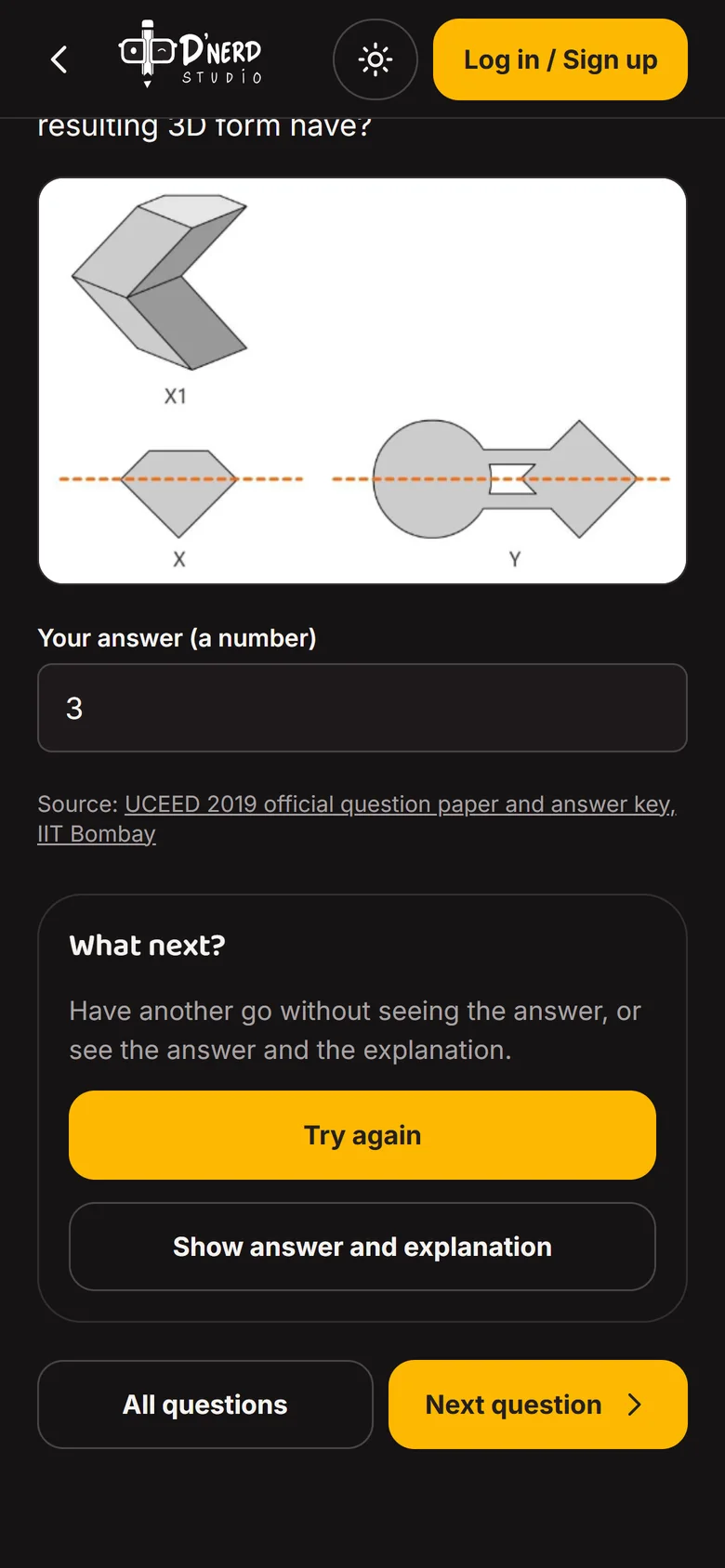
Only when they ask: the correct answer, the official source and the next question. Questions without a written explanation yet say so honestly.
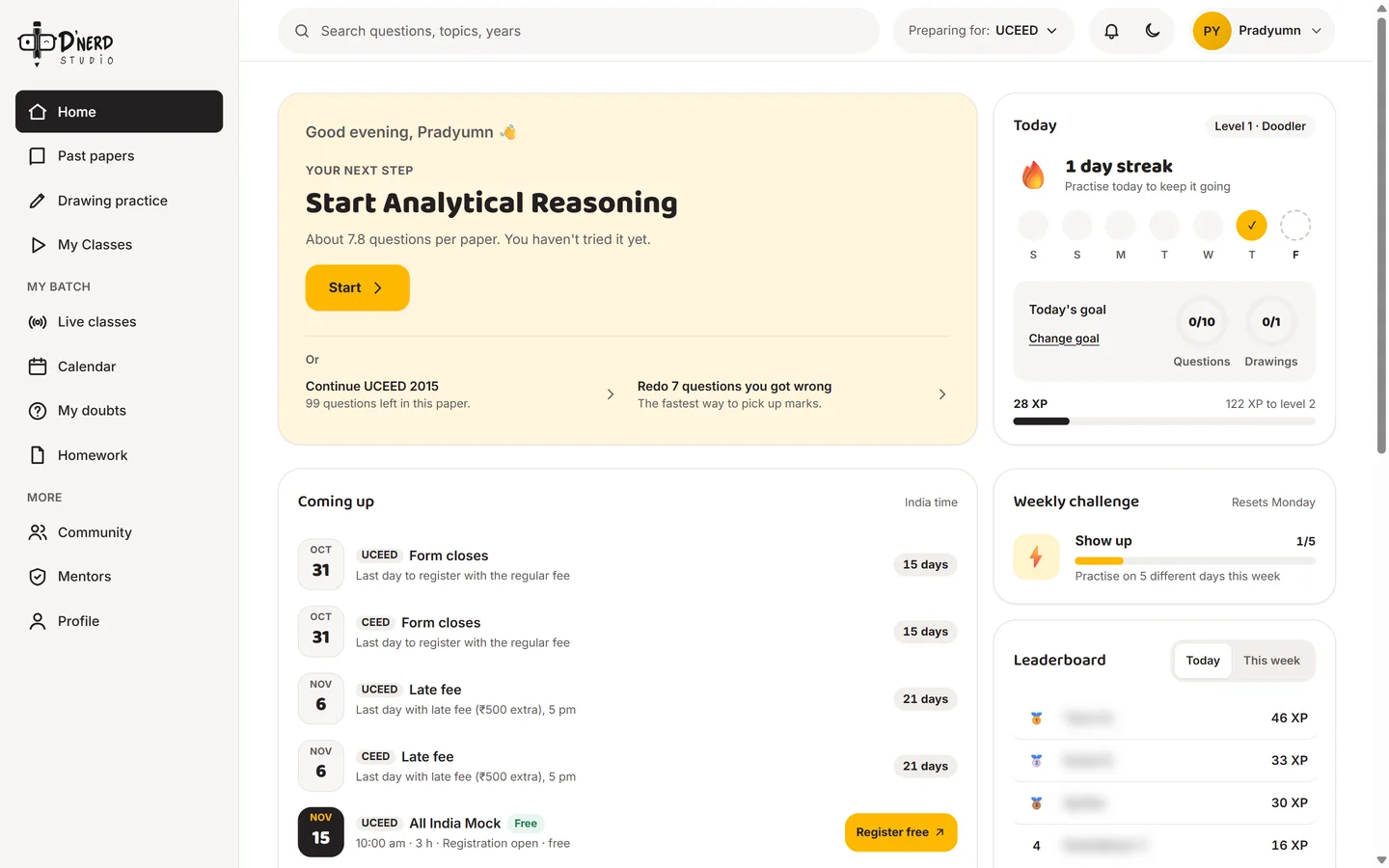
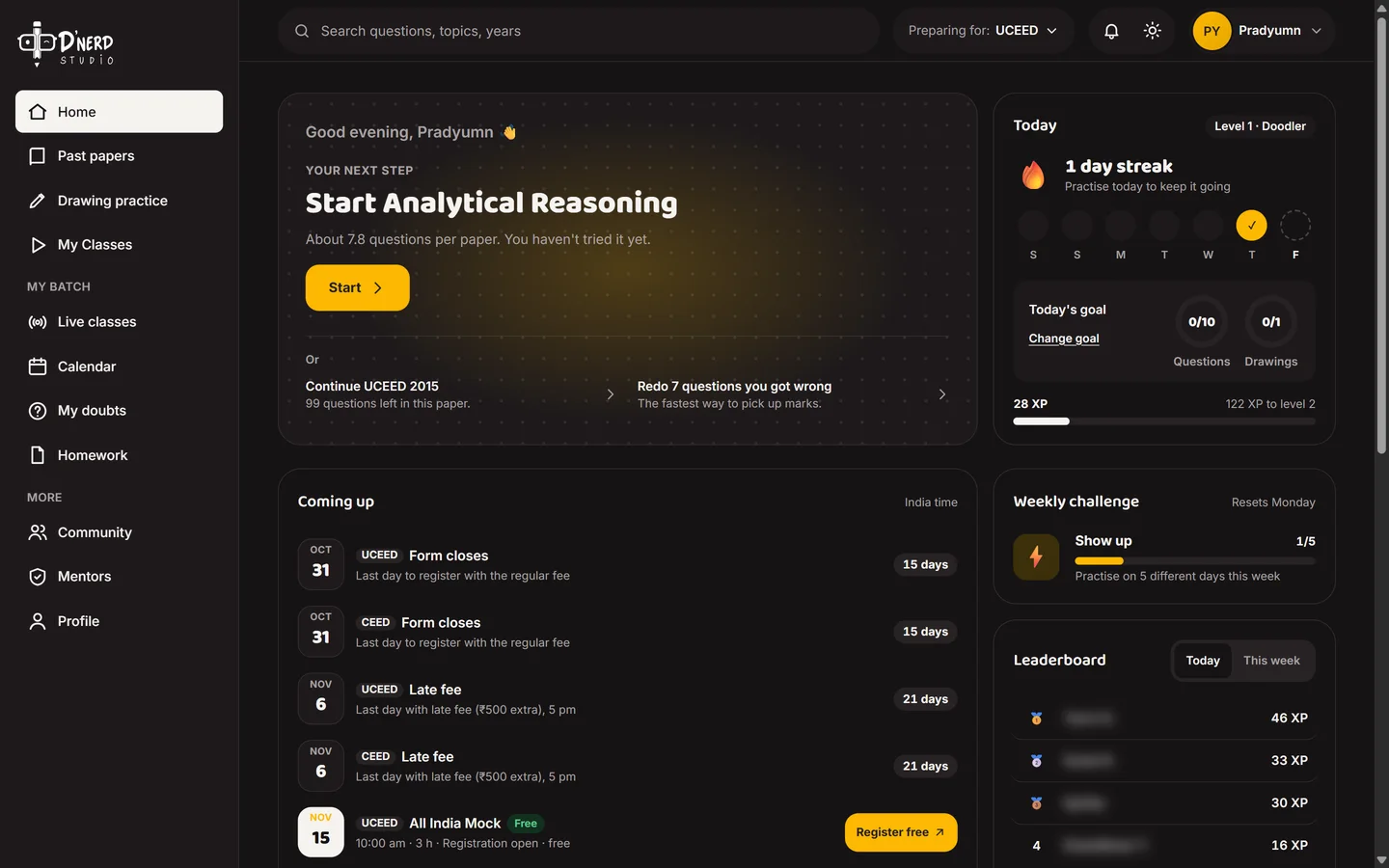
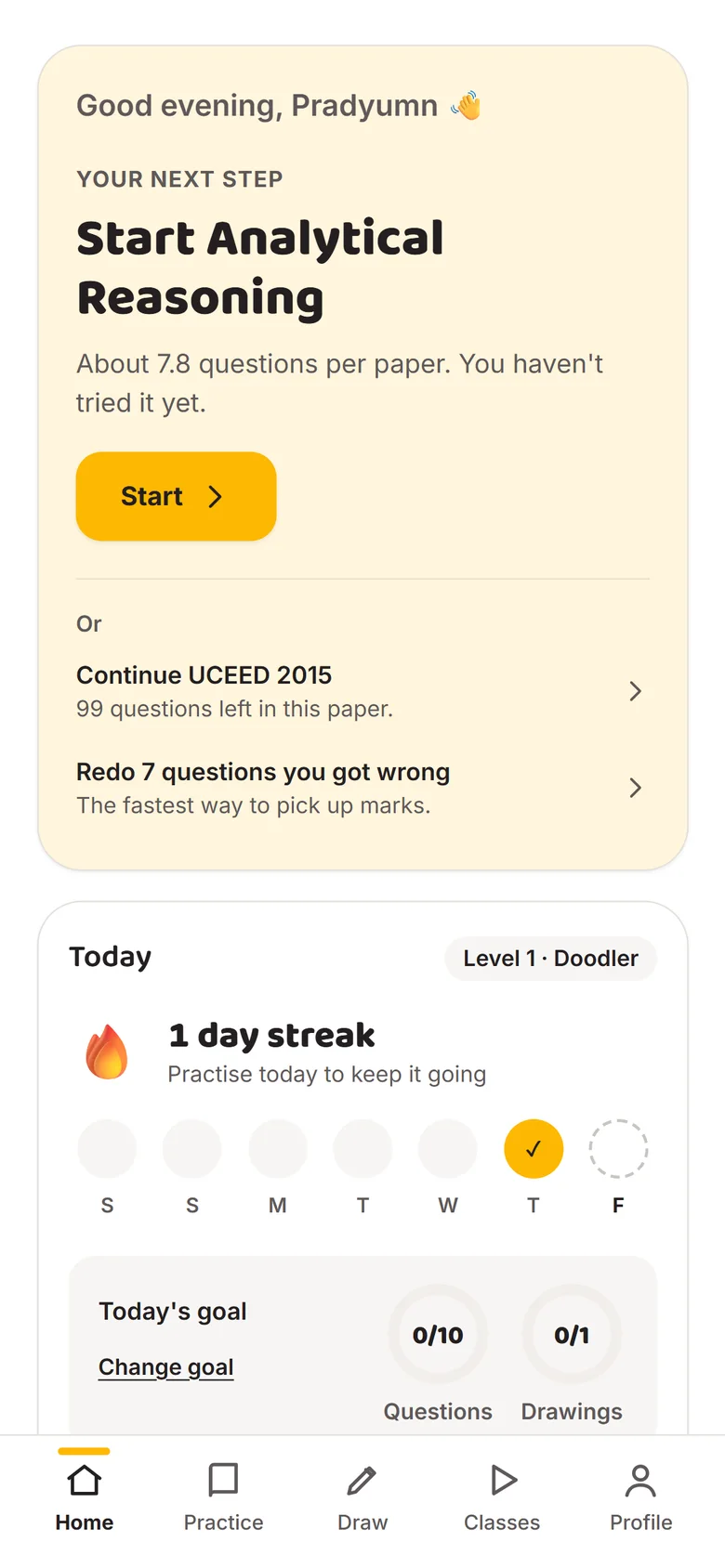
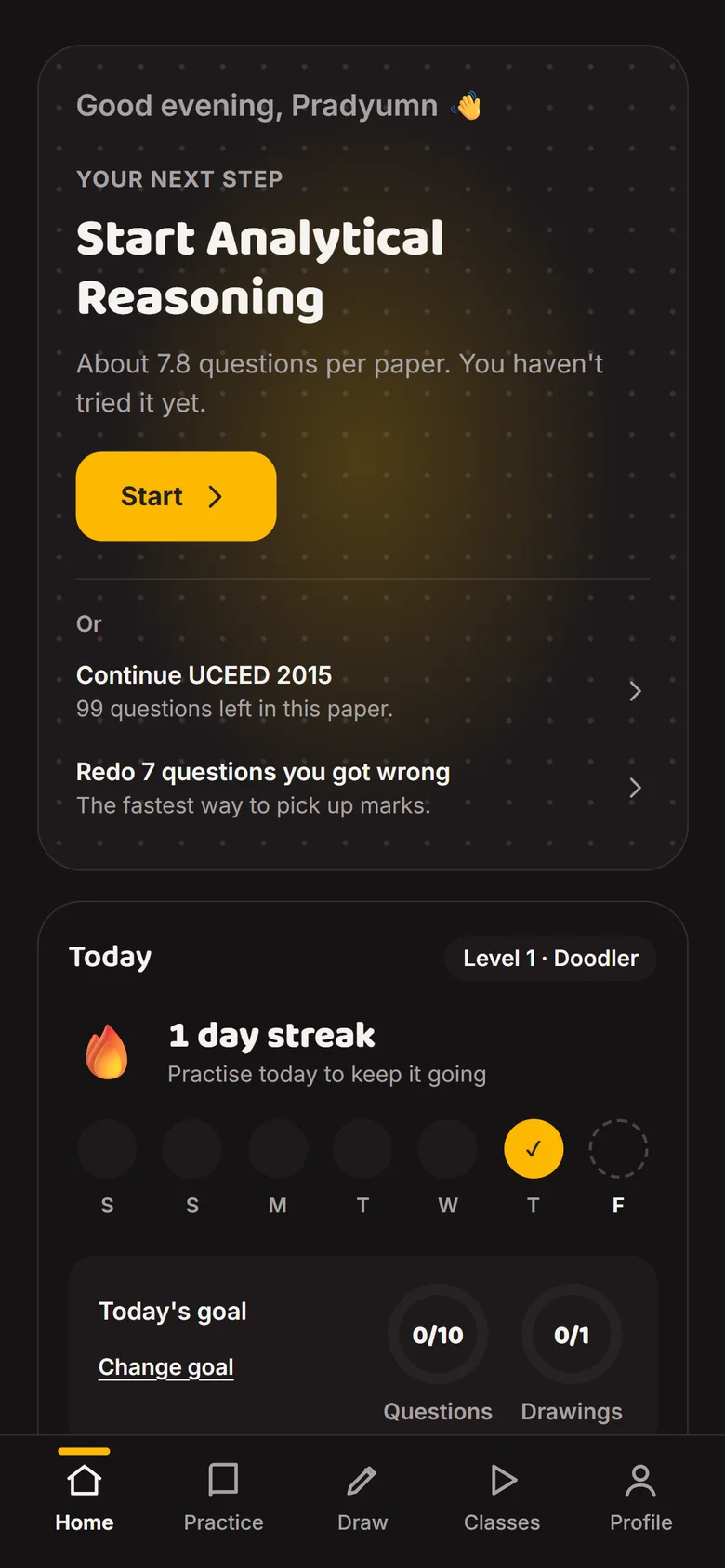
The next step, today's goal, a streak and "Redo 7 questions you got wrong". Students see how they're doing instead of guessing. Leaderboard names are blurred here.
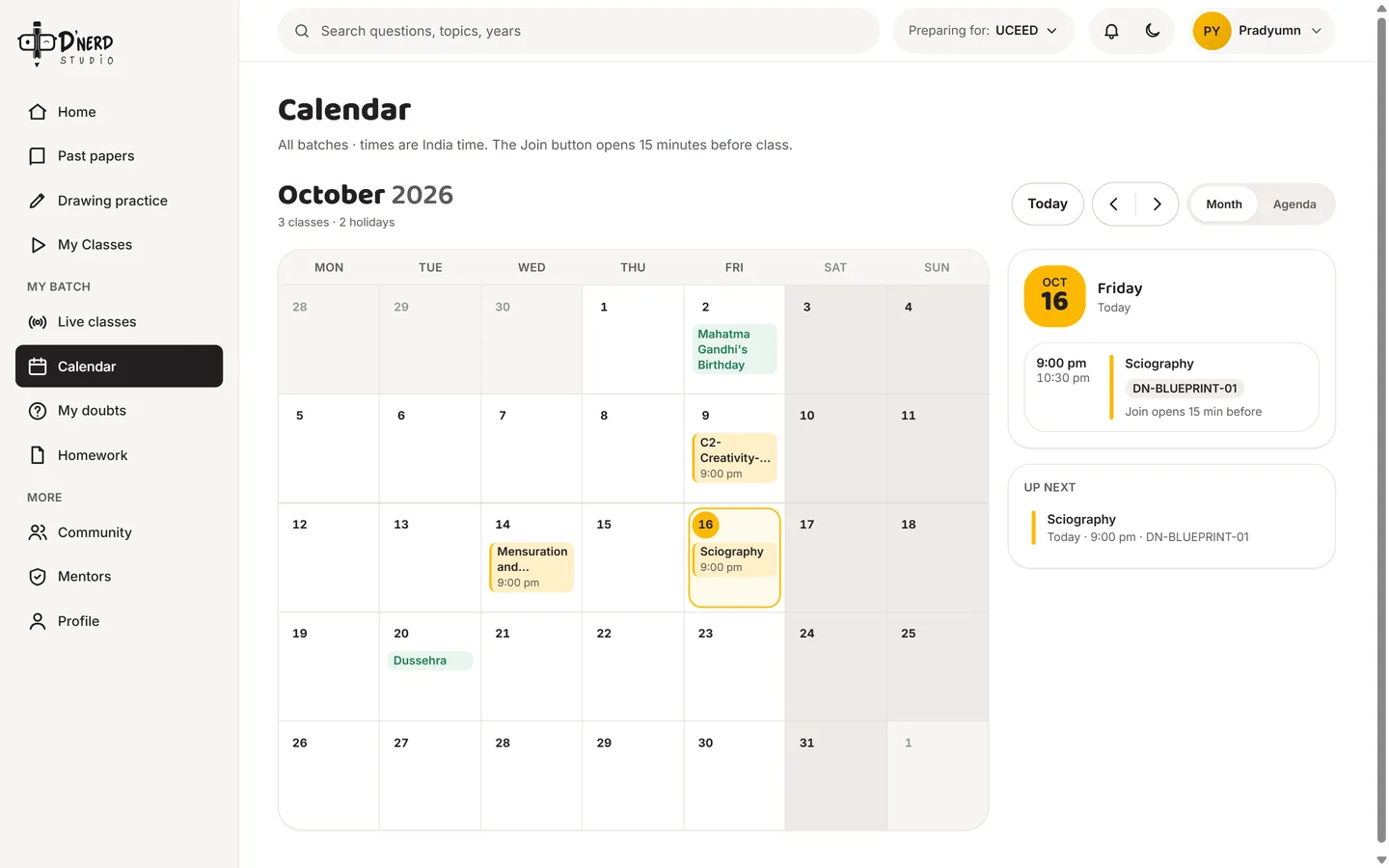
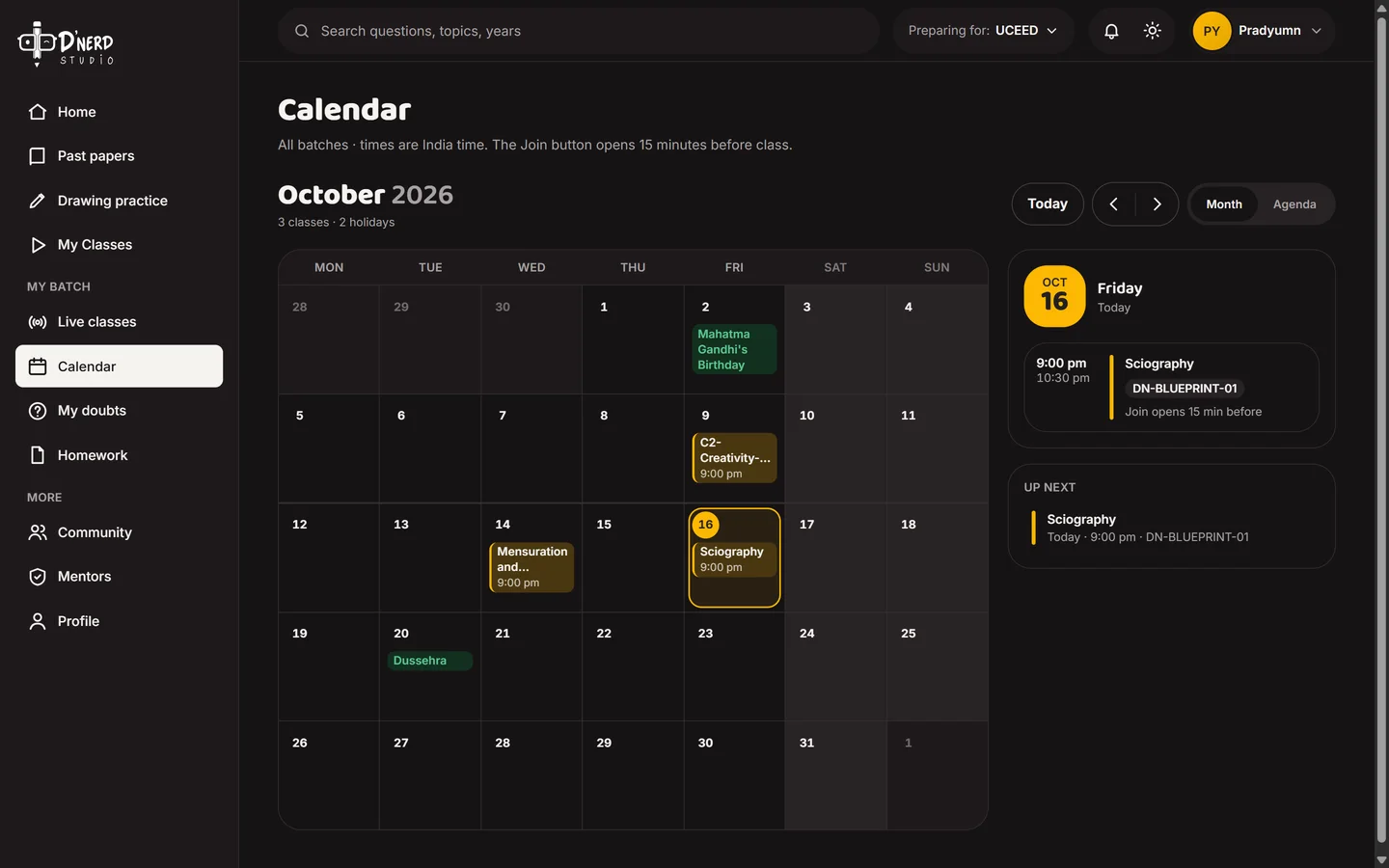
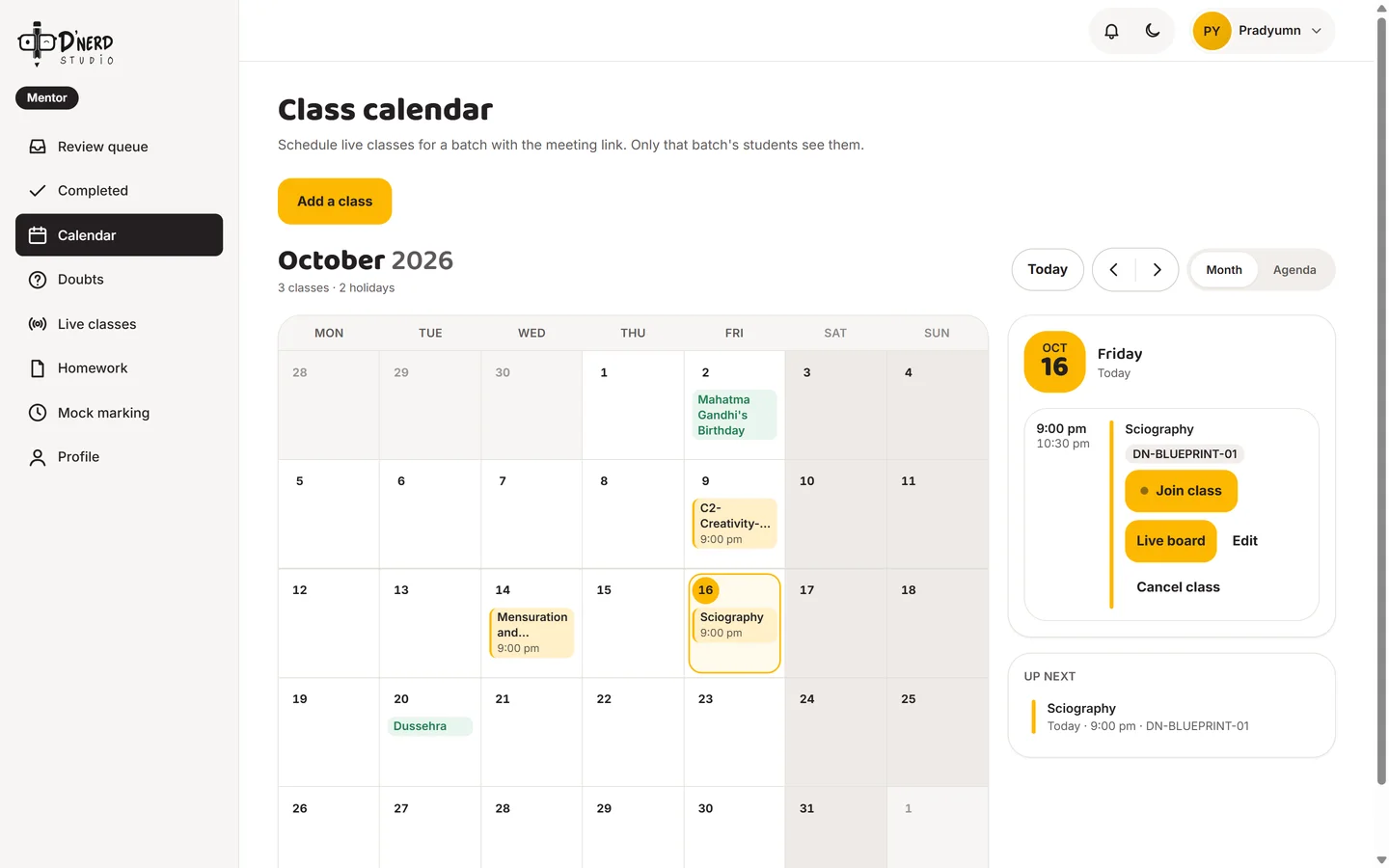
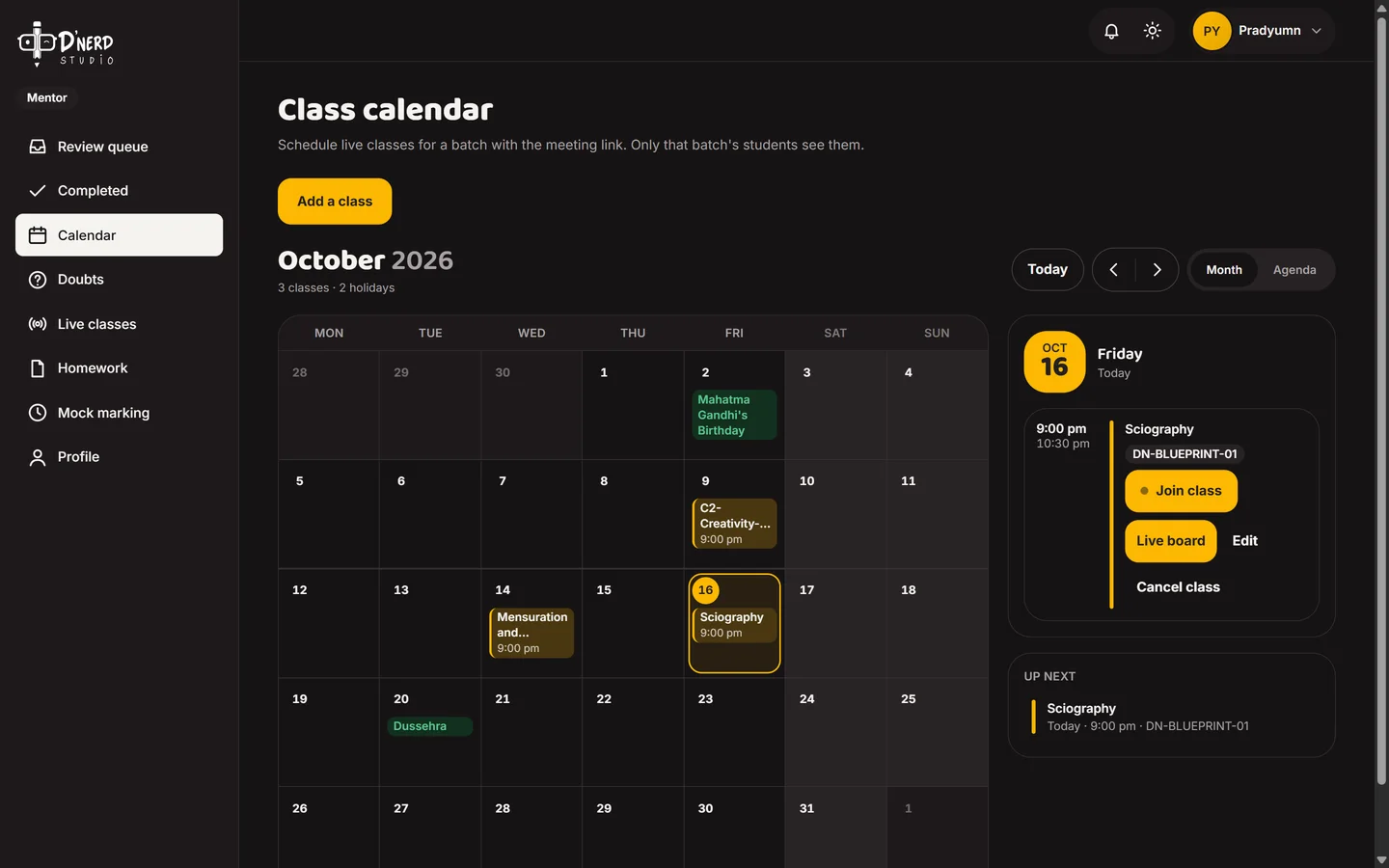
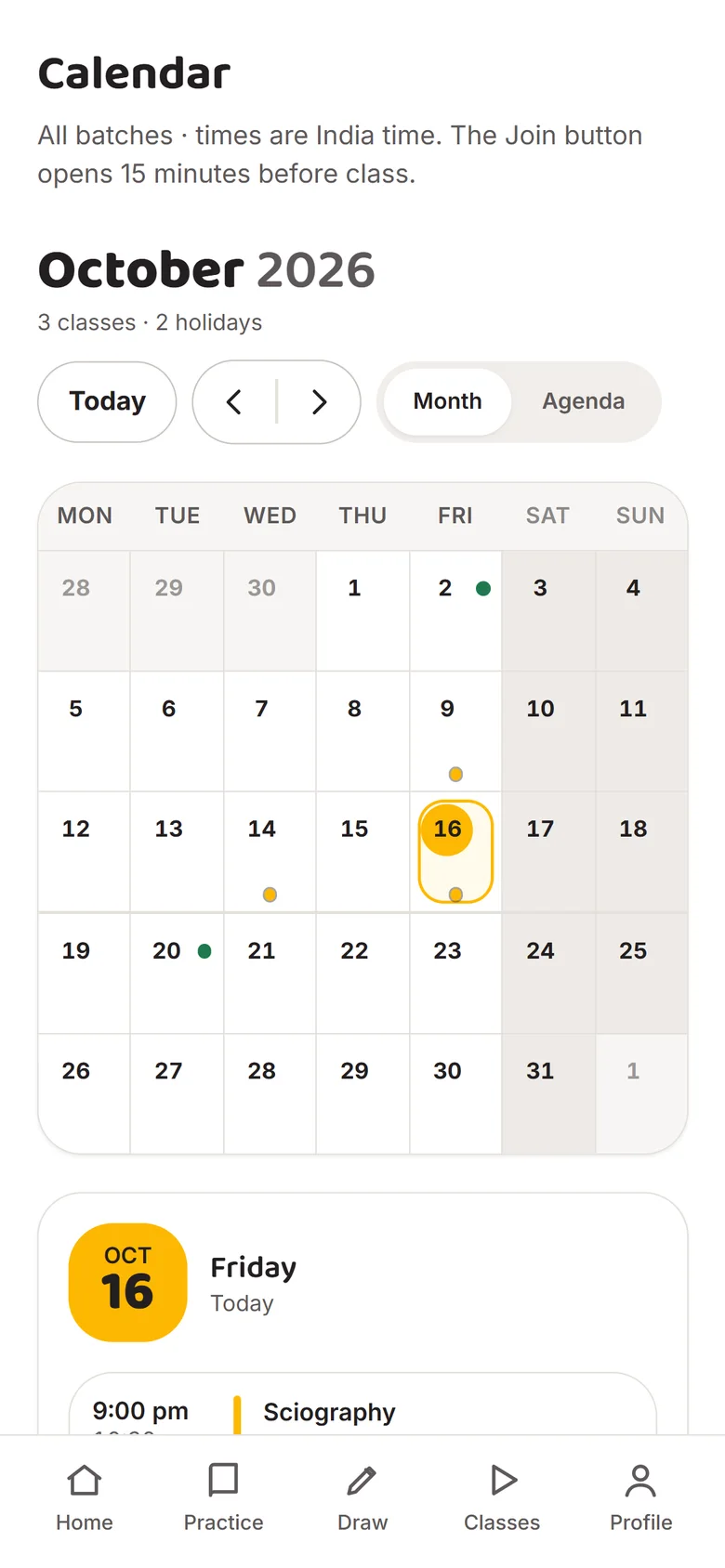
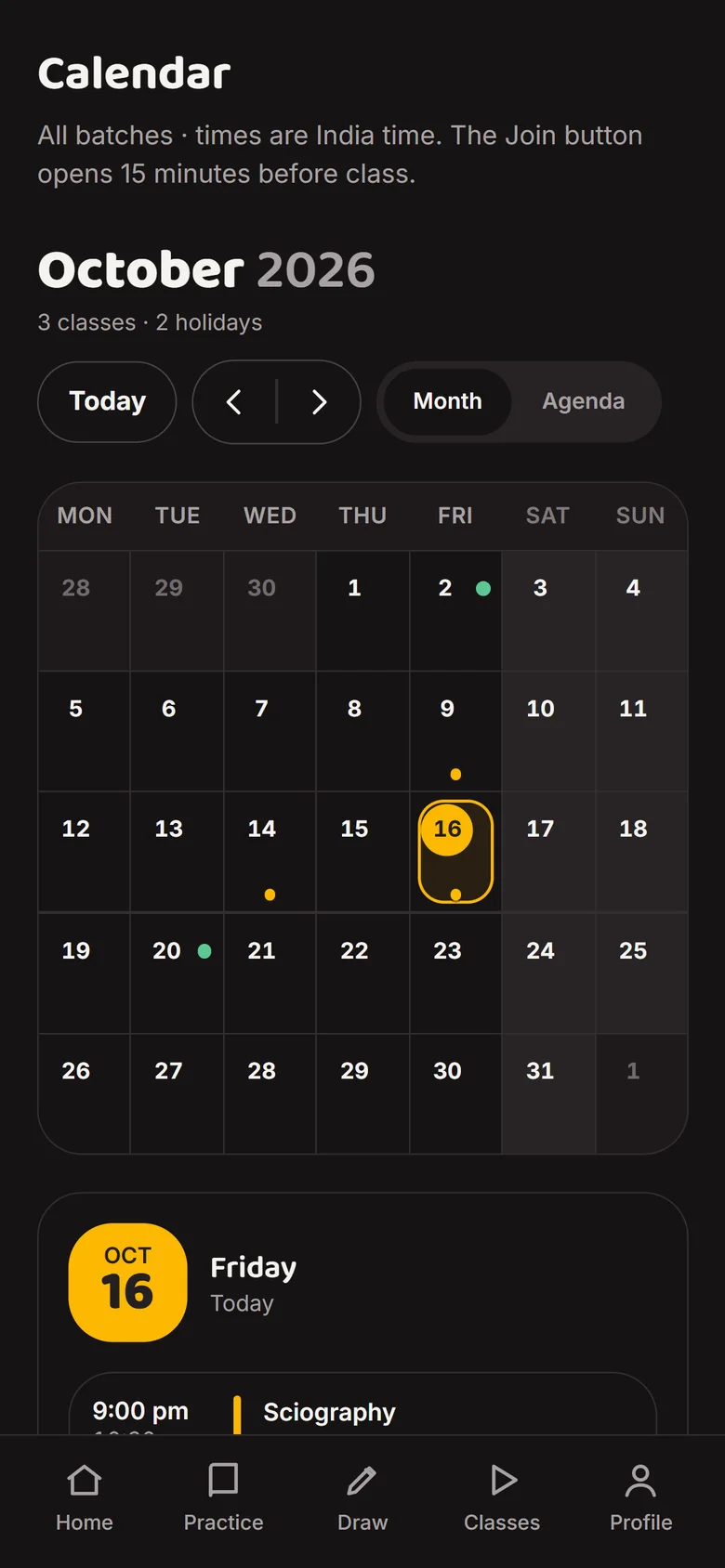
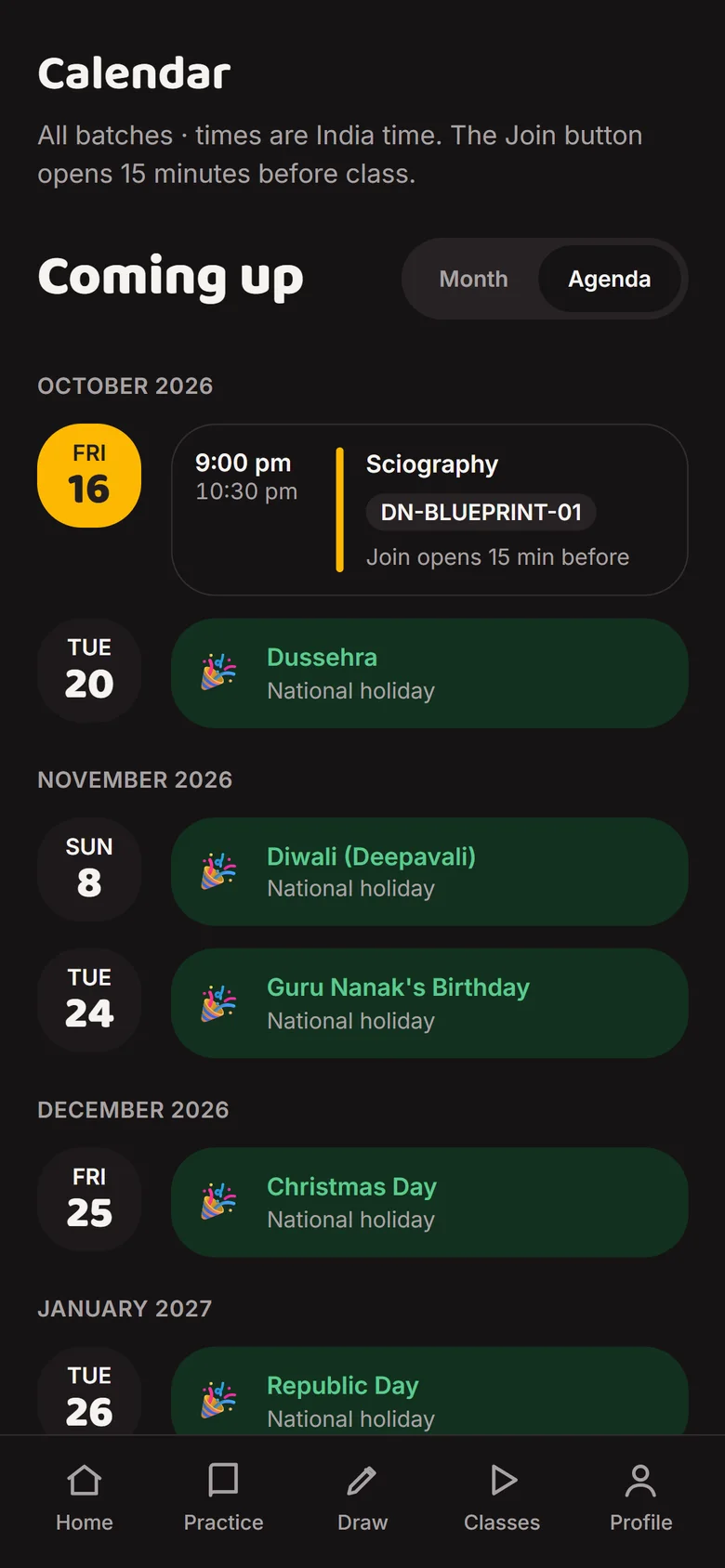
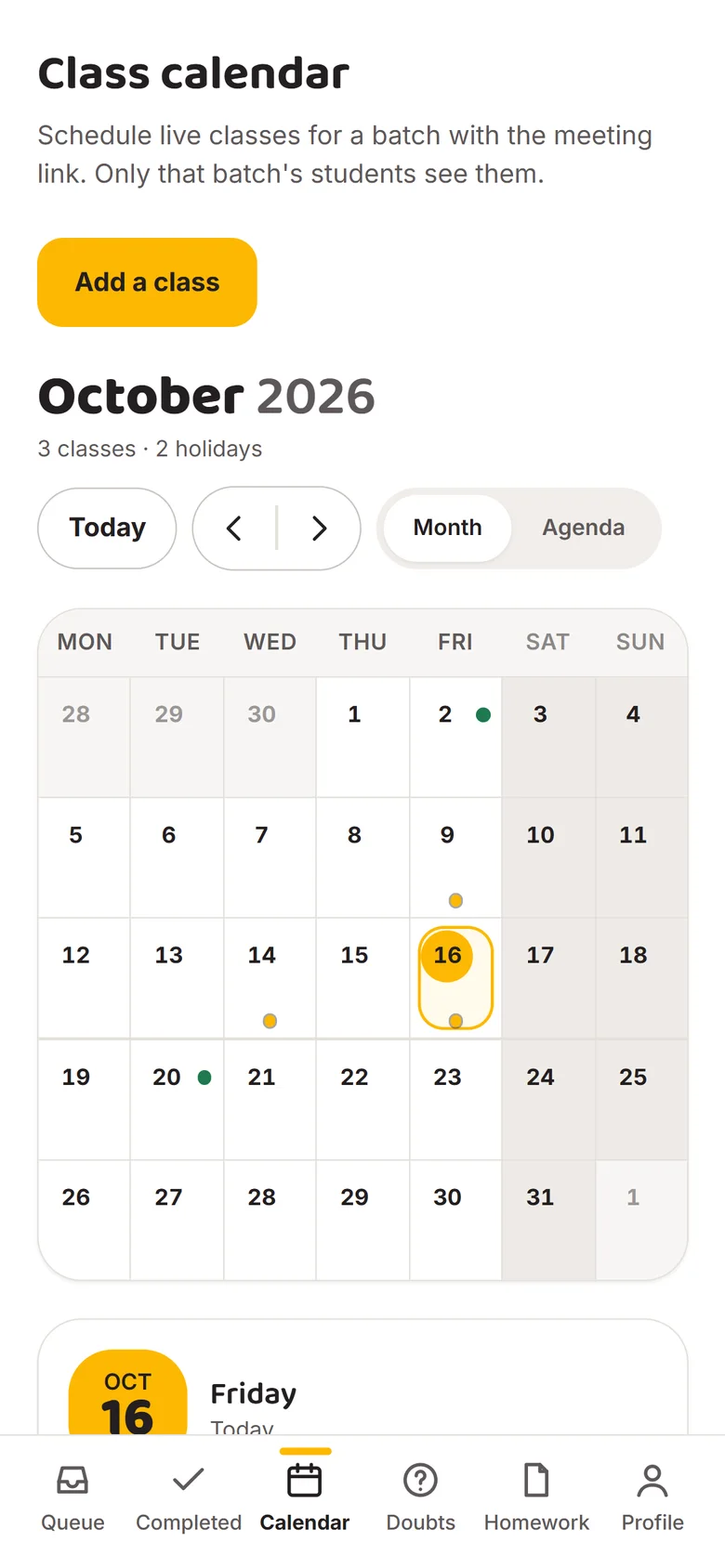
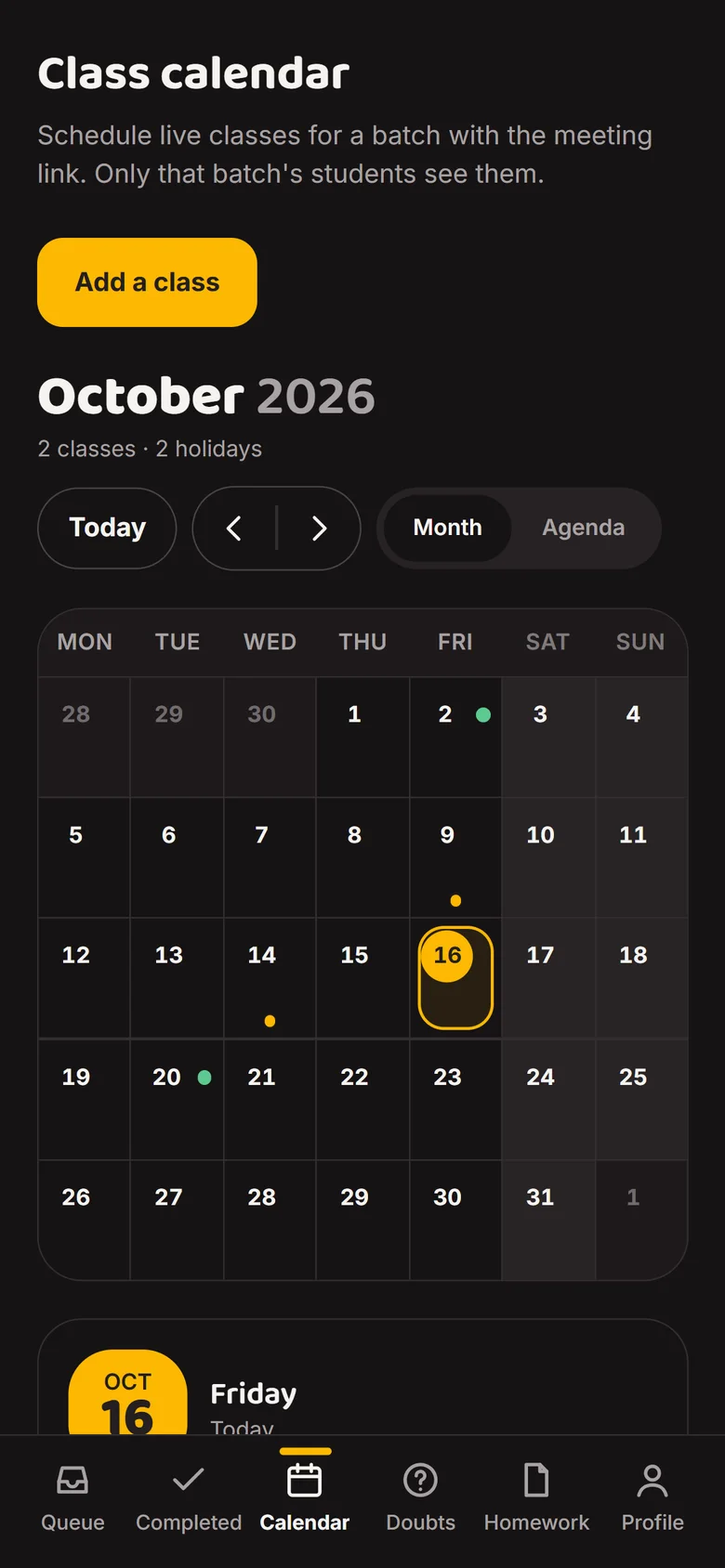
Every class and holiday for the batch, in India time. Today's class is highlighted on the right.
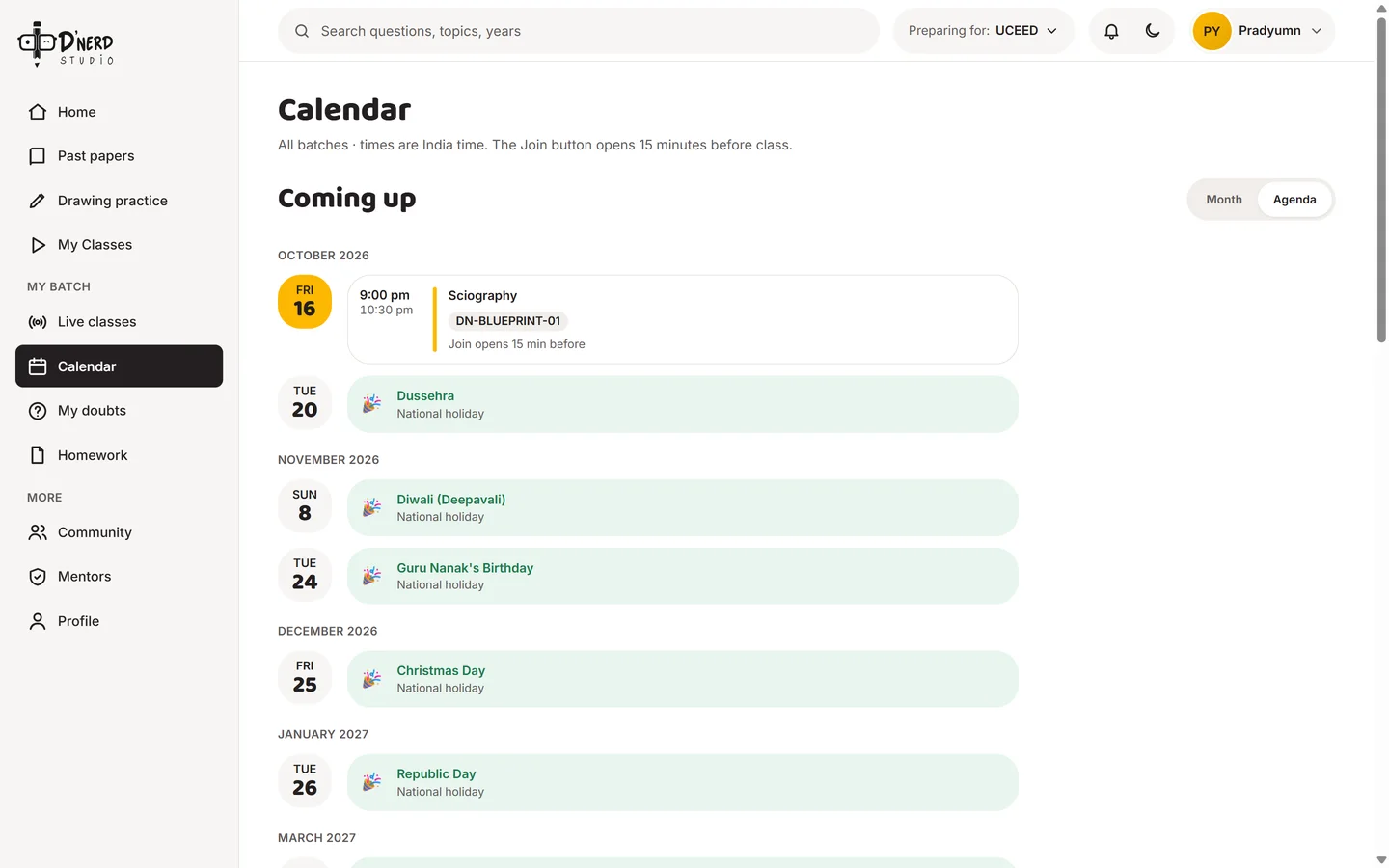
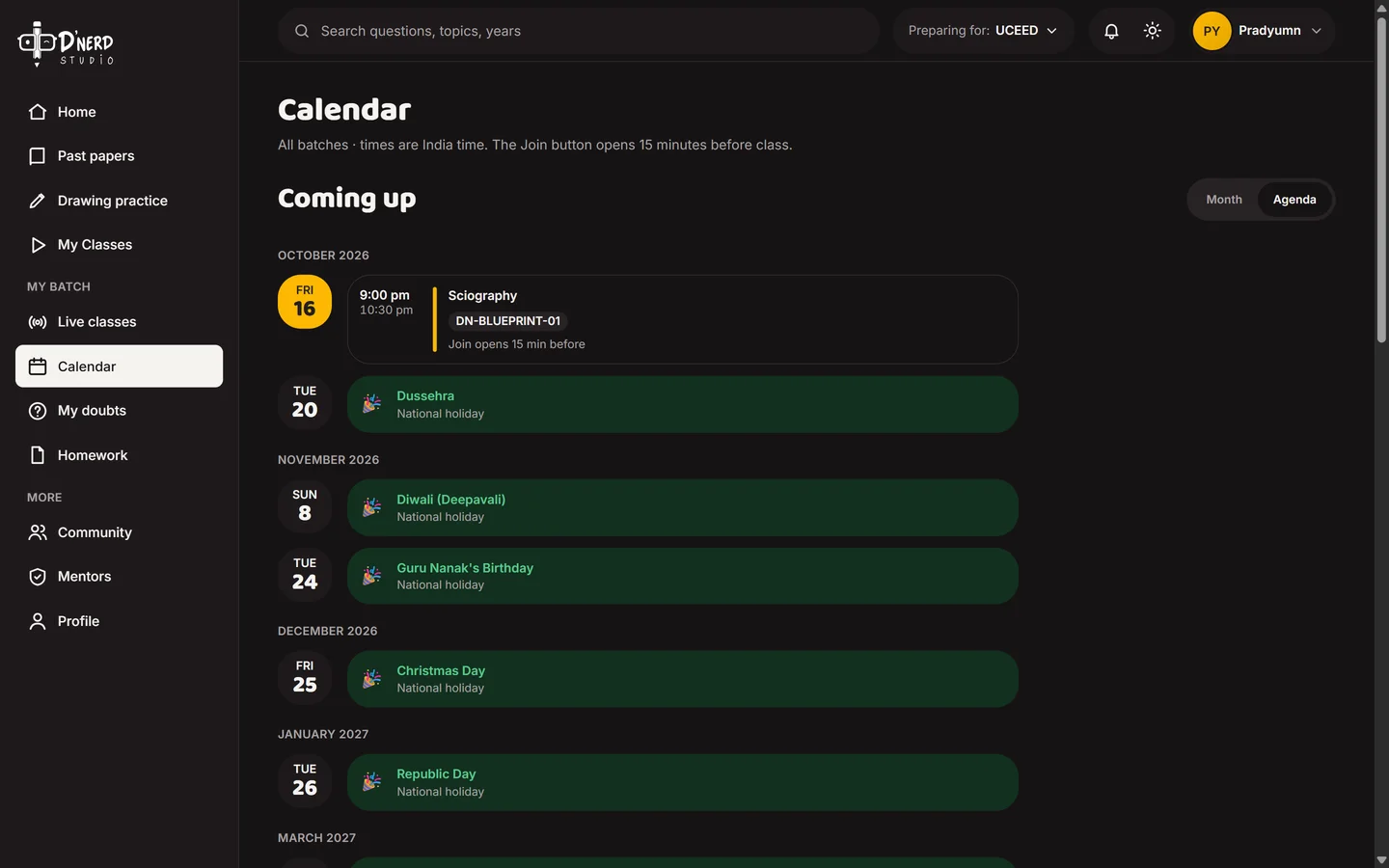
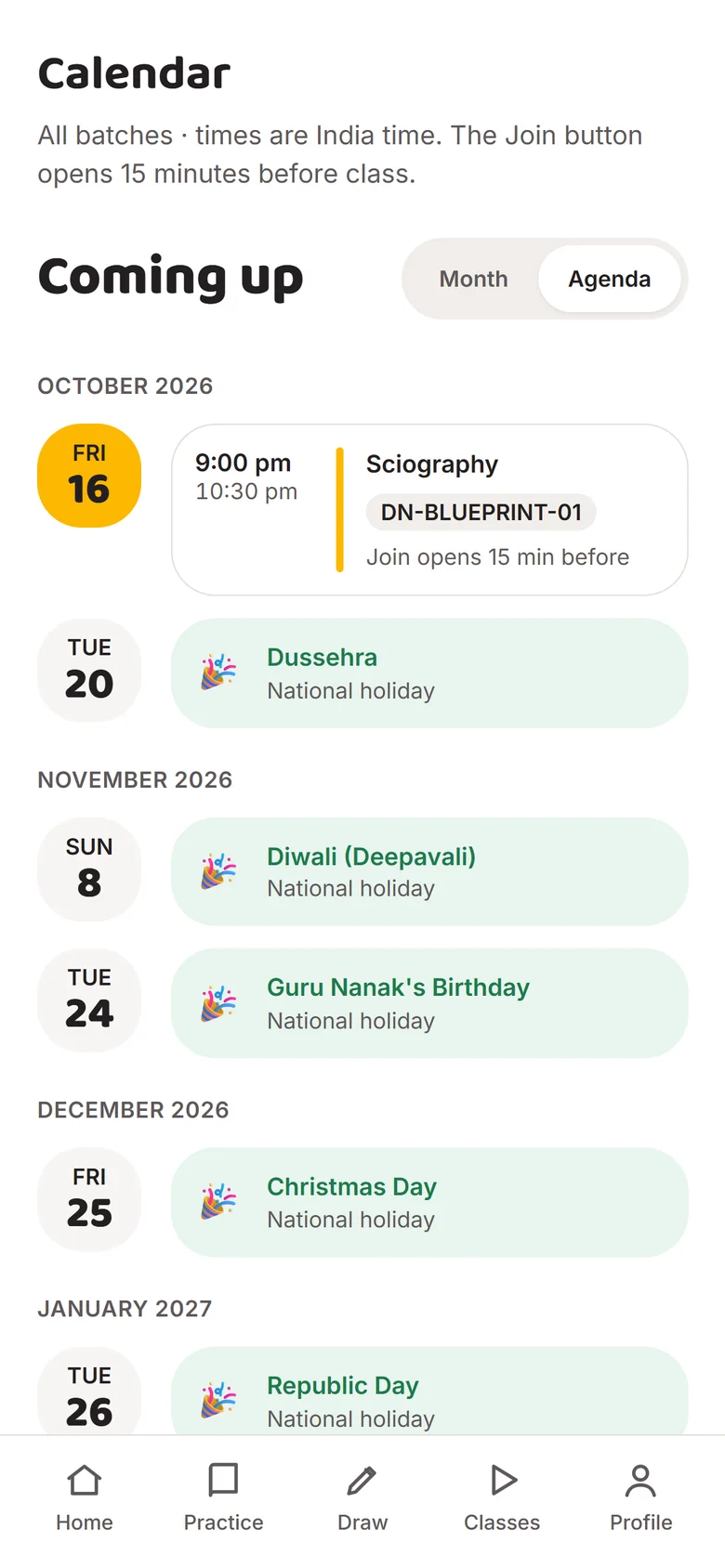
The agenda lists what's next. The Join button opens 15 minutes before class, so no one asks for the link again.
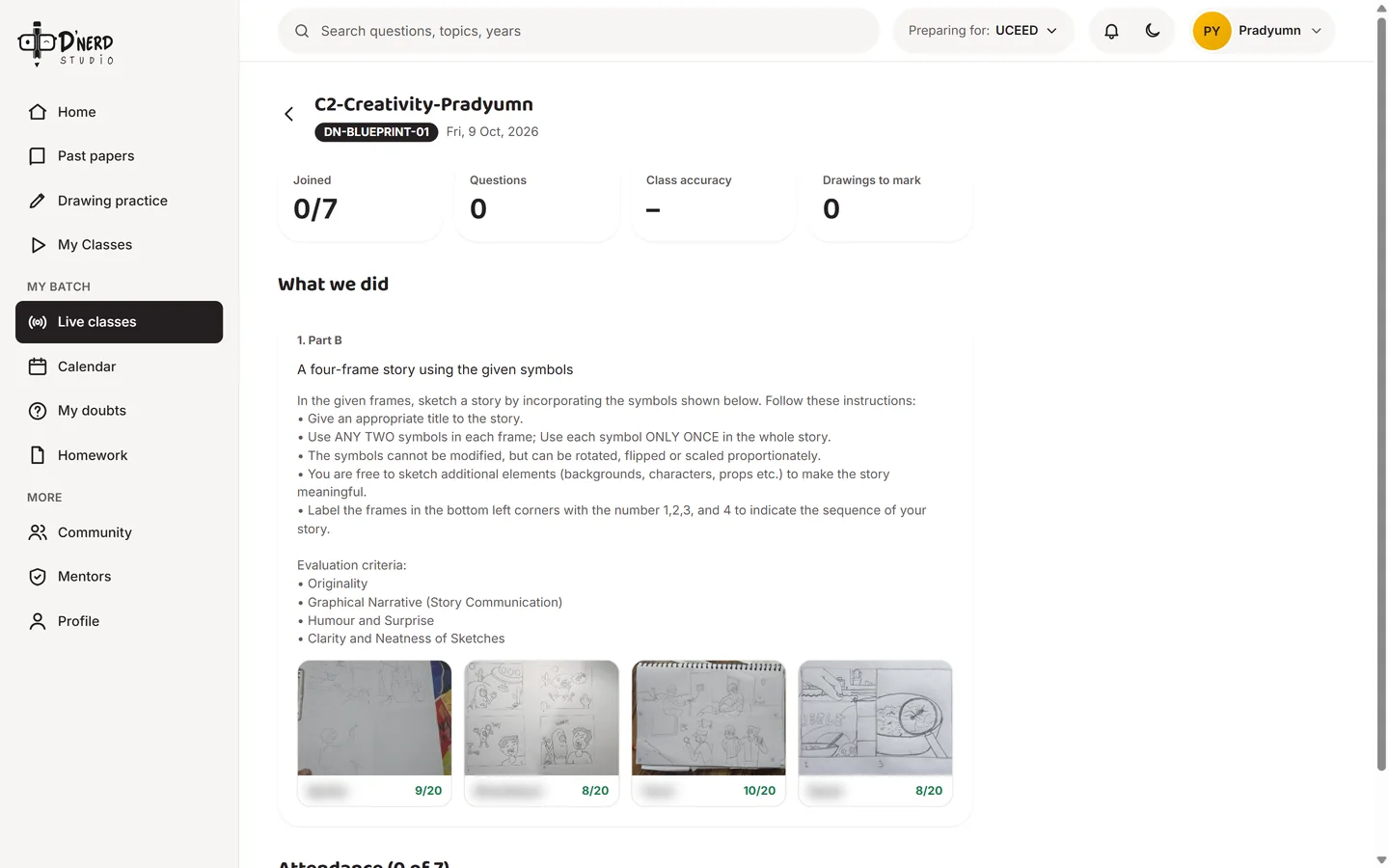
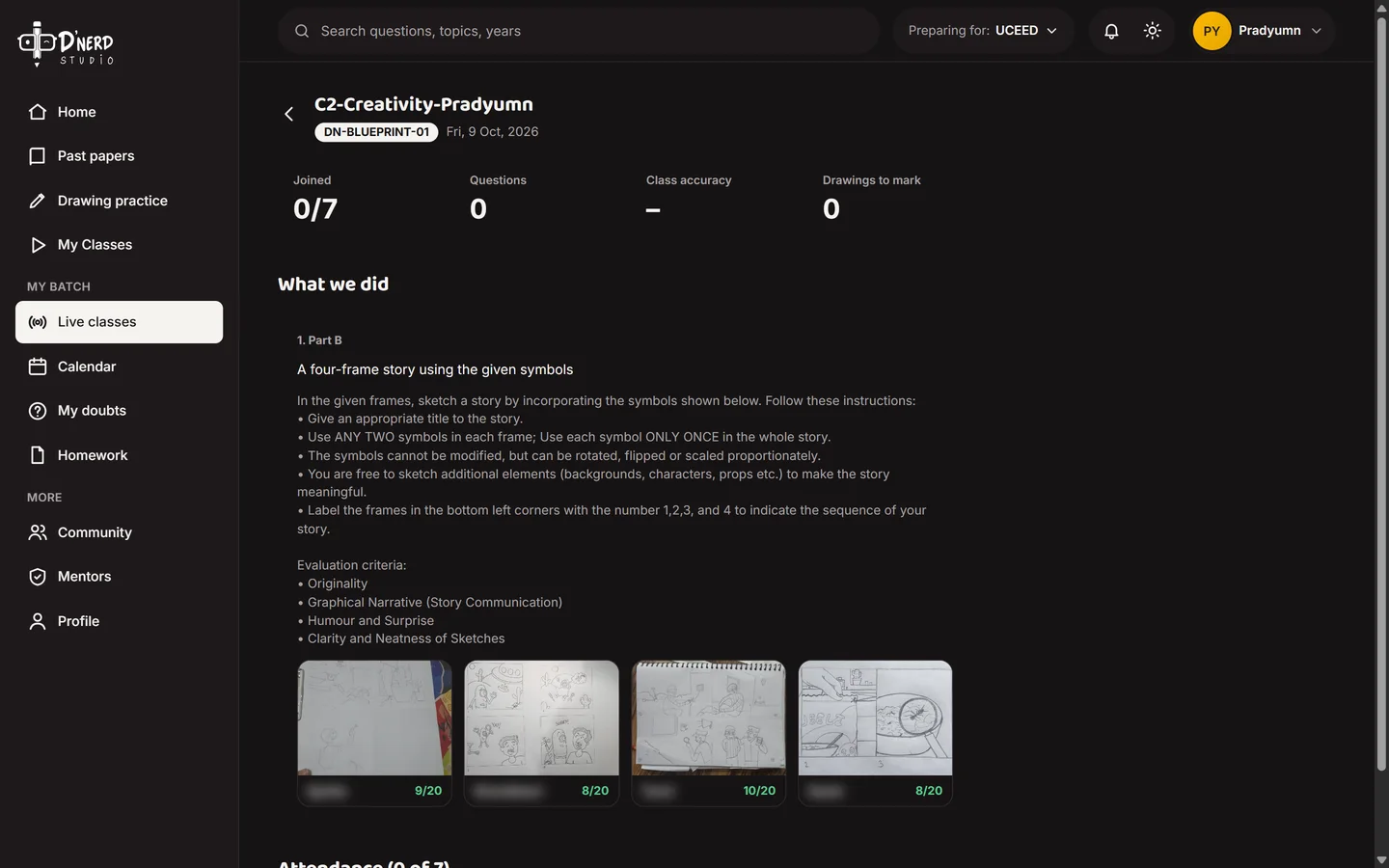
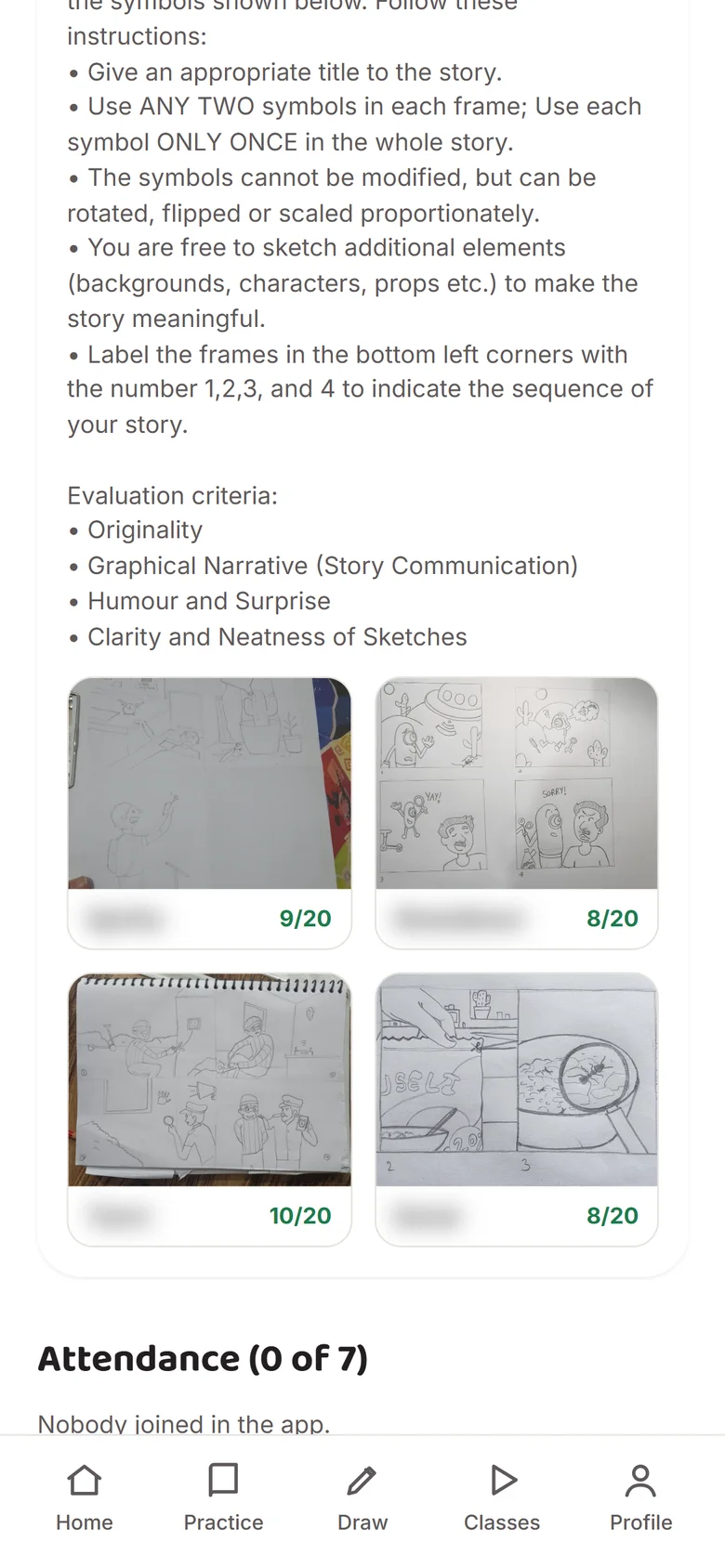
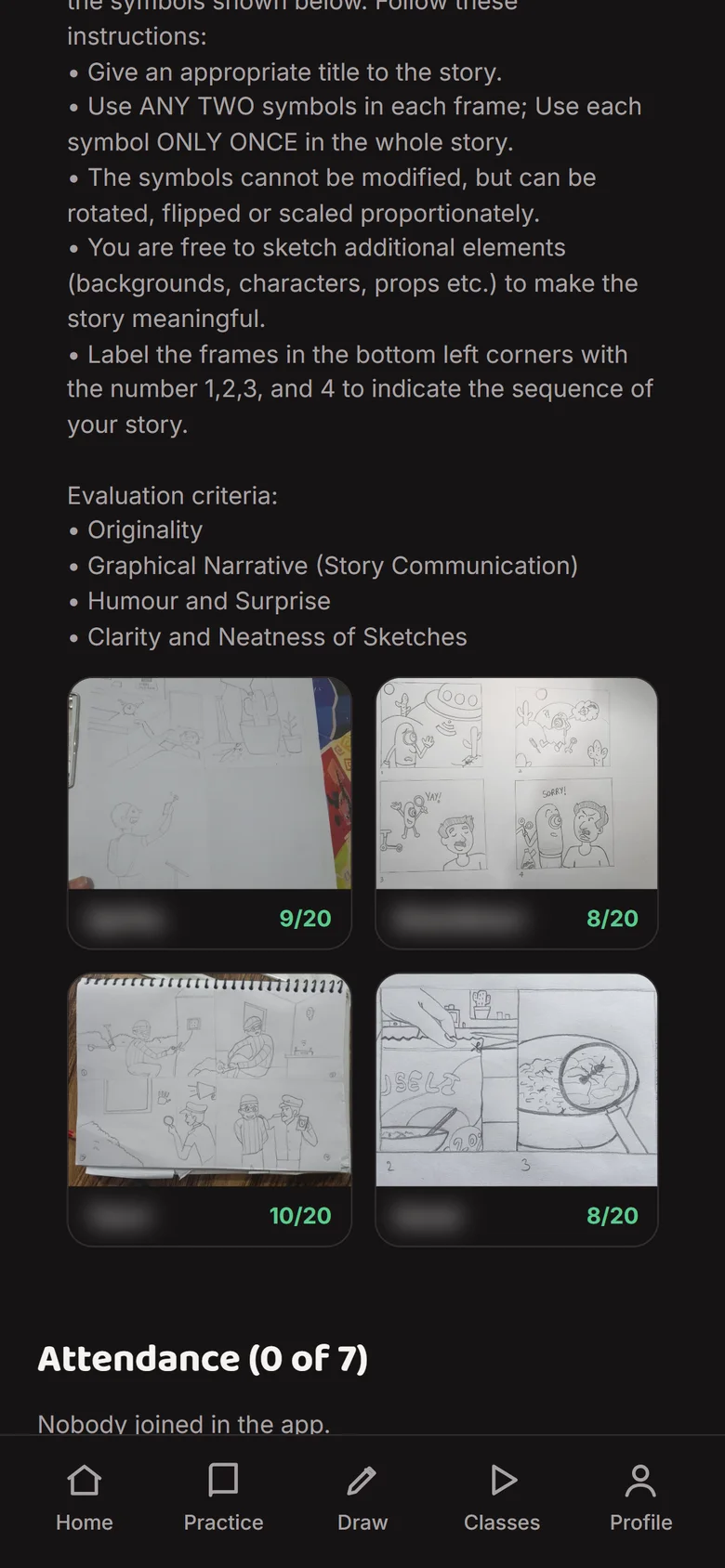
Drawings uploaded during the class are marked by the mentor out of 20 and stay on the class page with the prompt. Student names are blurred.
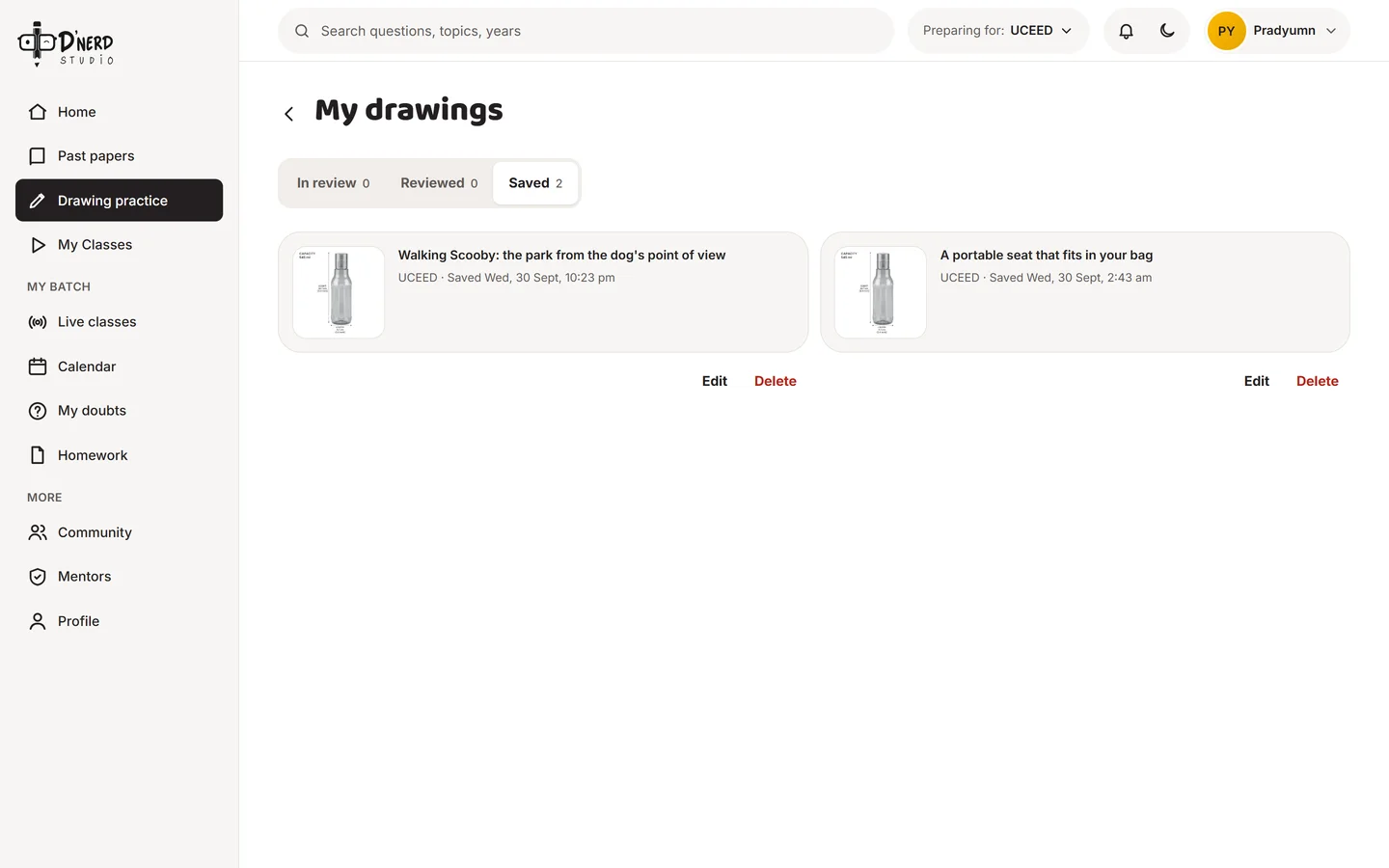
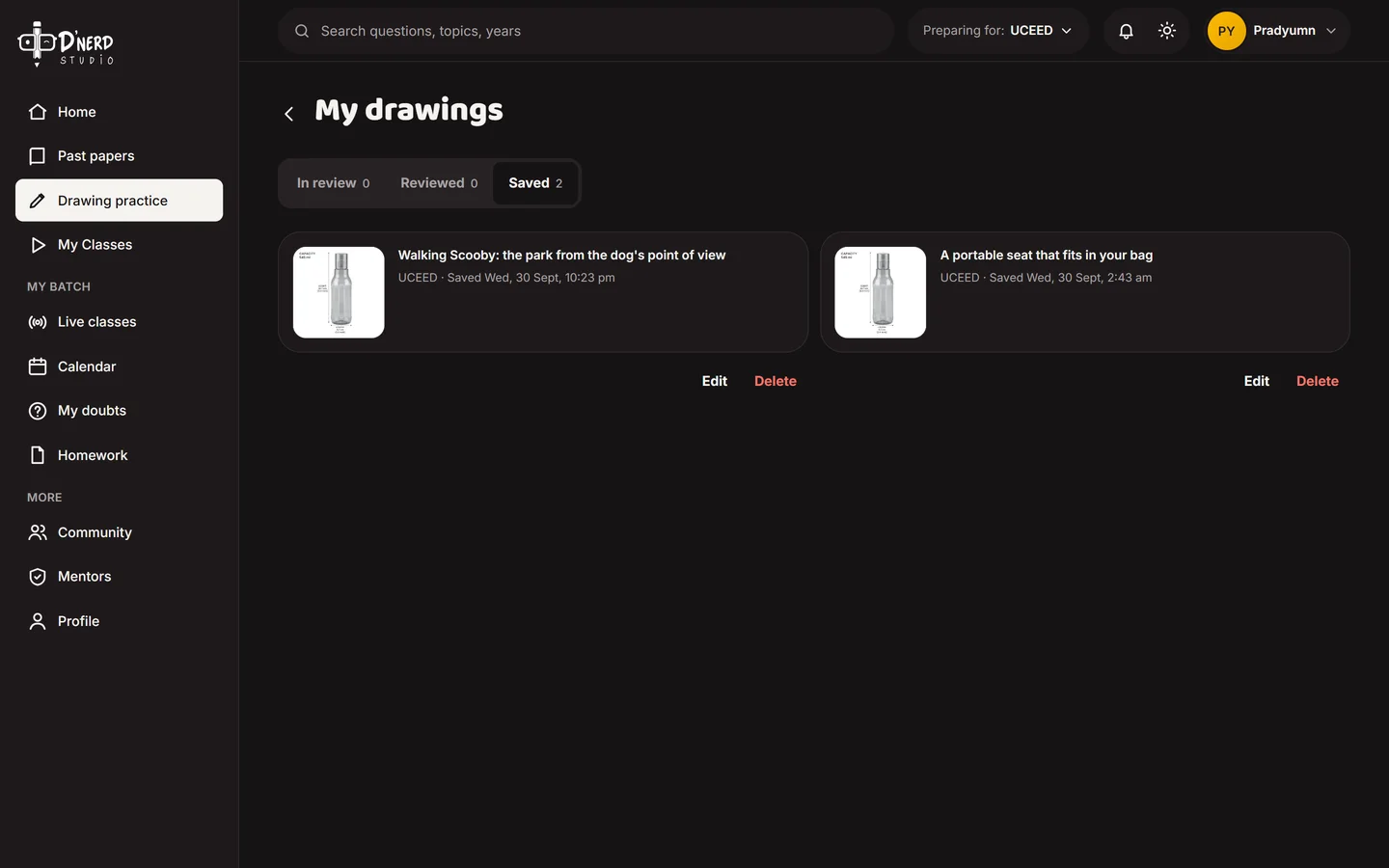
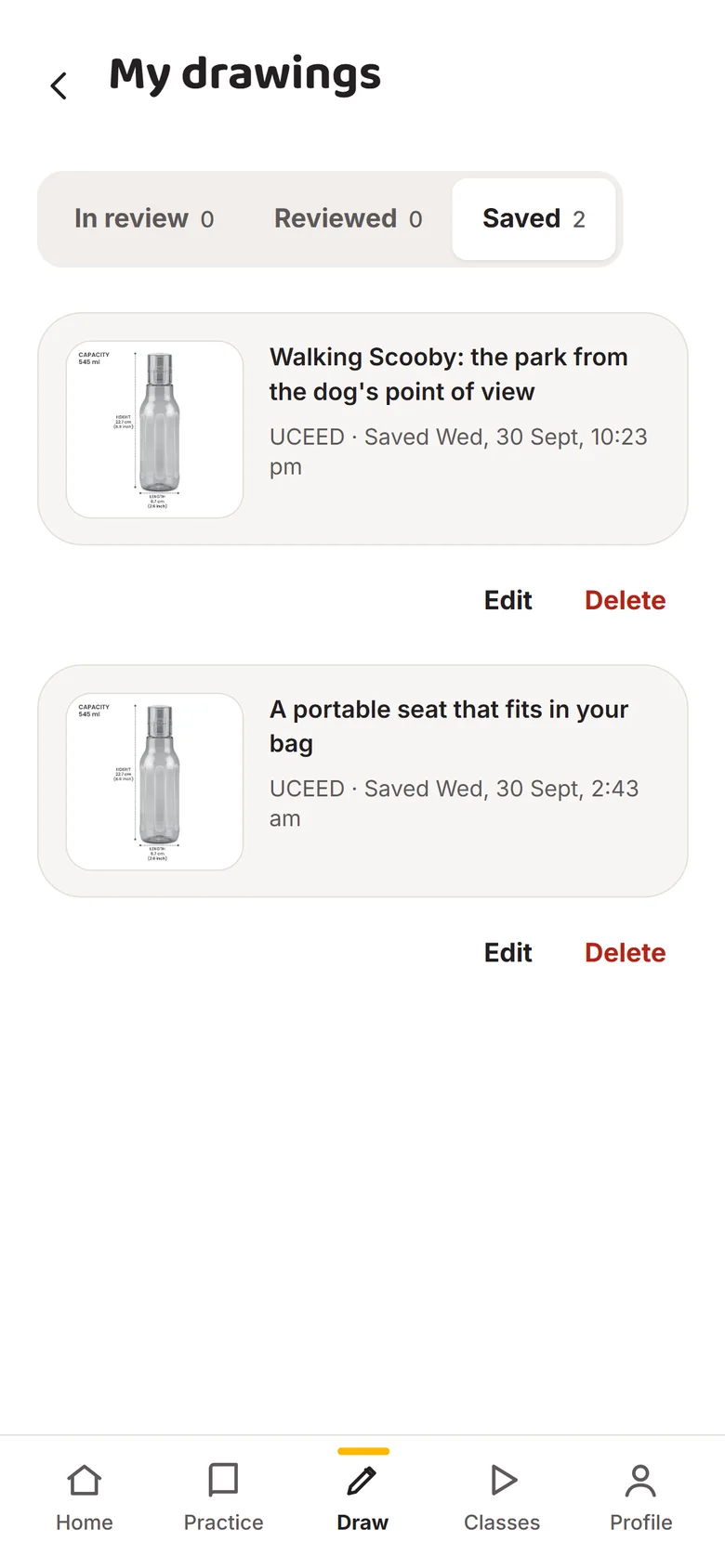
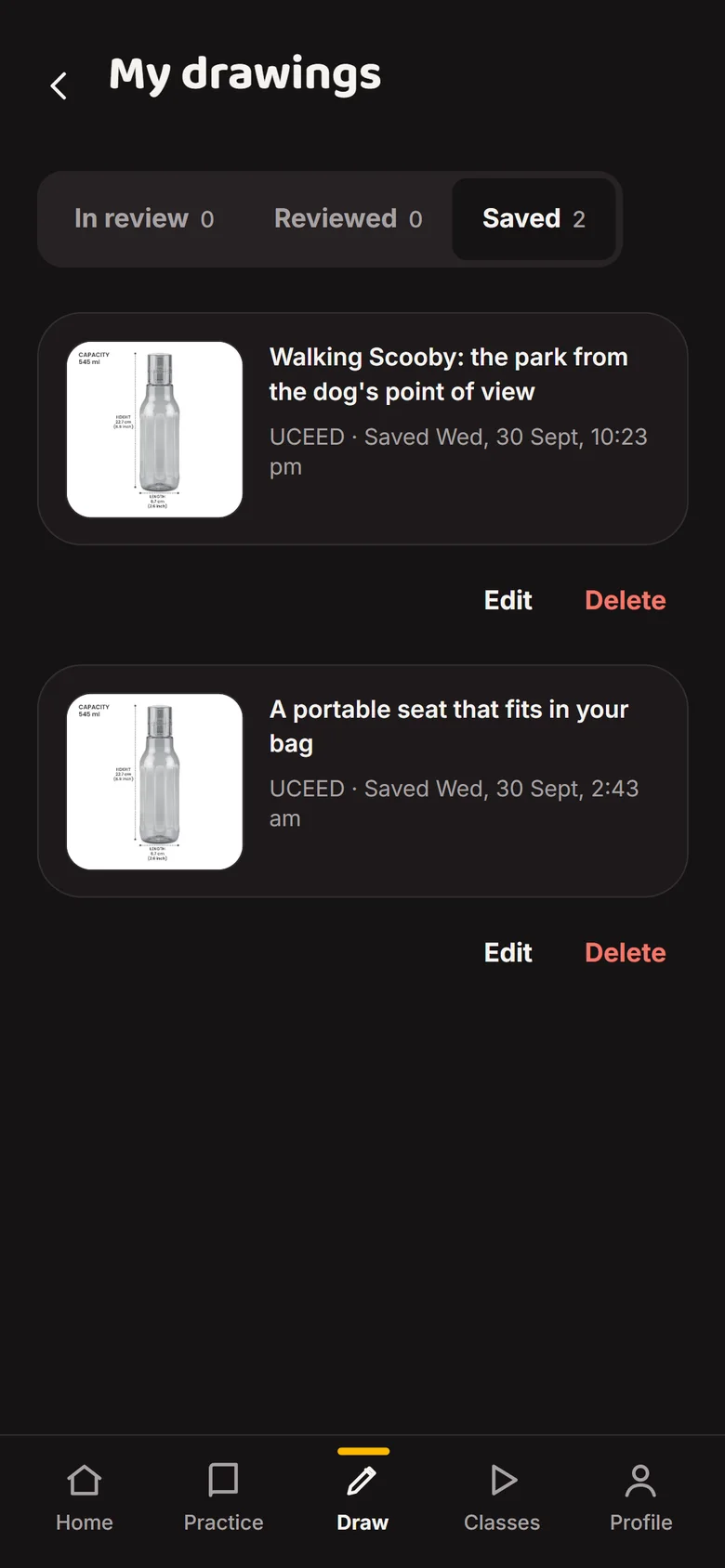
Uploads move from Saved to In review to Reviewed, so nothing gets lost in a chat again.
Every class for the batch. Today's class has Join, Live board, Edit and Cancel.
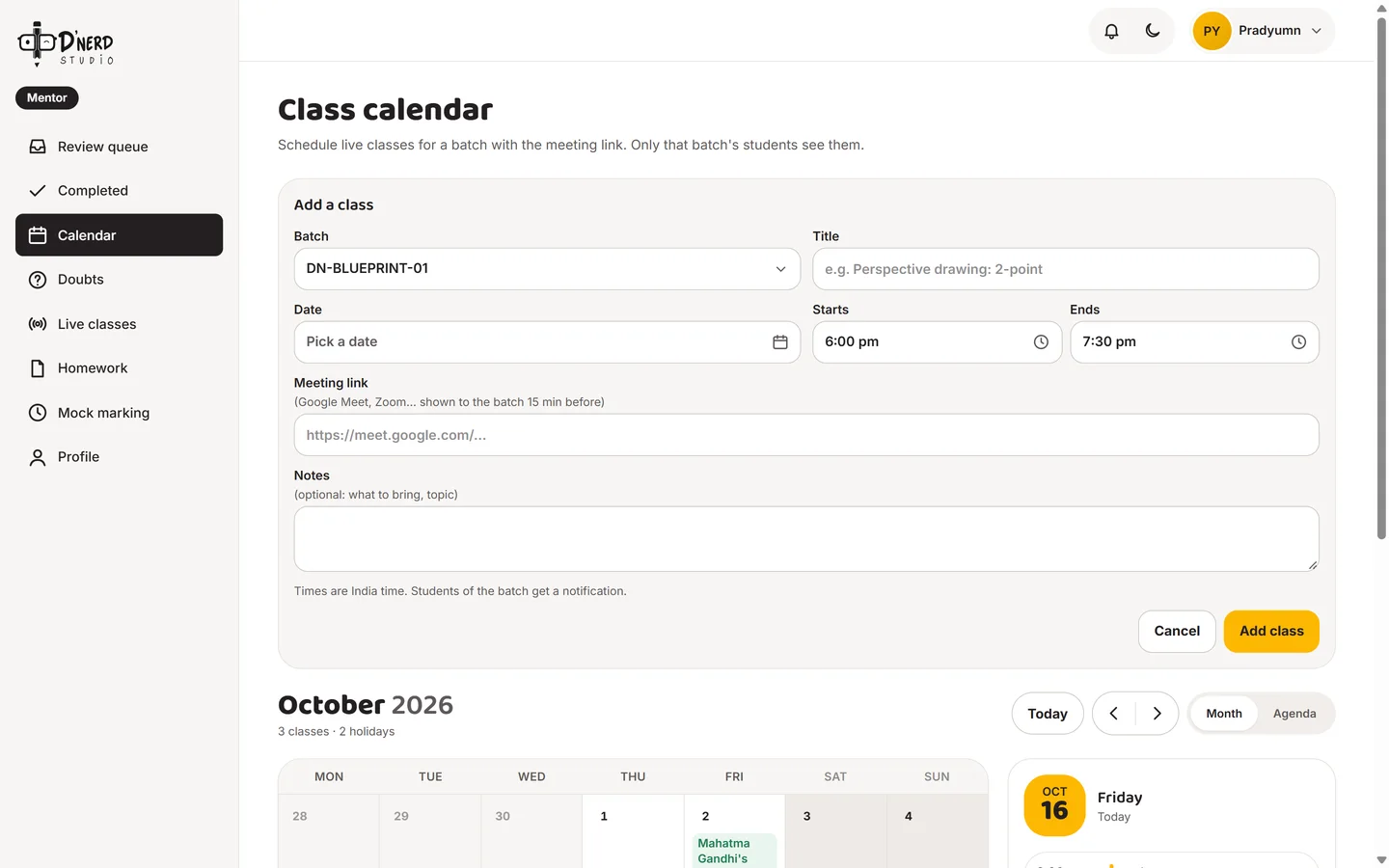
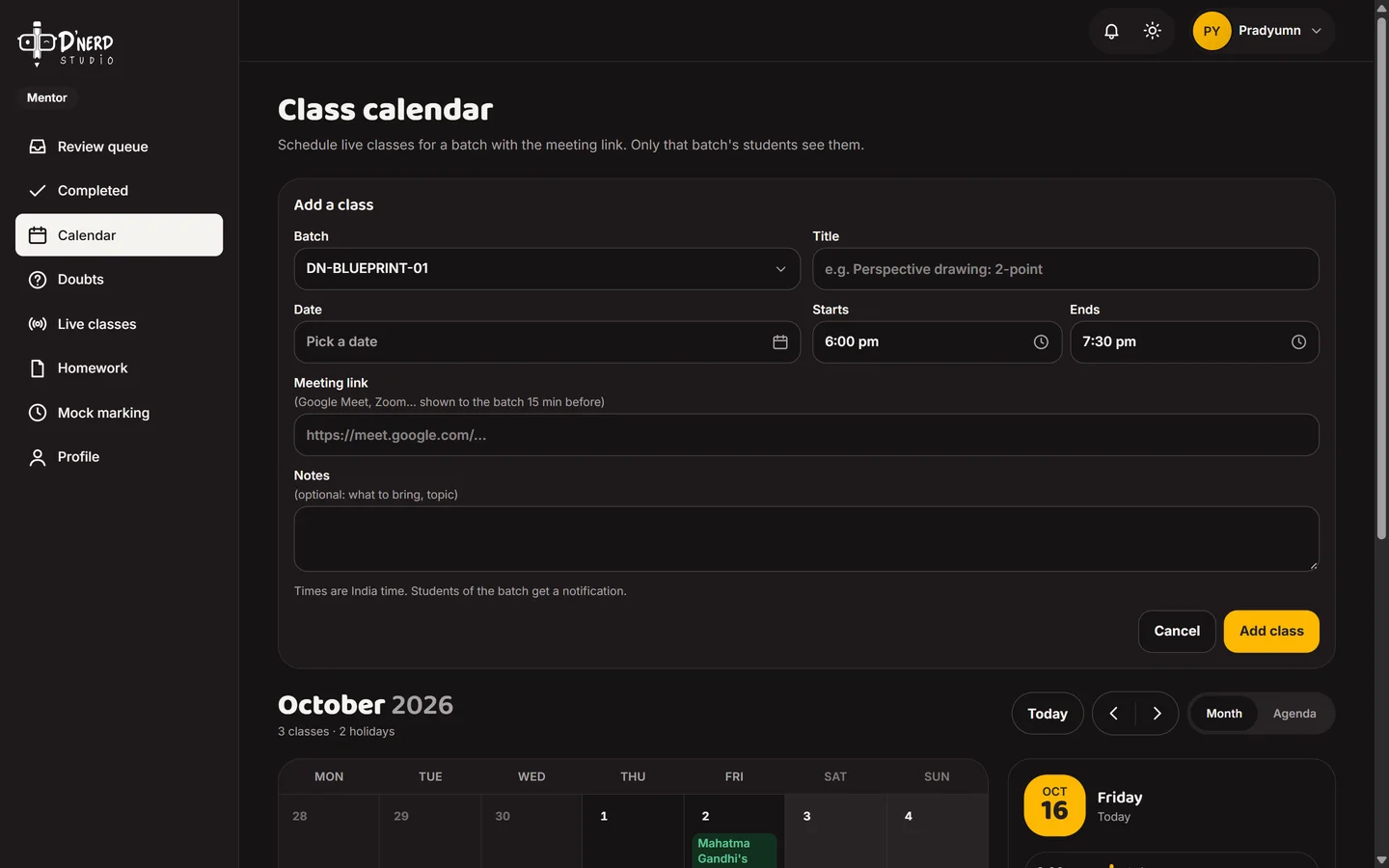
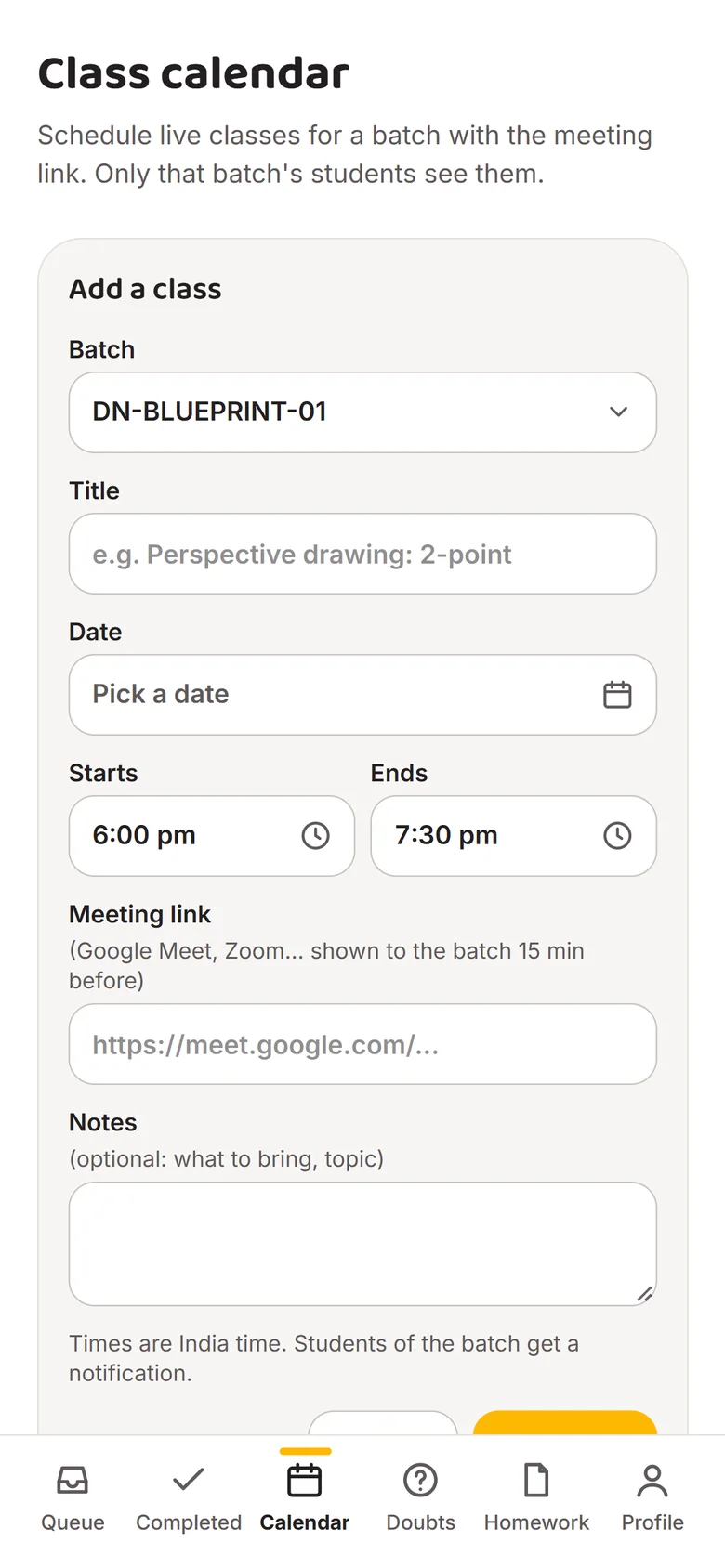
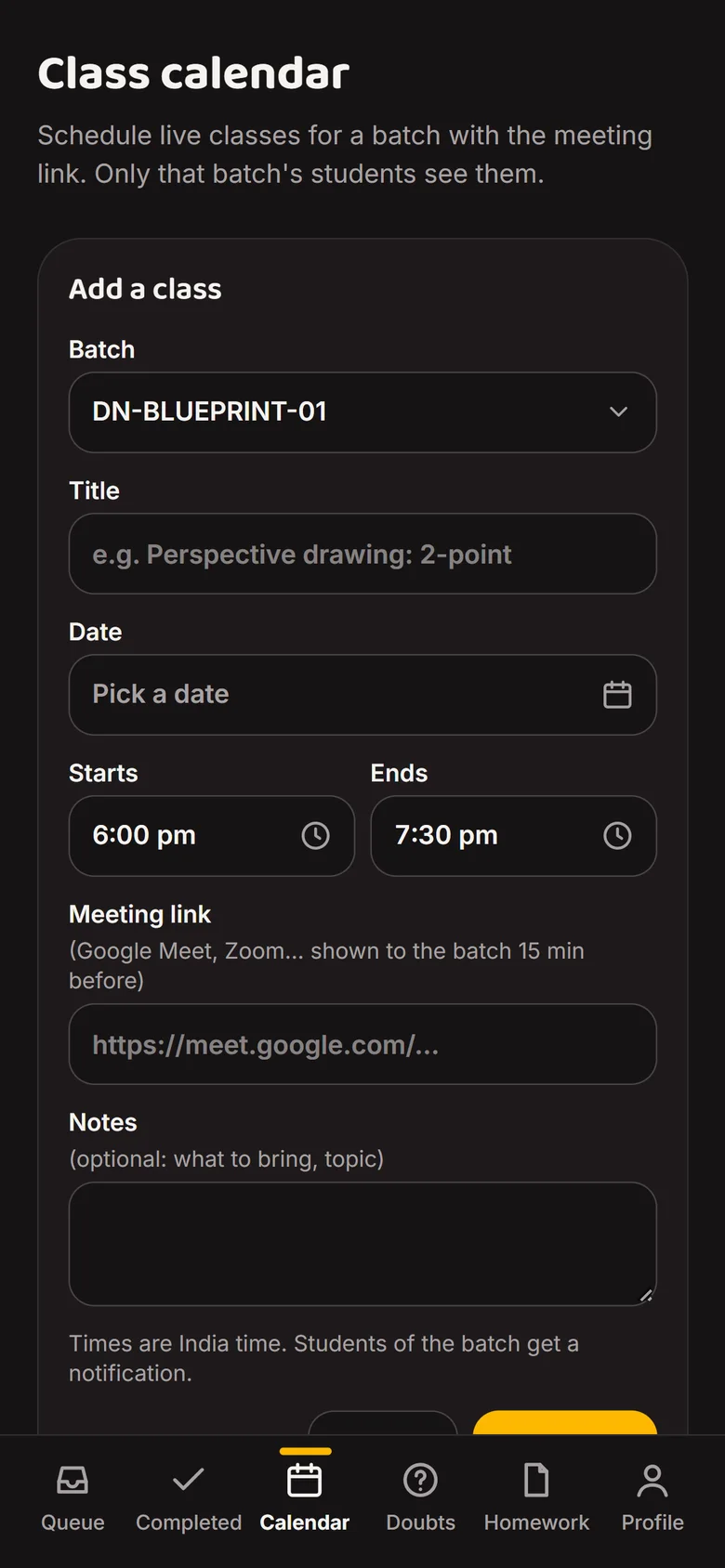
Pick the batch, write the topic, set the time and paste the Google Meet link. Students in that batch get a notification.
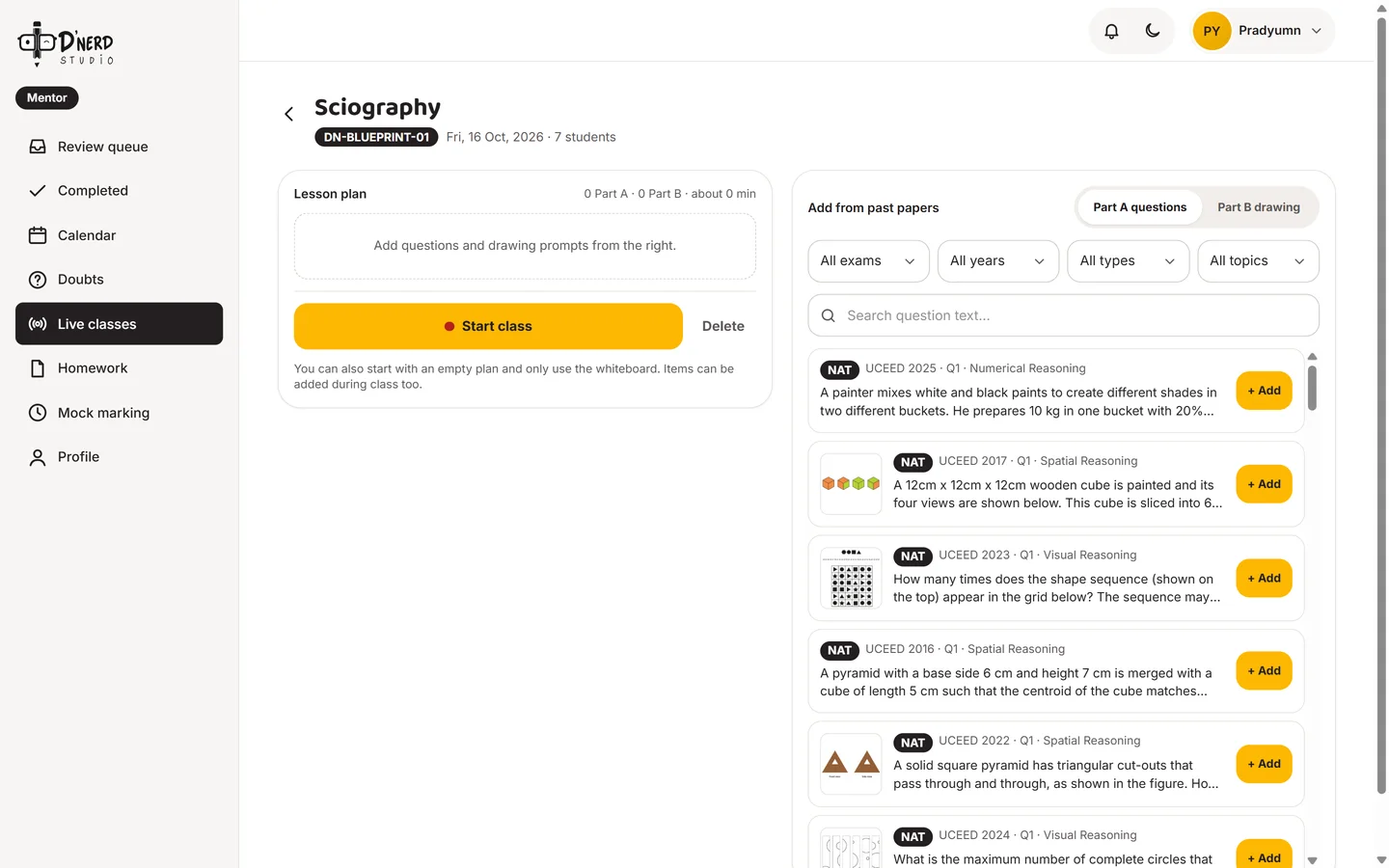
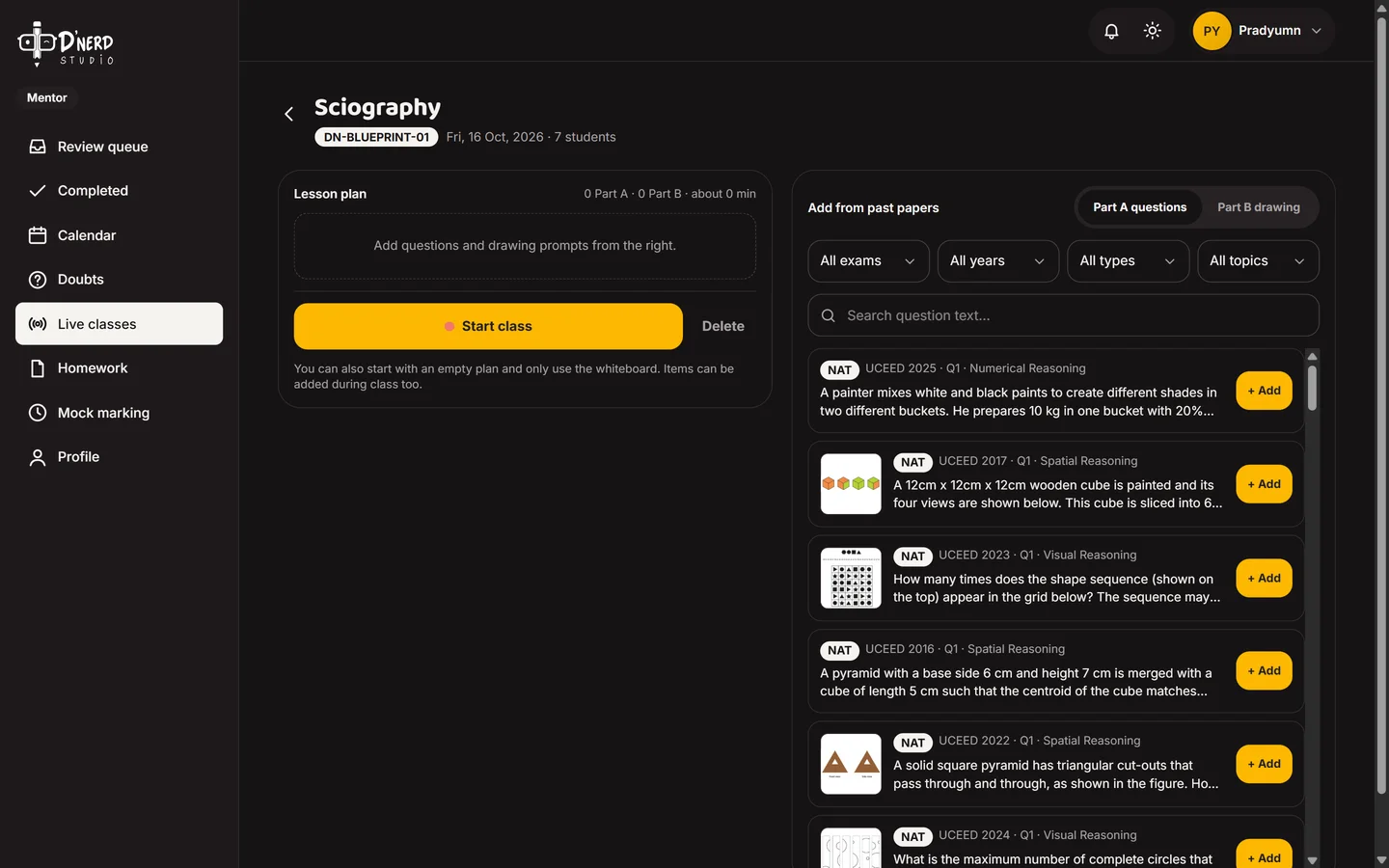
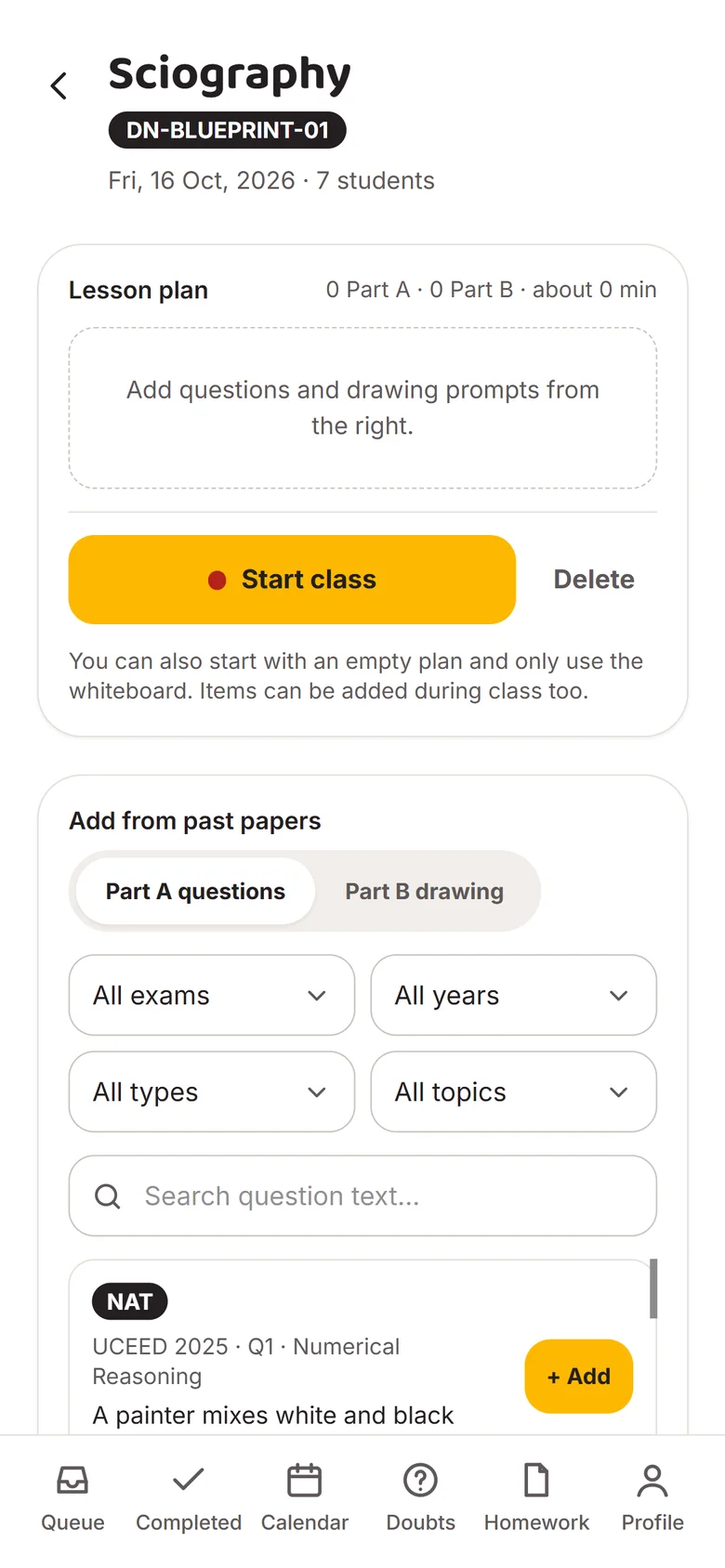
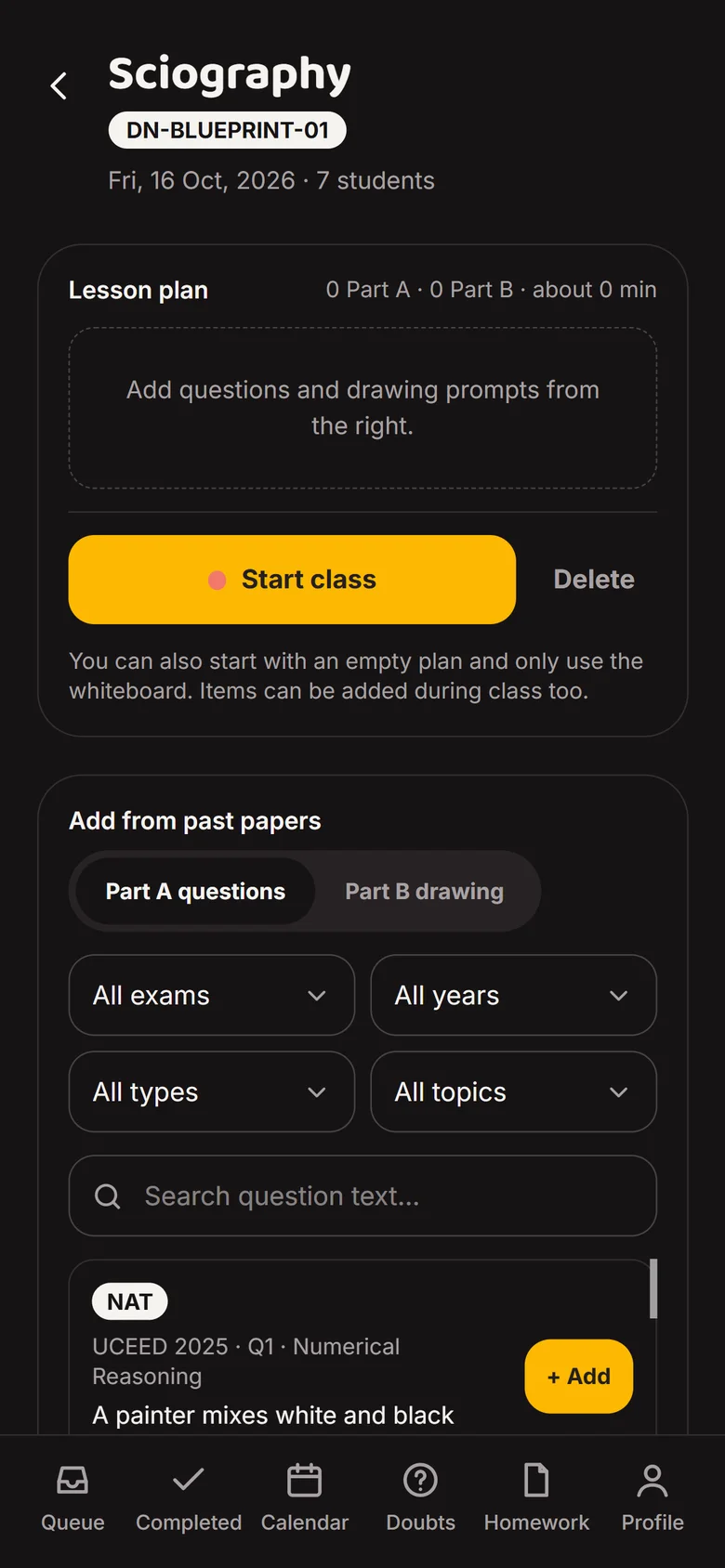
Add past-paper questions and Part B prompts to the lesson plan, then press Start class.
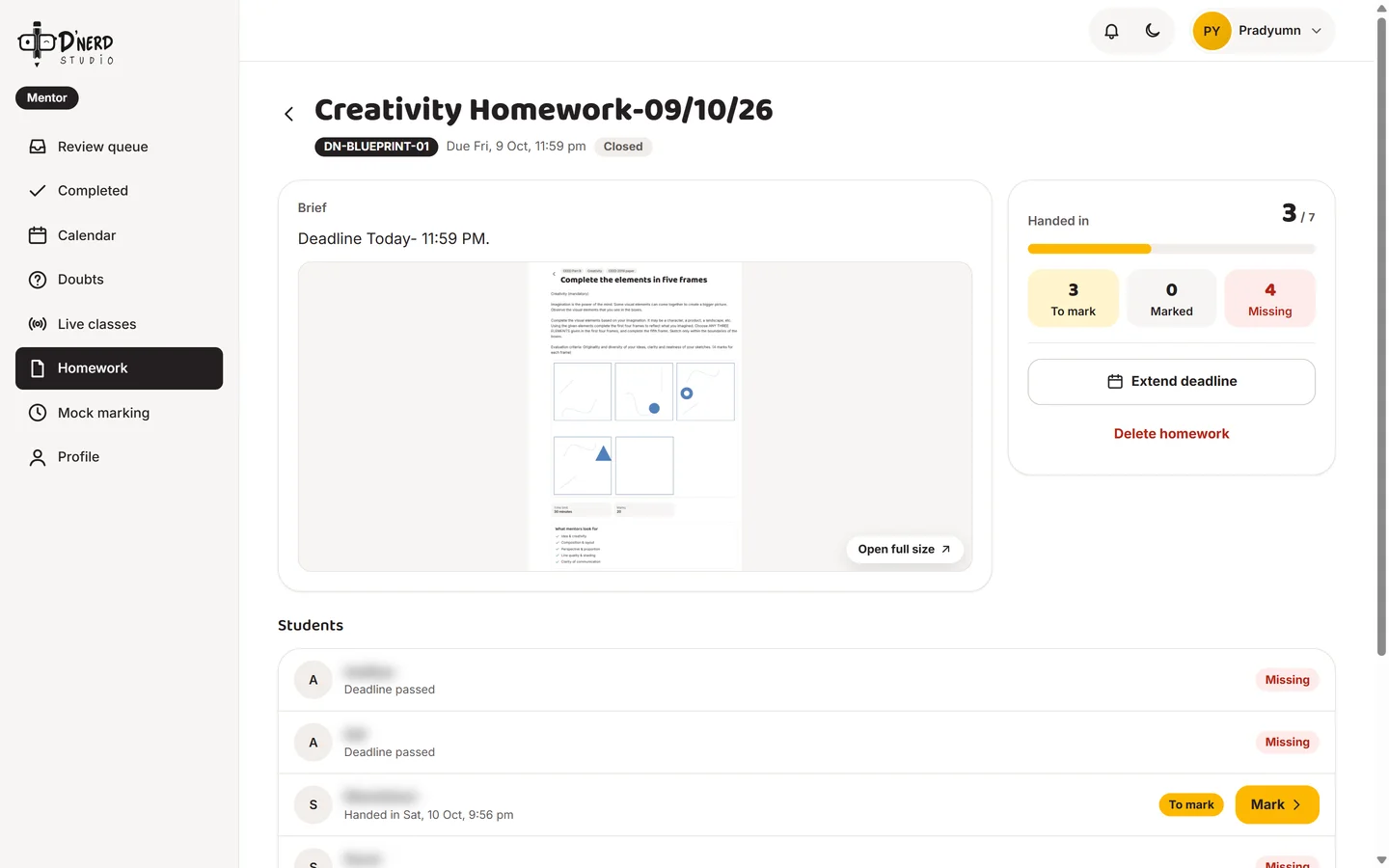
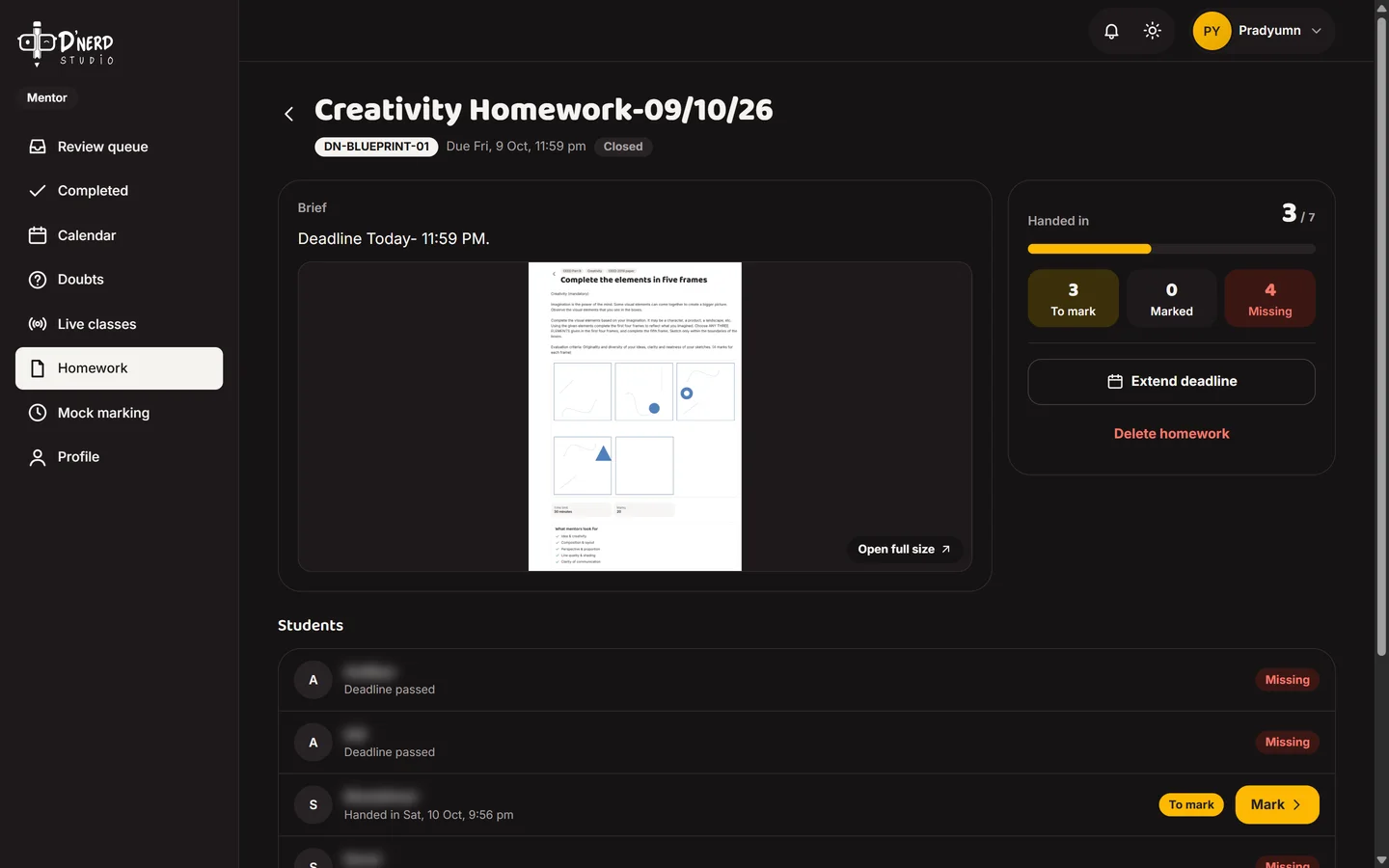
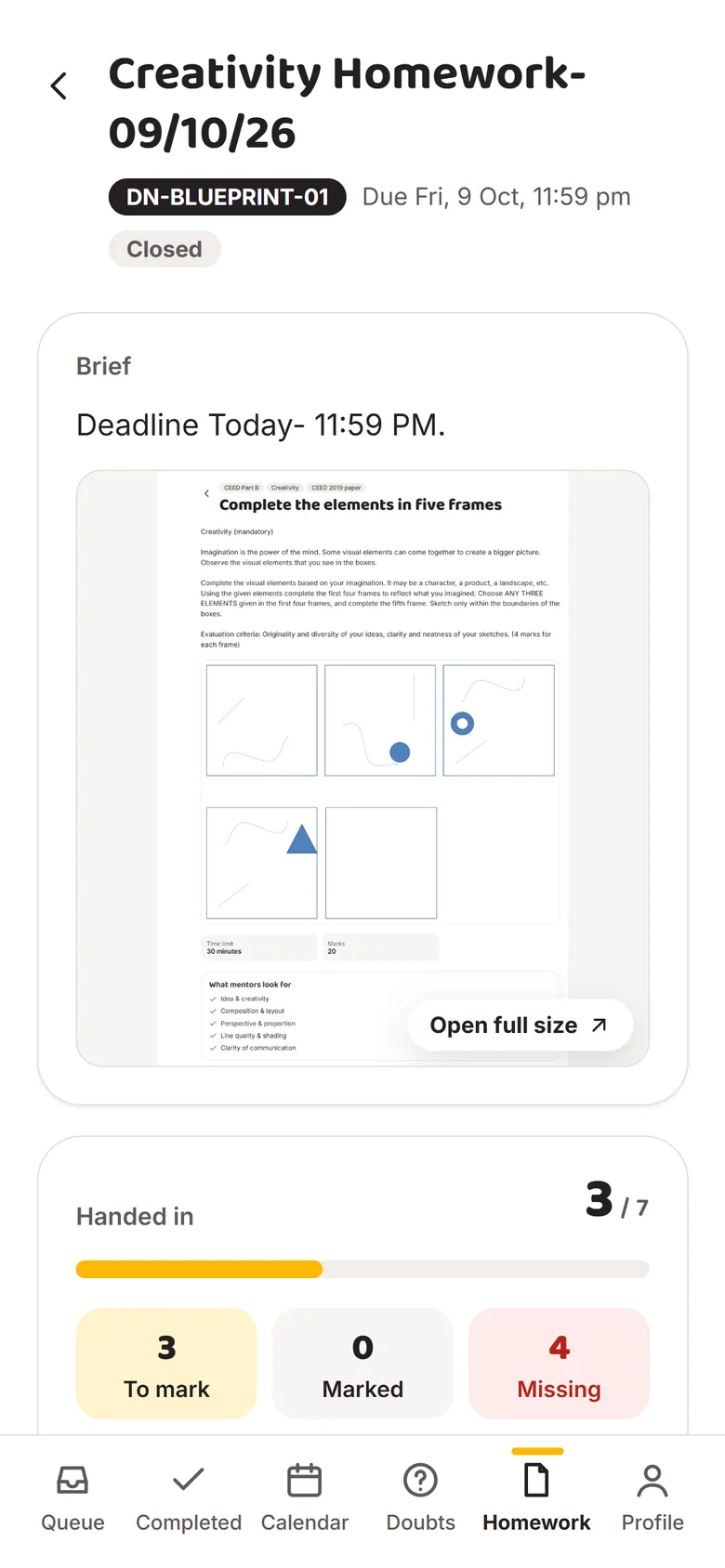
3 of 7 handed in, 3 to mark, 4 missing. The deadline can be extended in one tap. Student names are blurred.
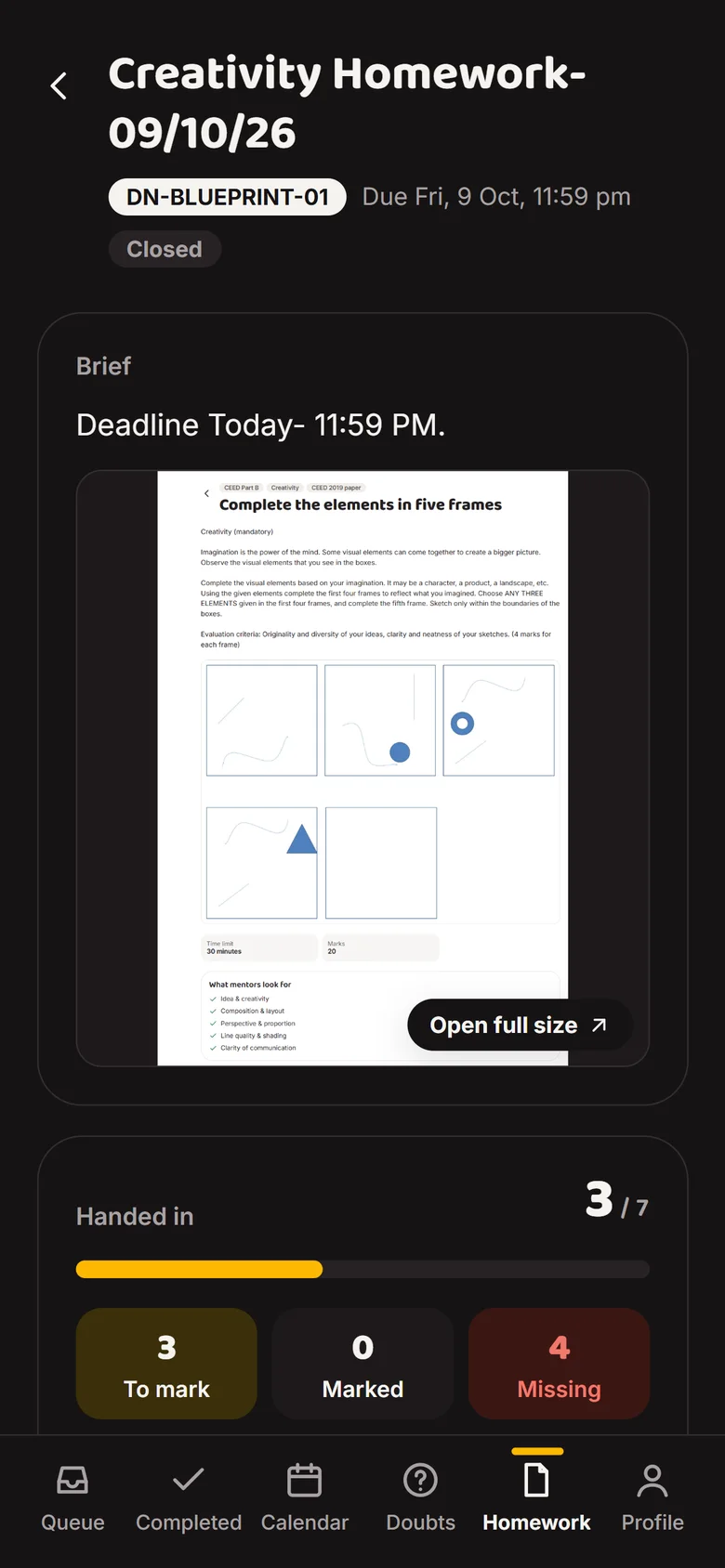
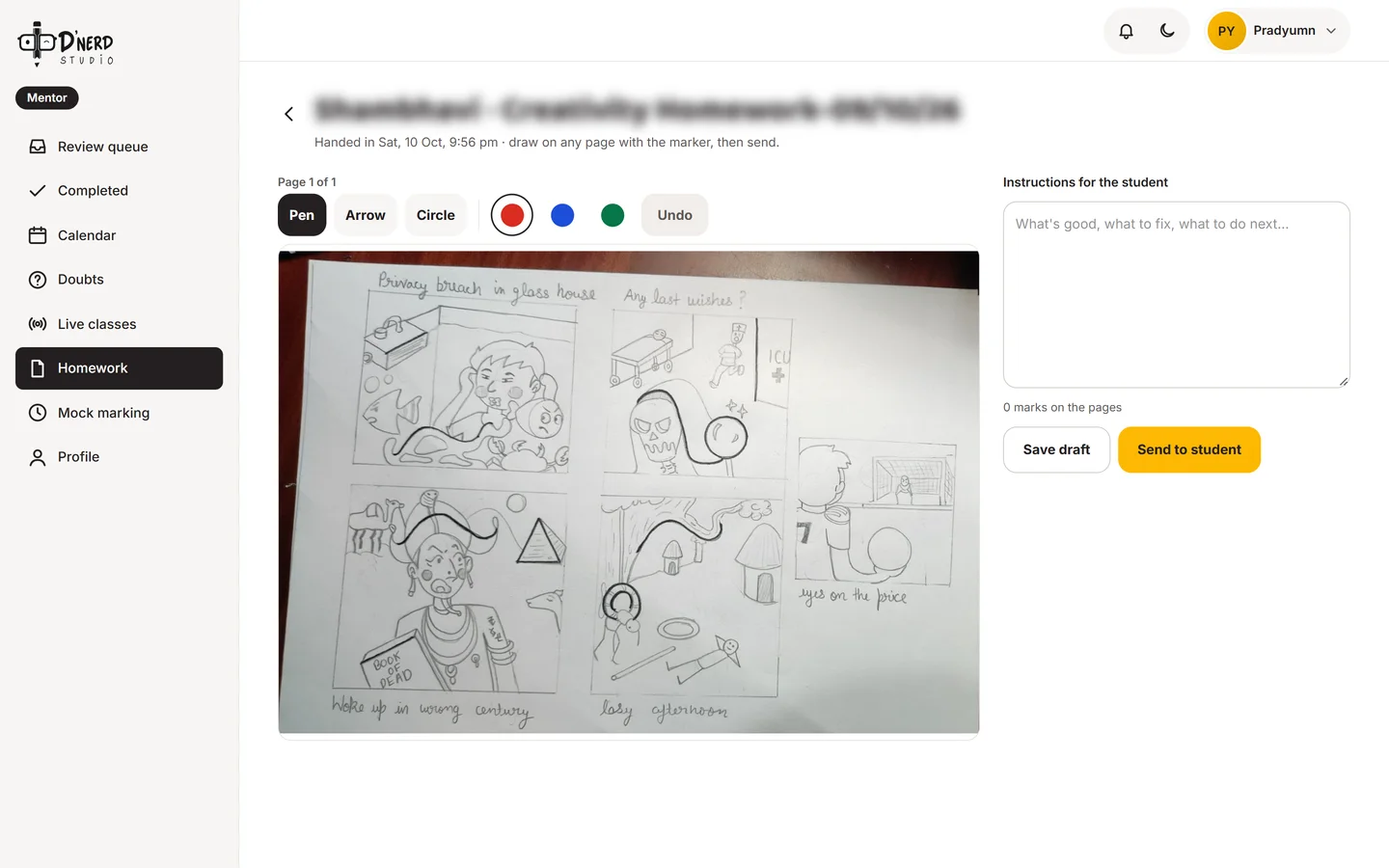
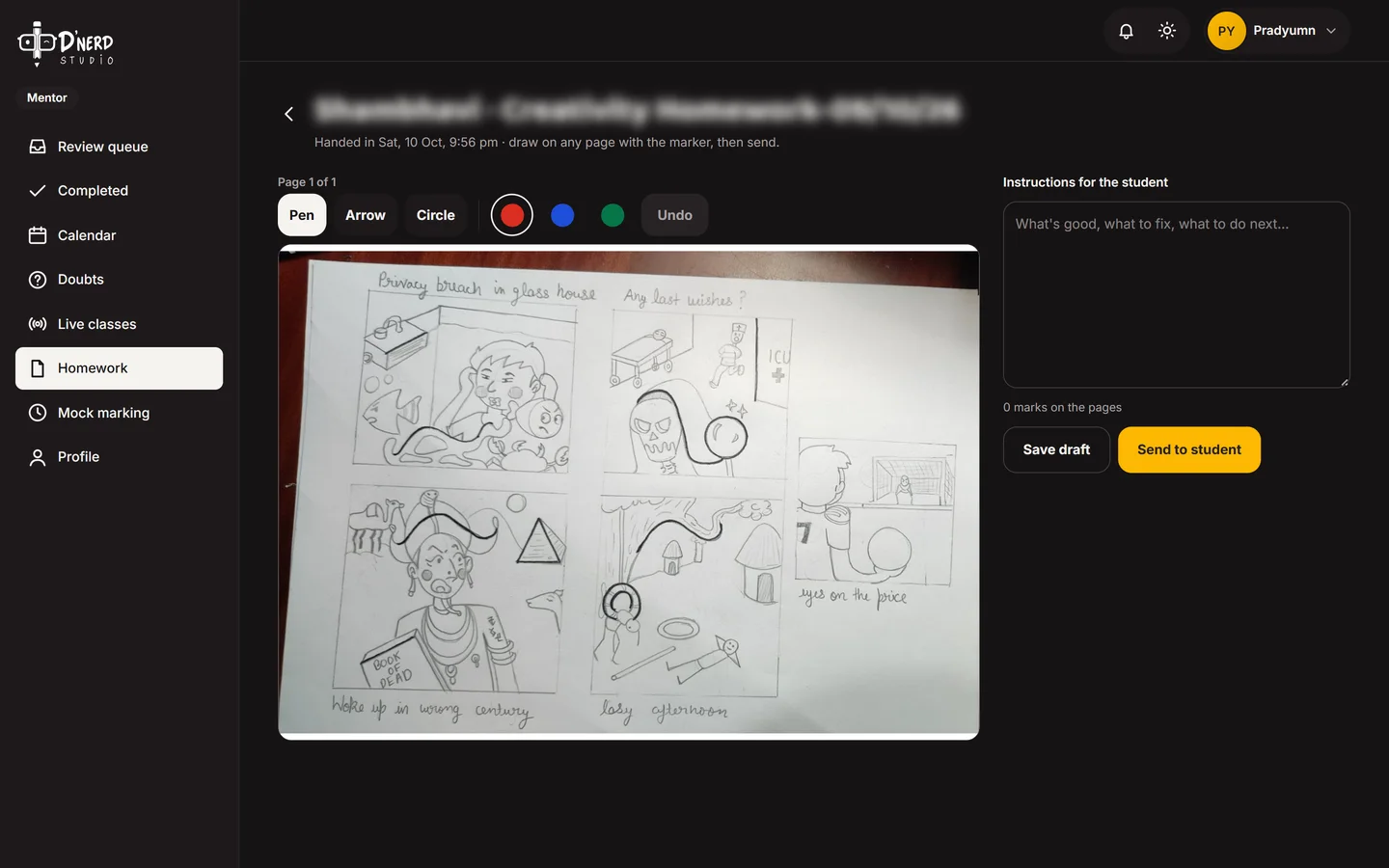
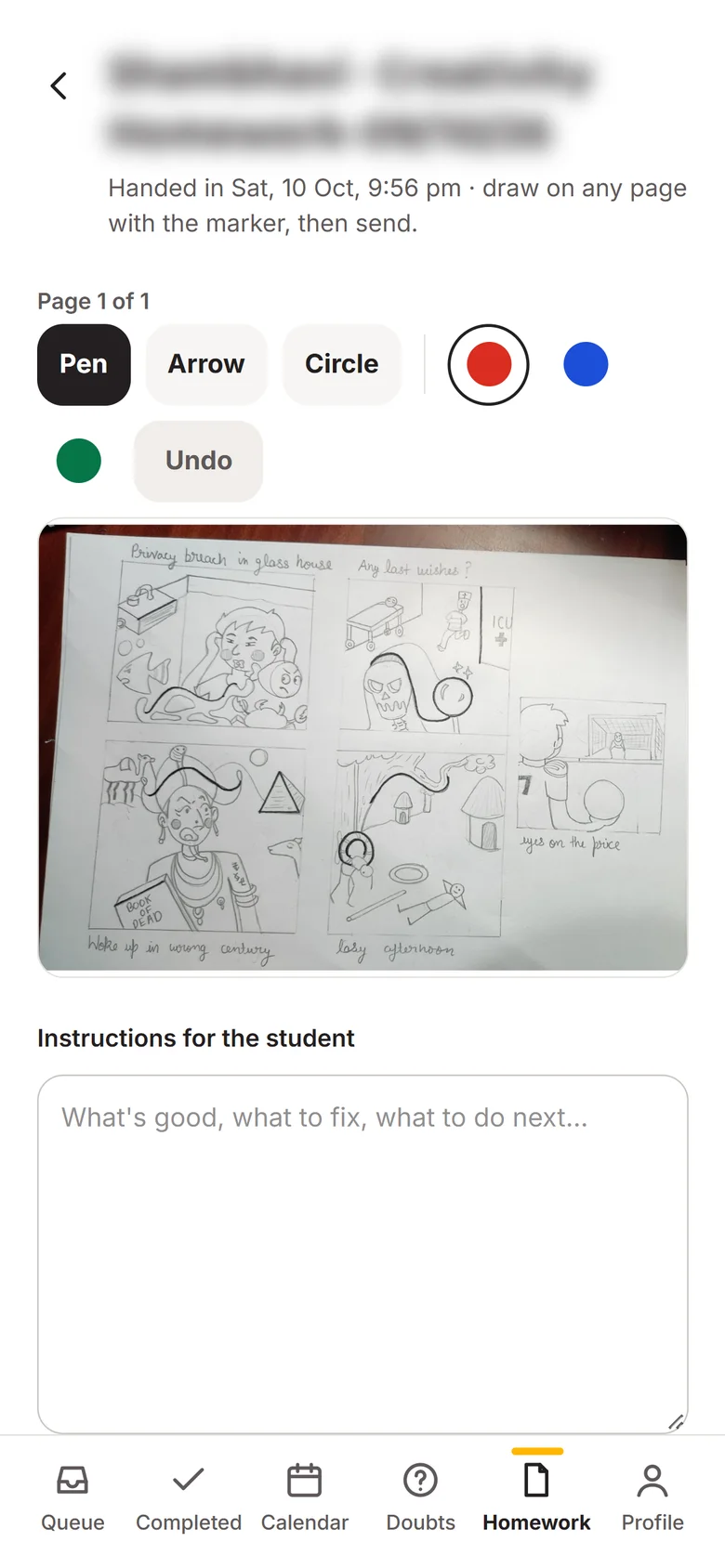
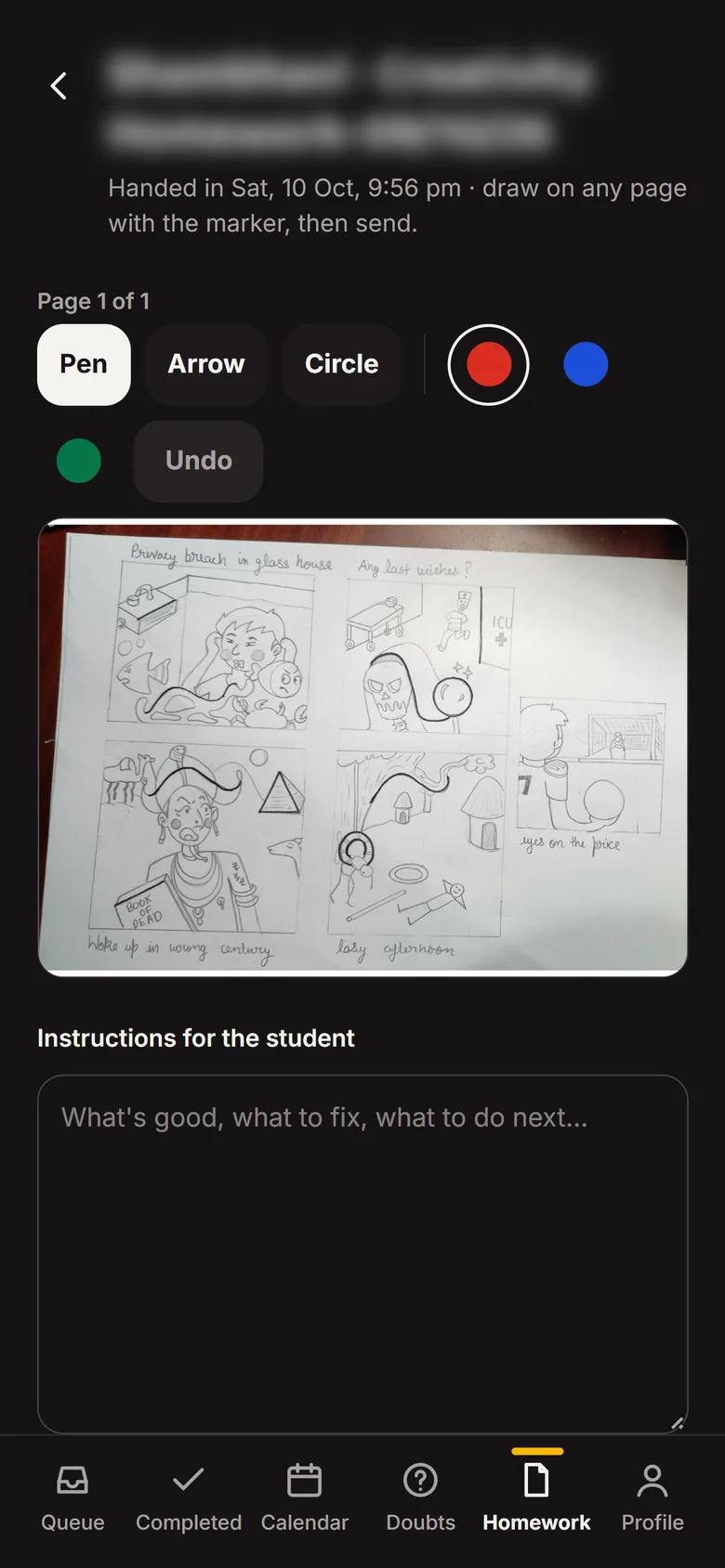
Pen, arrow and circle on the student's page, written instructions, then Send to student.
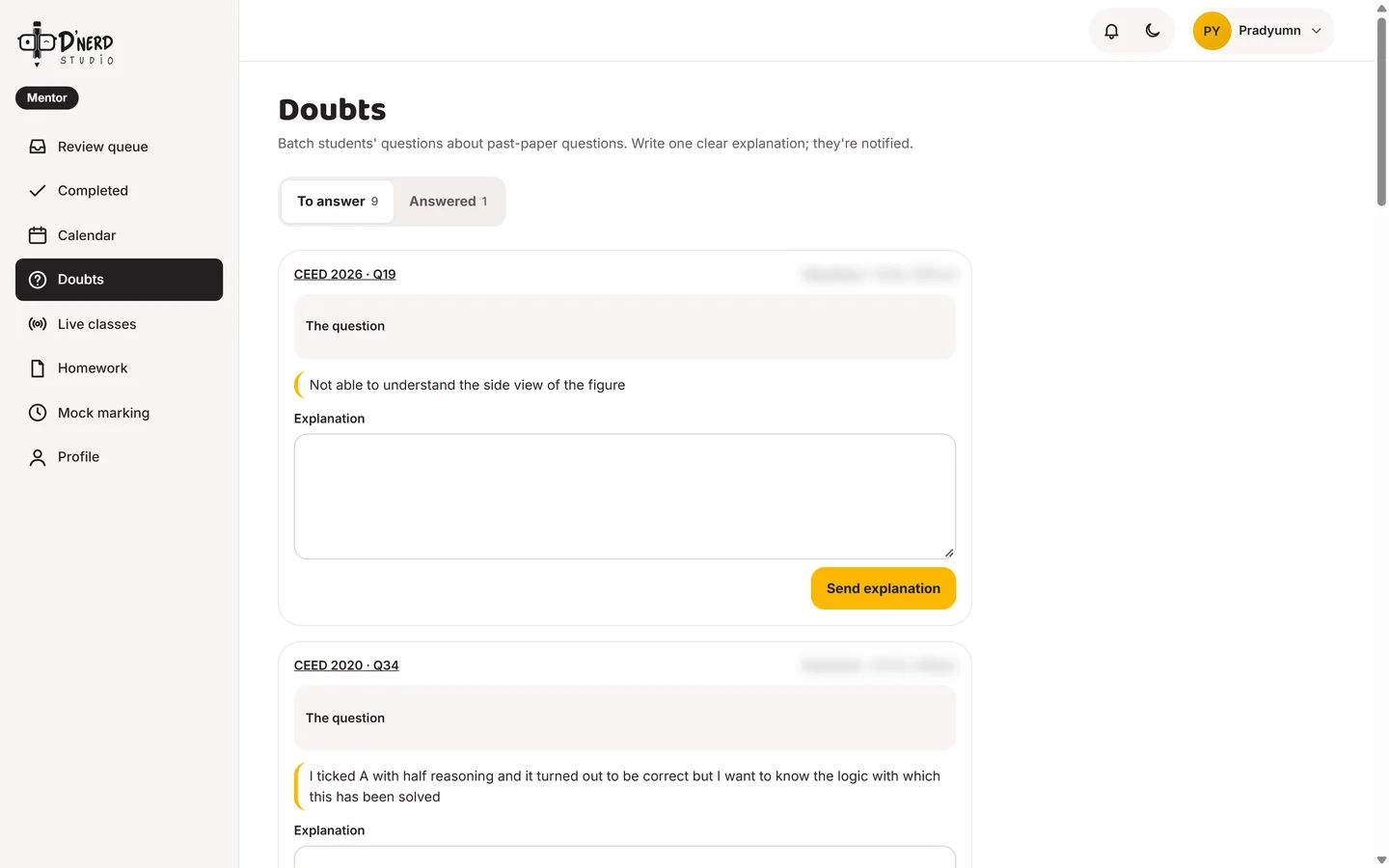
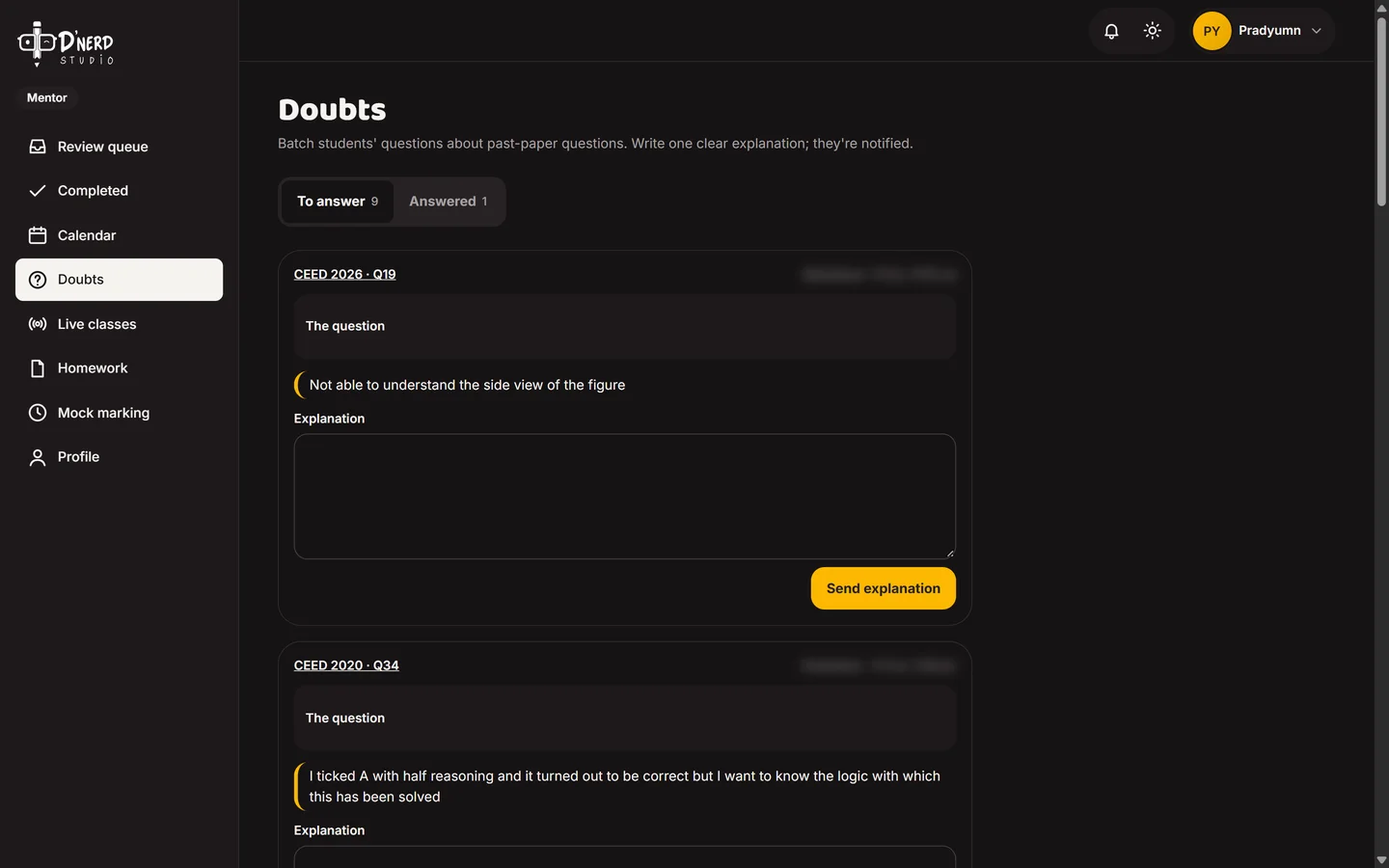
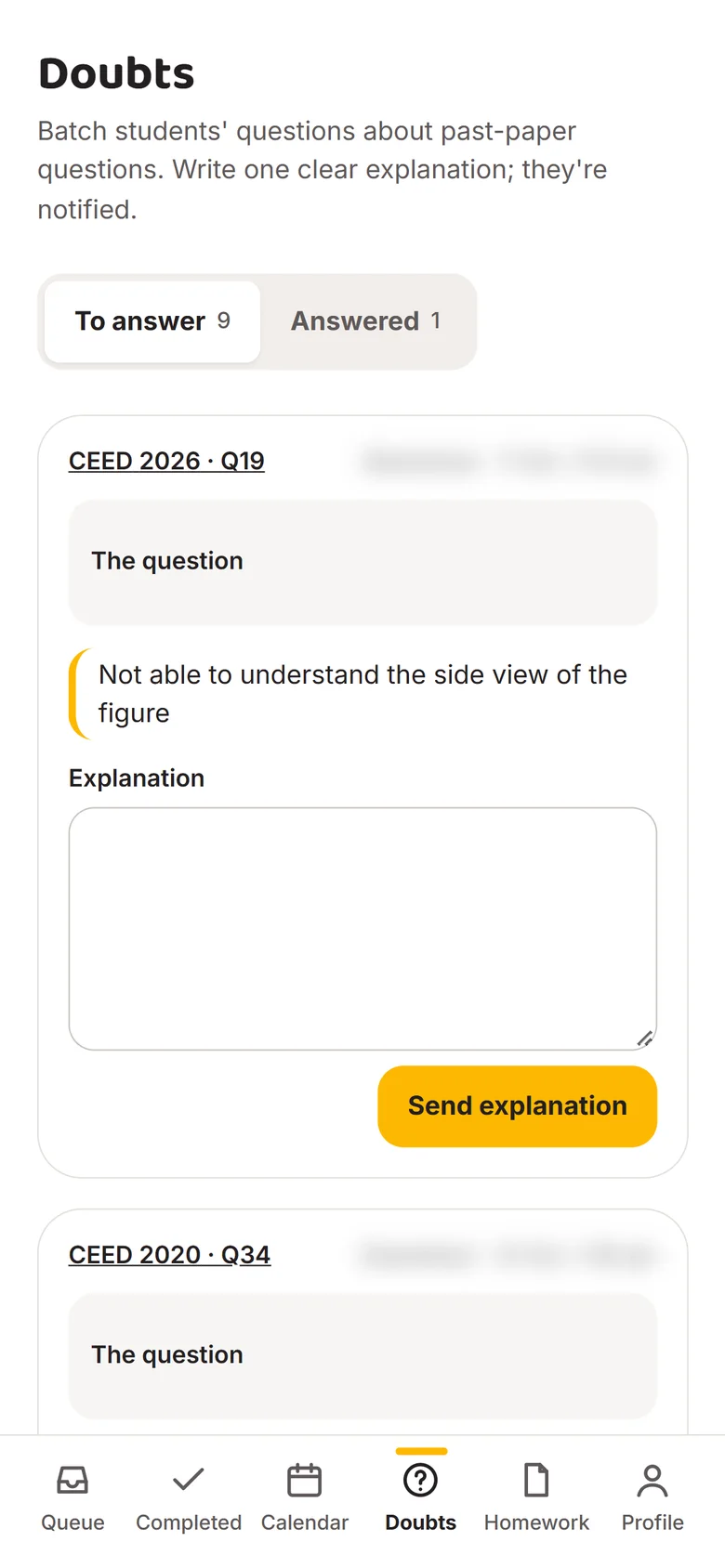
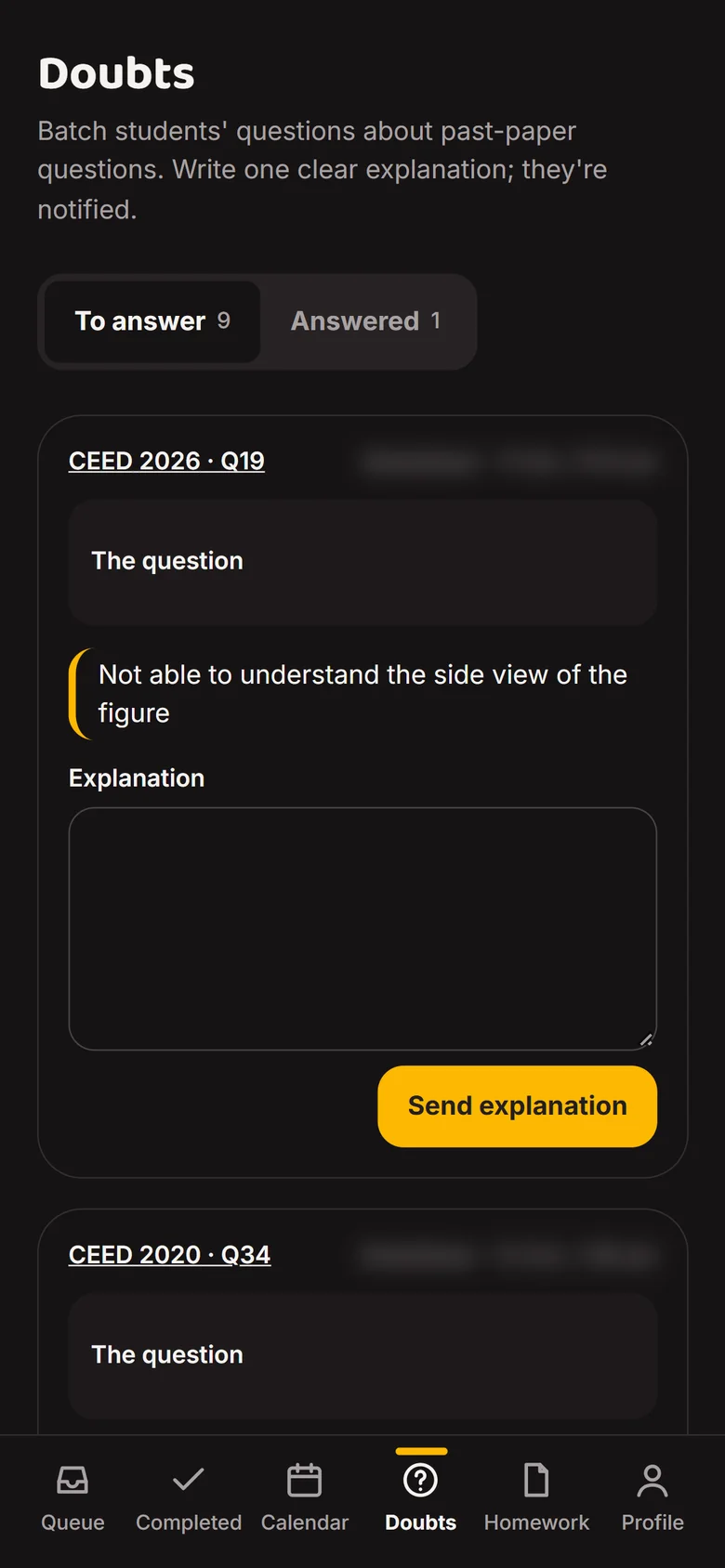
Each doubt arrives with its question. The mentor writes one clear explanation and the student is notified.
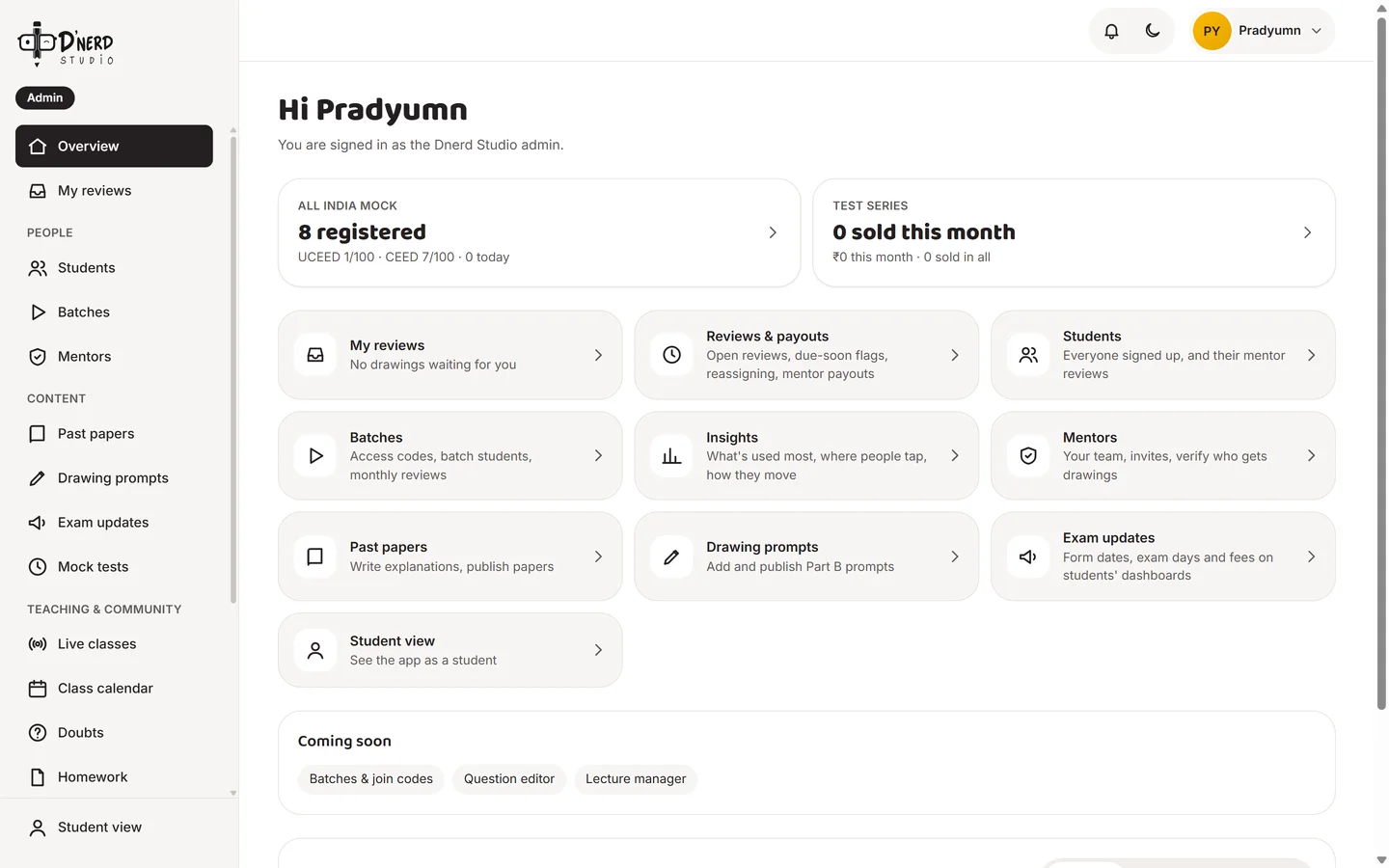
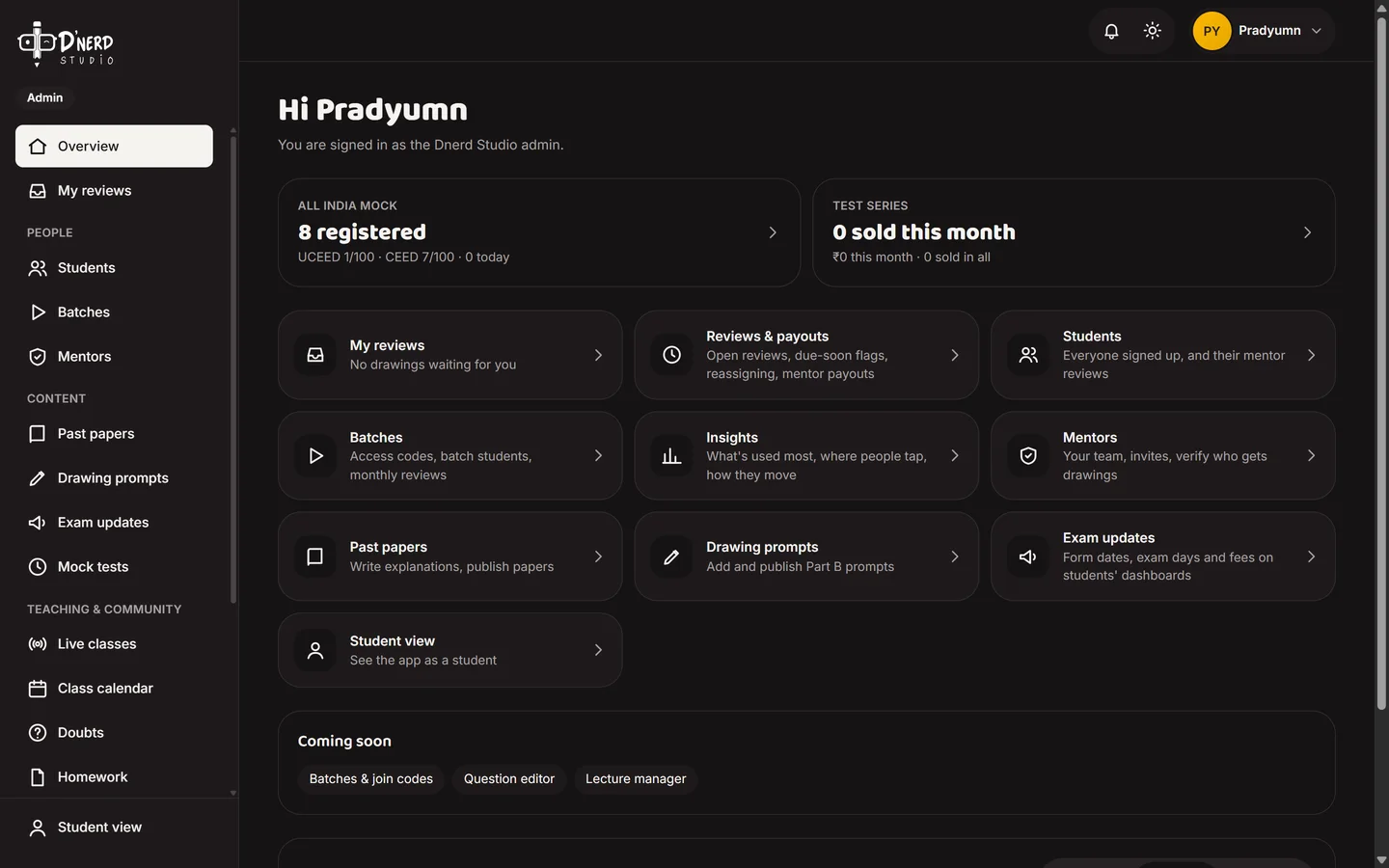
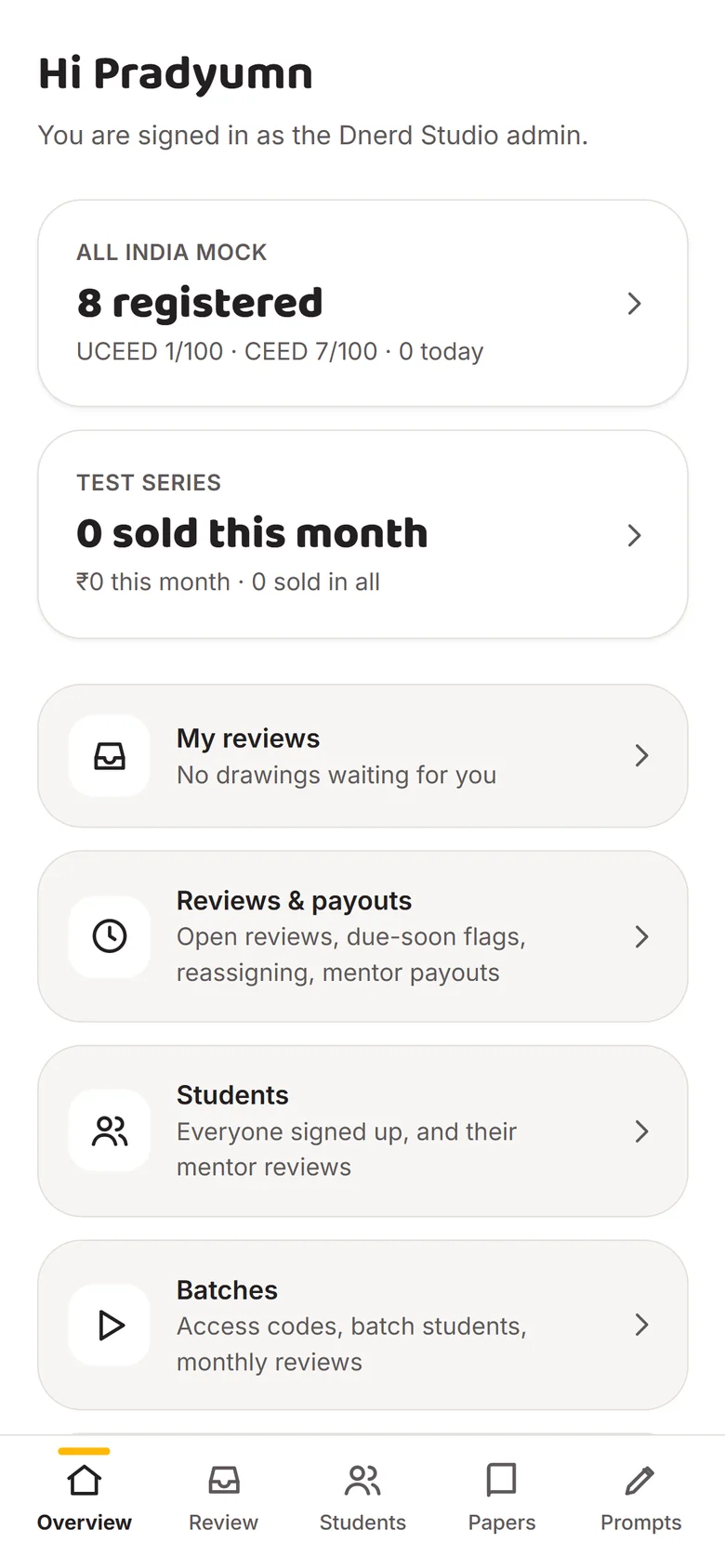
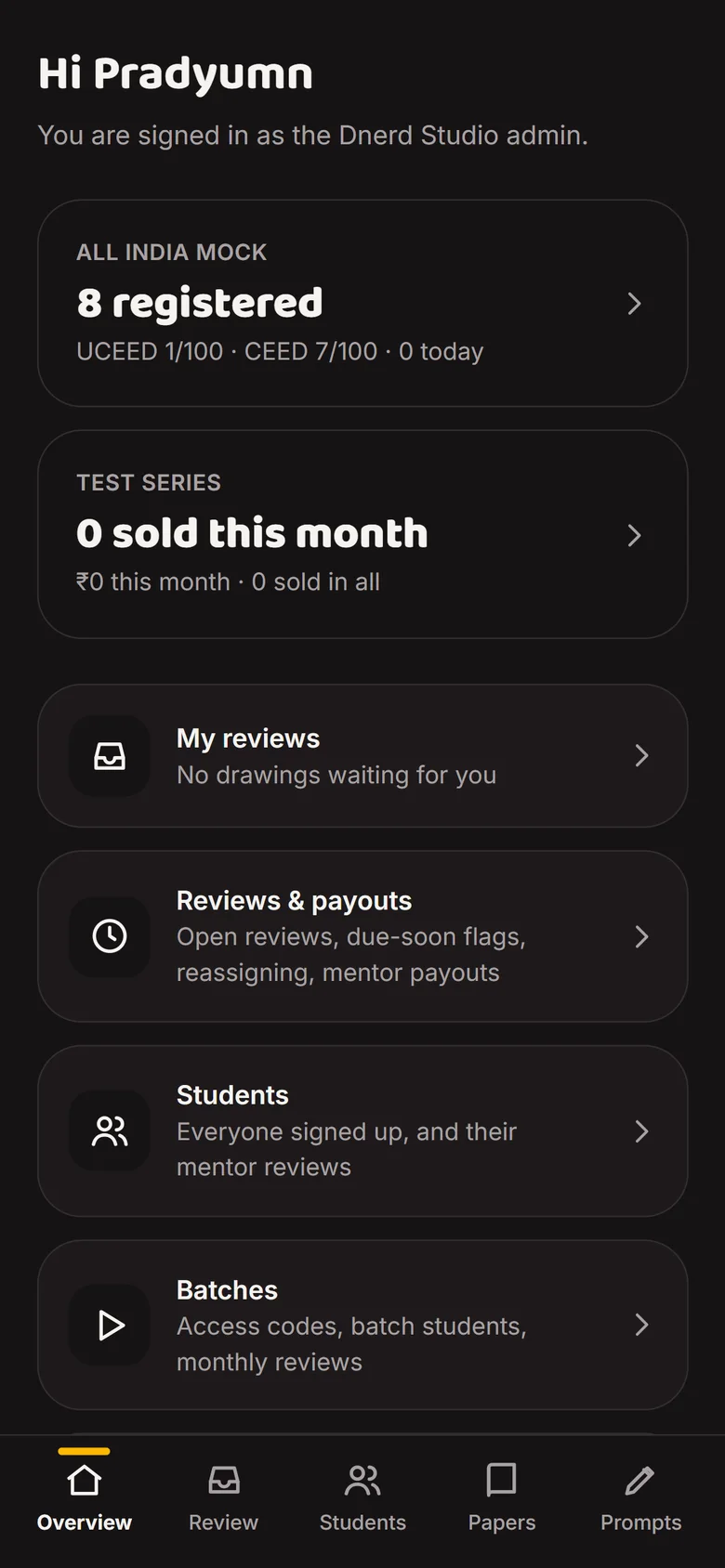
Mock registrations, sales, reviews and a door into every part of the platform.
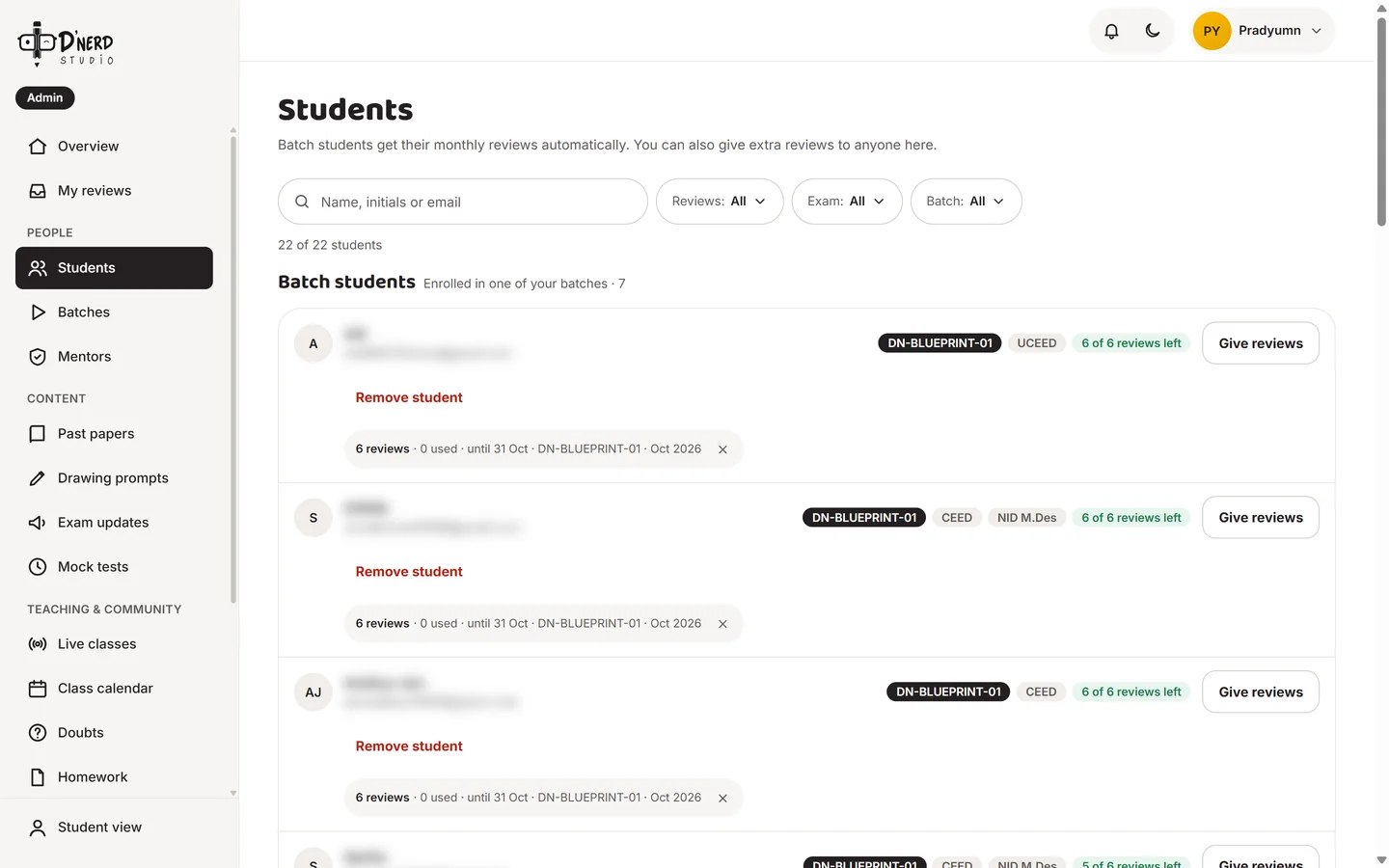
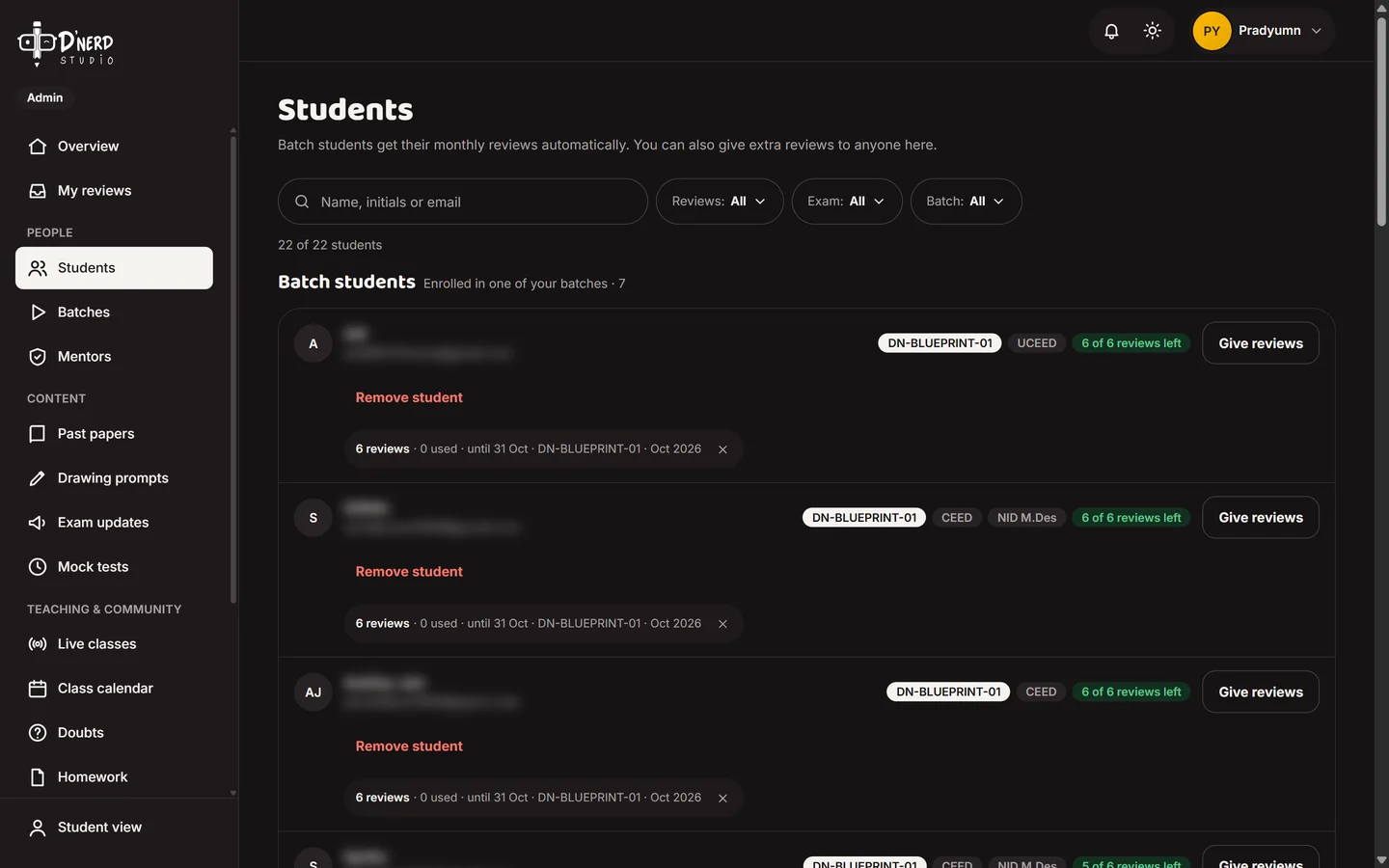
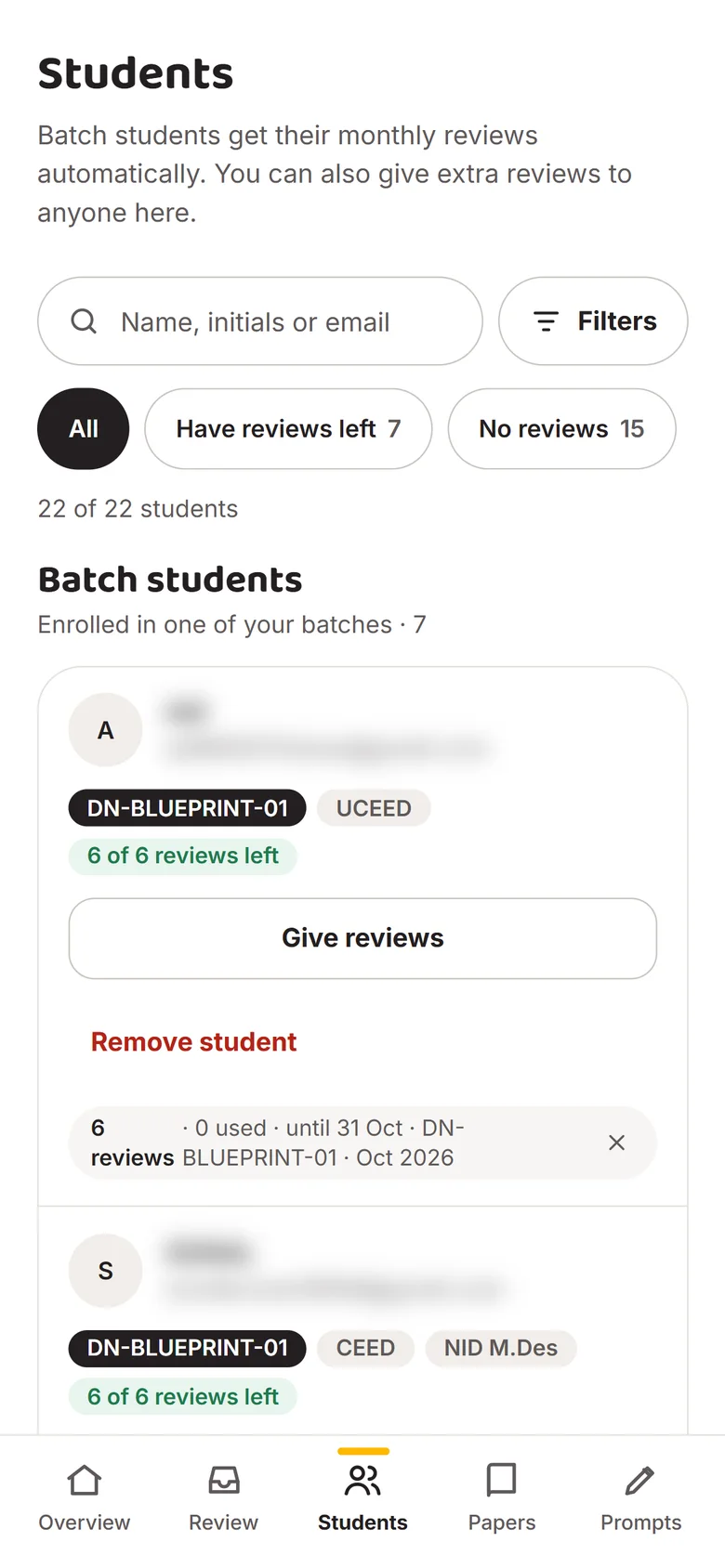
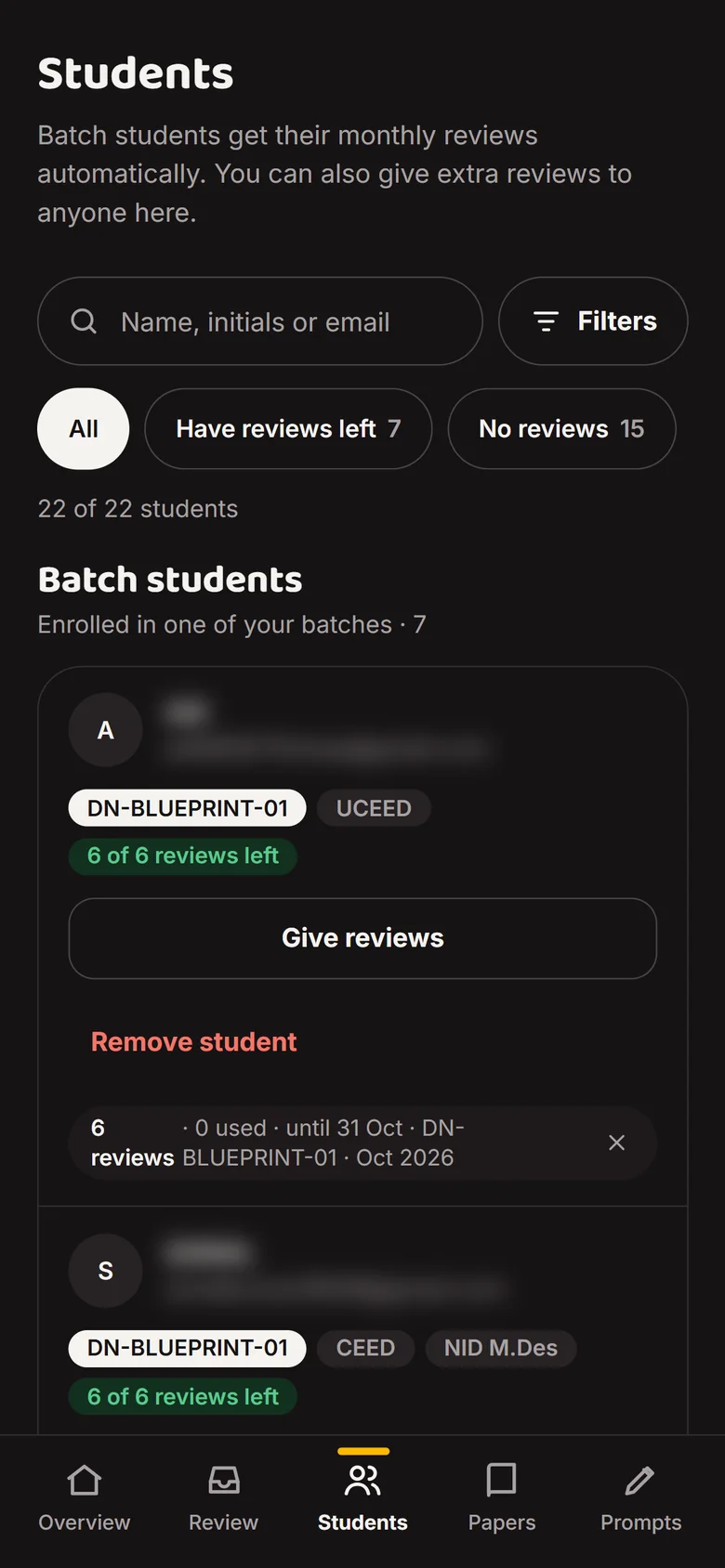
Batch students and independent sign-ups, with their monthly reviews. Names and emails are blurred.
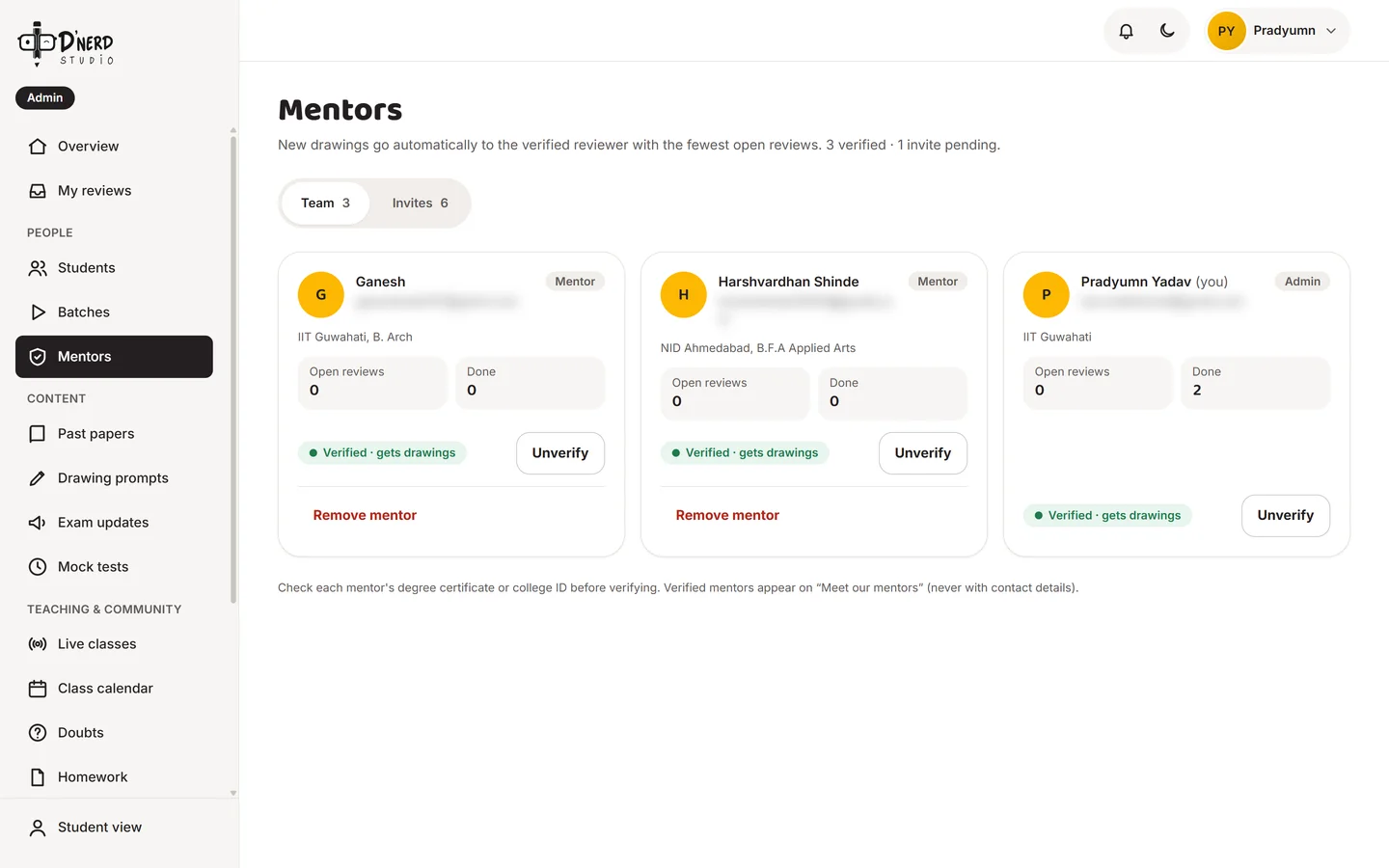
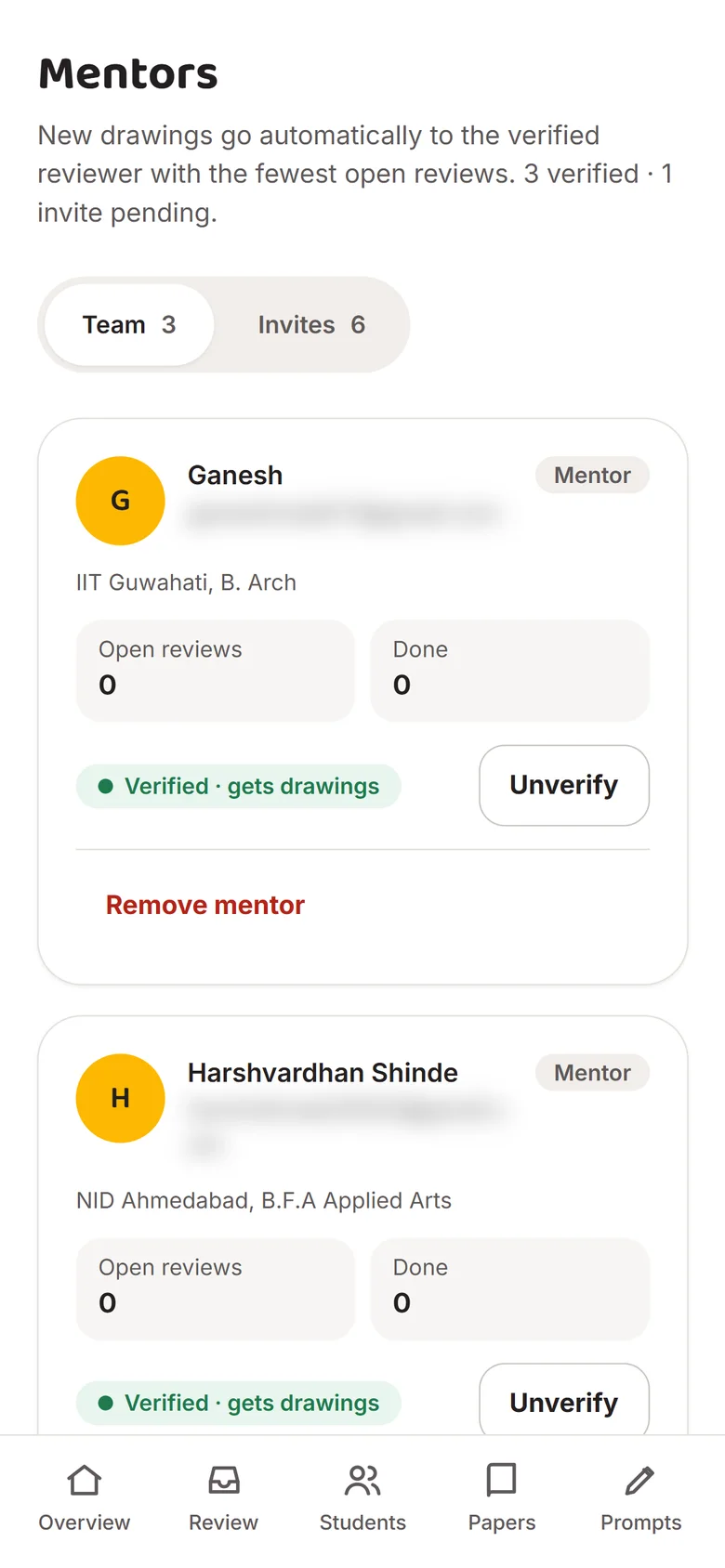
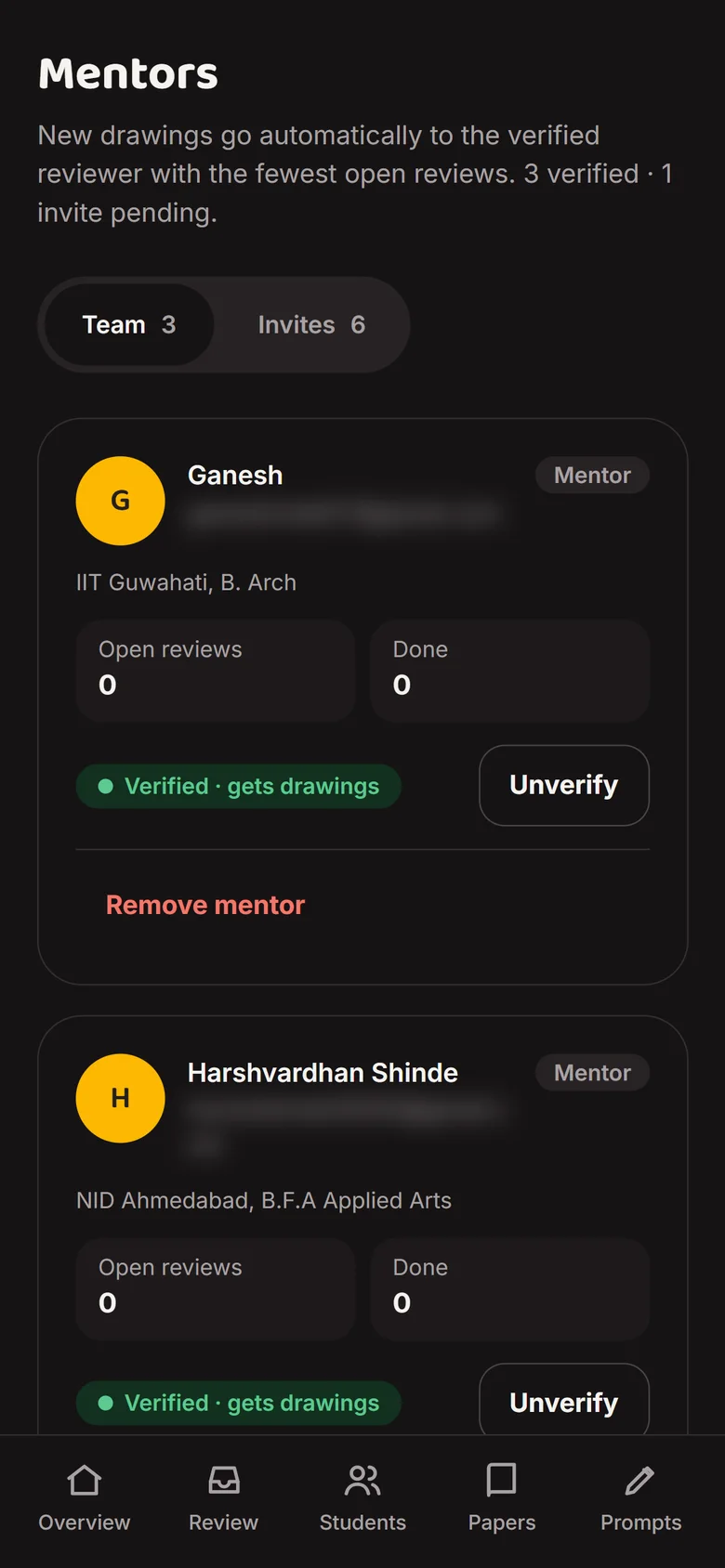
Invite, verify or remove mentors. New drawings go to the verified mentor with the fewest open reviews.
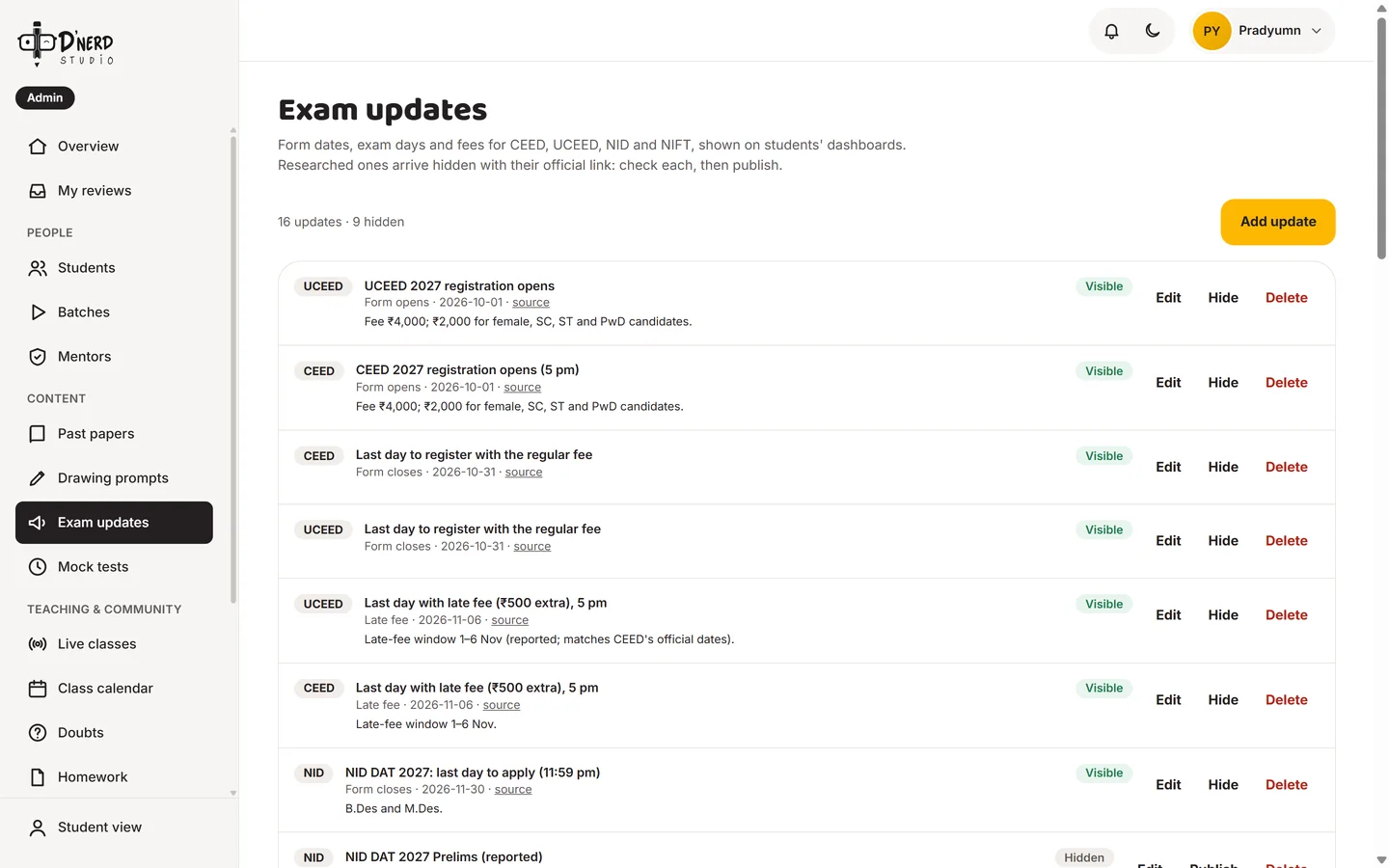
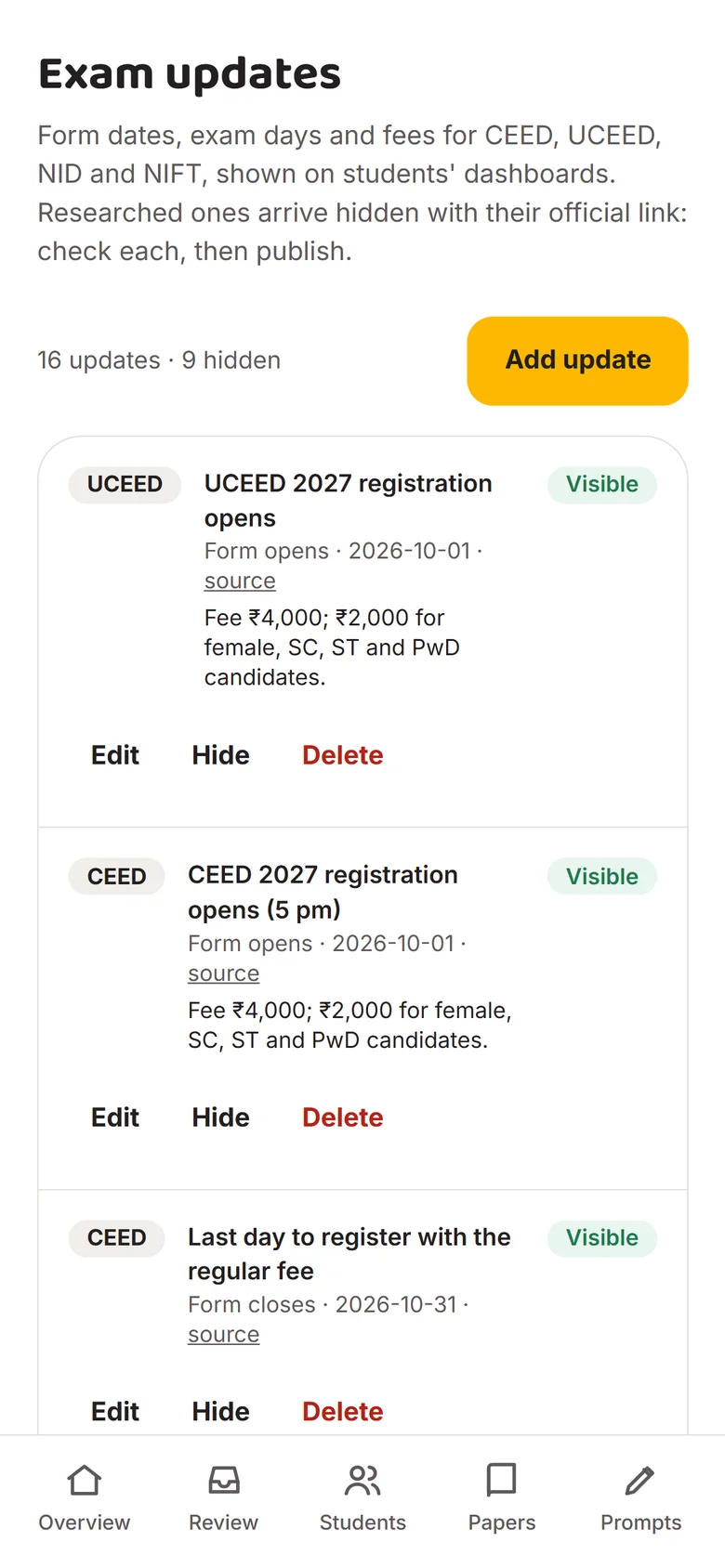
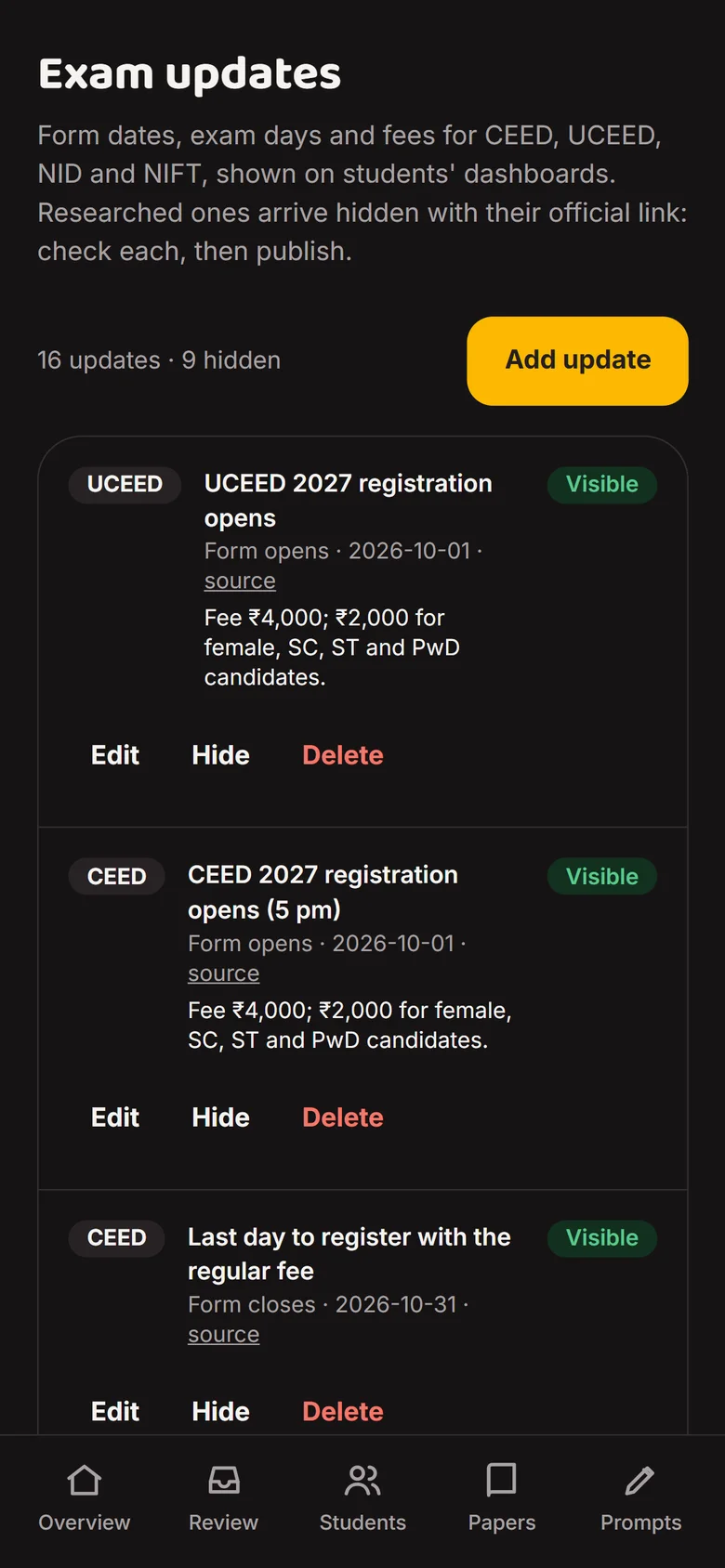
Form dates, exam days and fees for CEED, UCEED, NID and NIFT, shown on every student's dashboard.
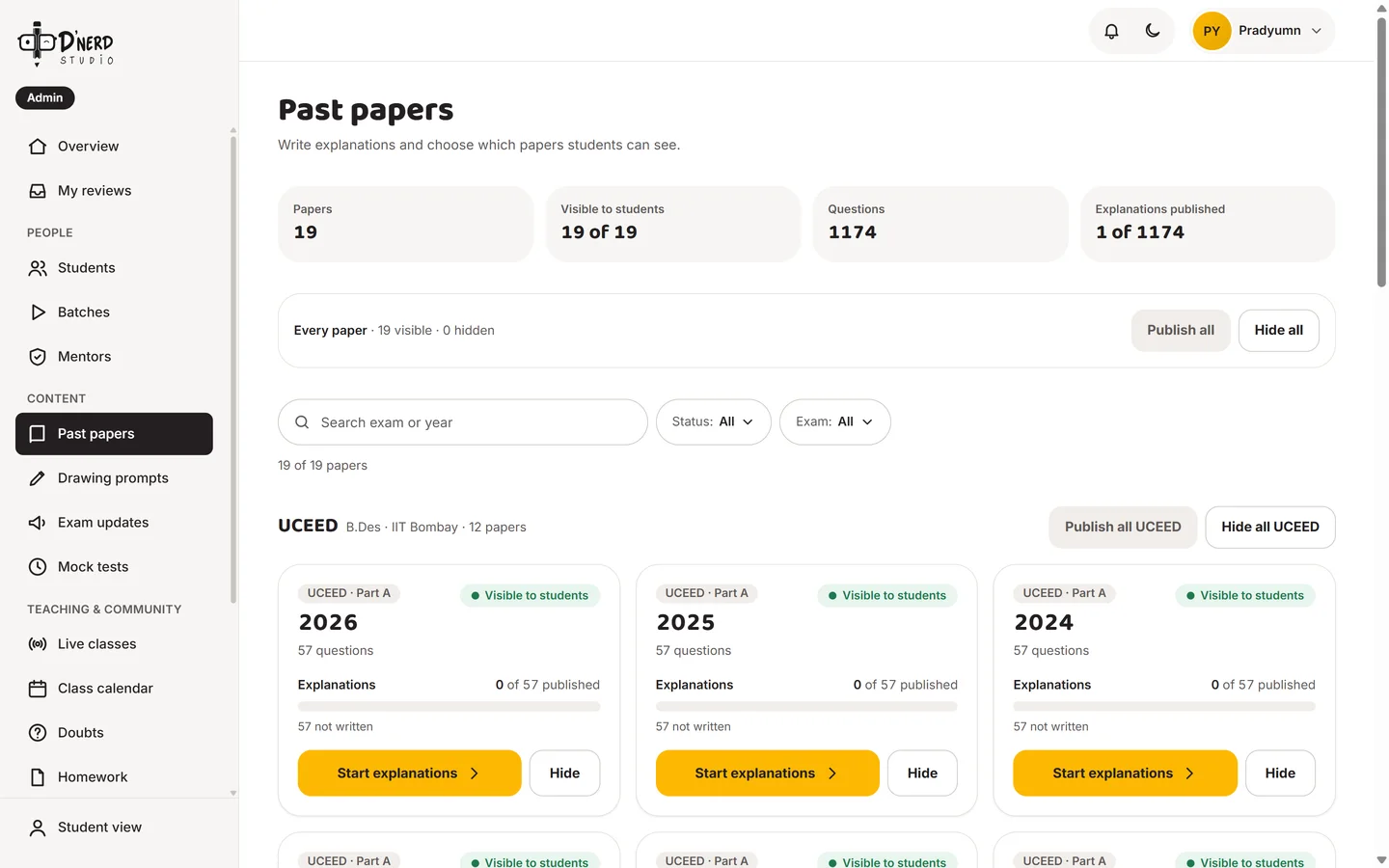
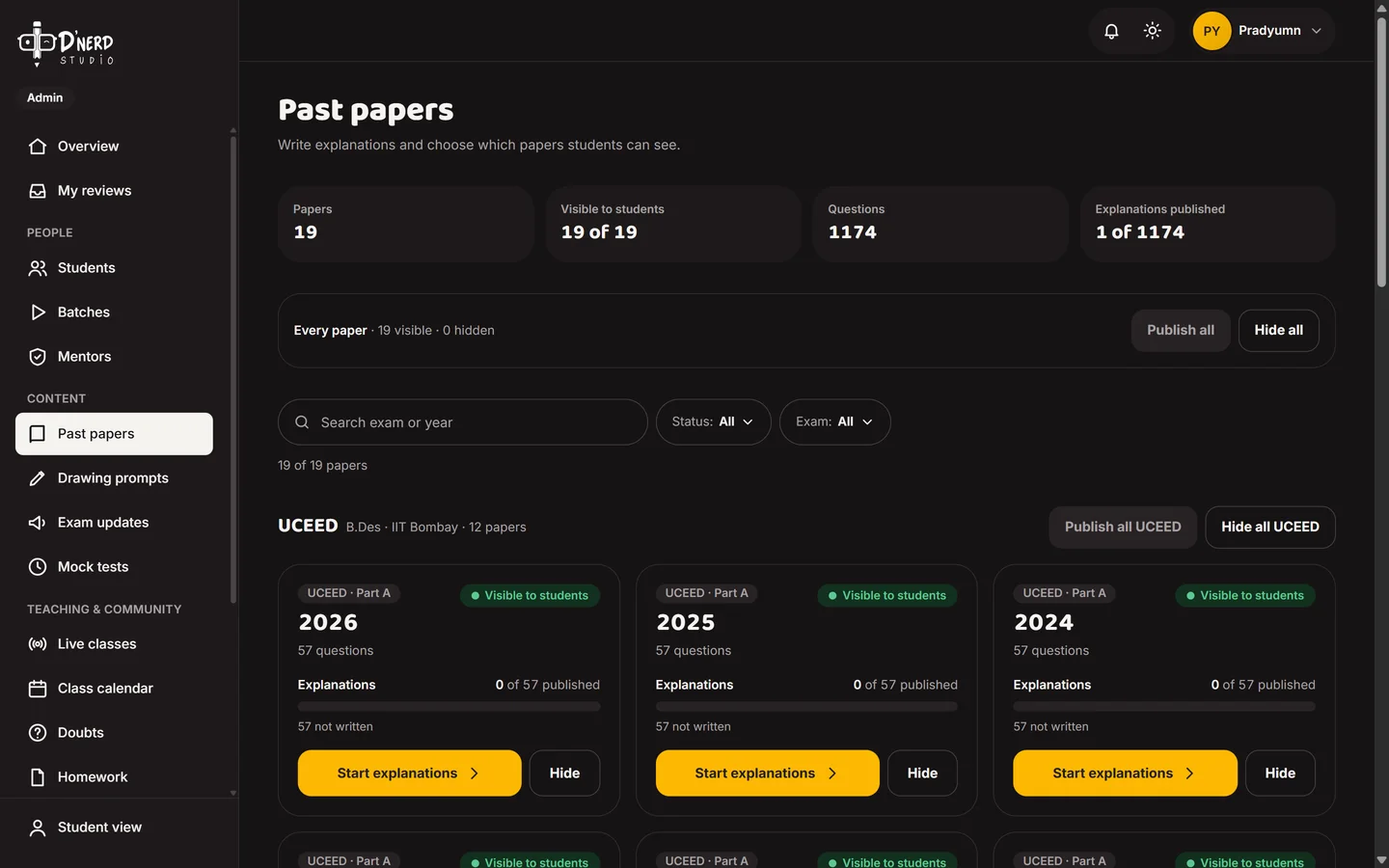
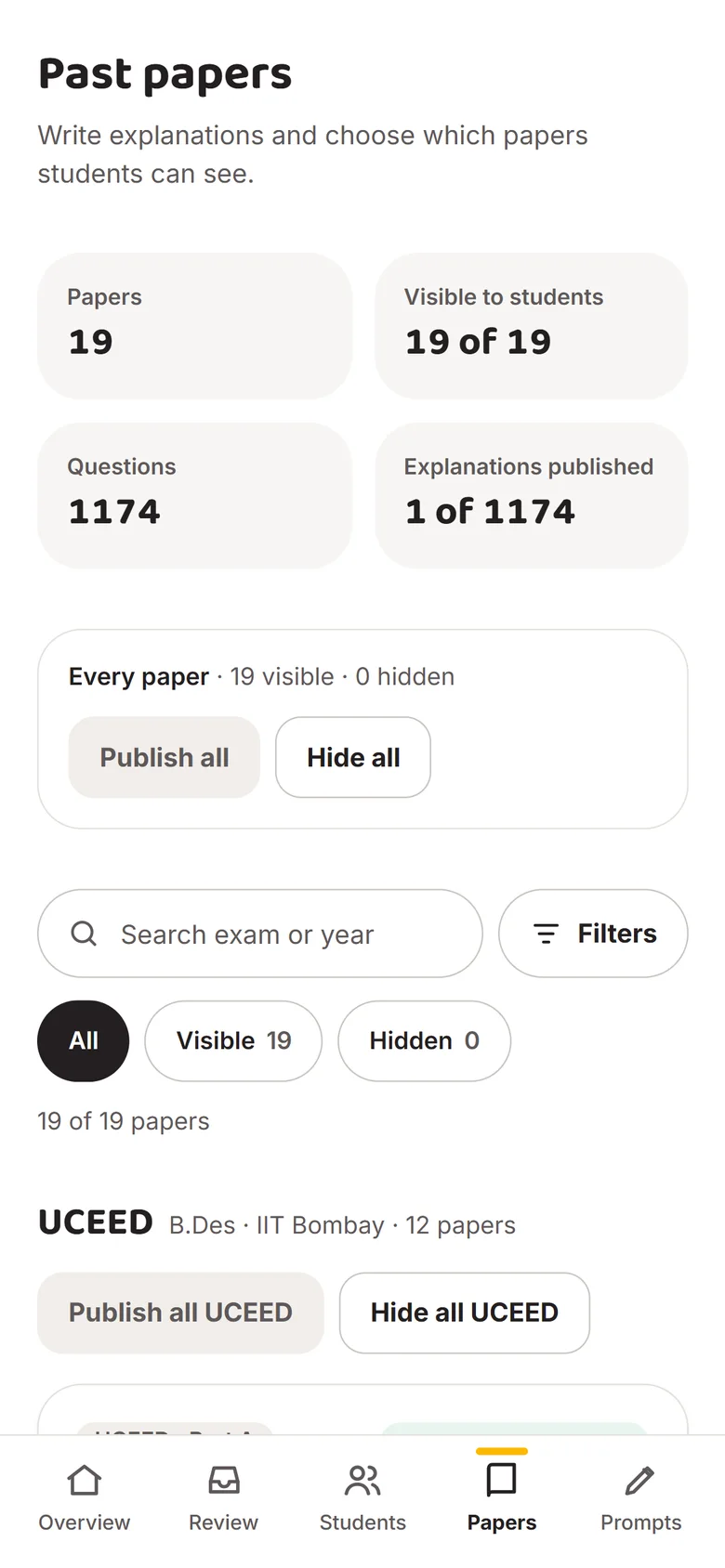
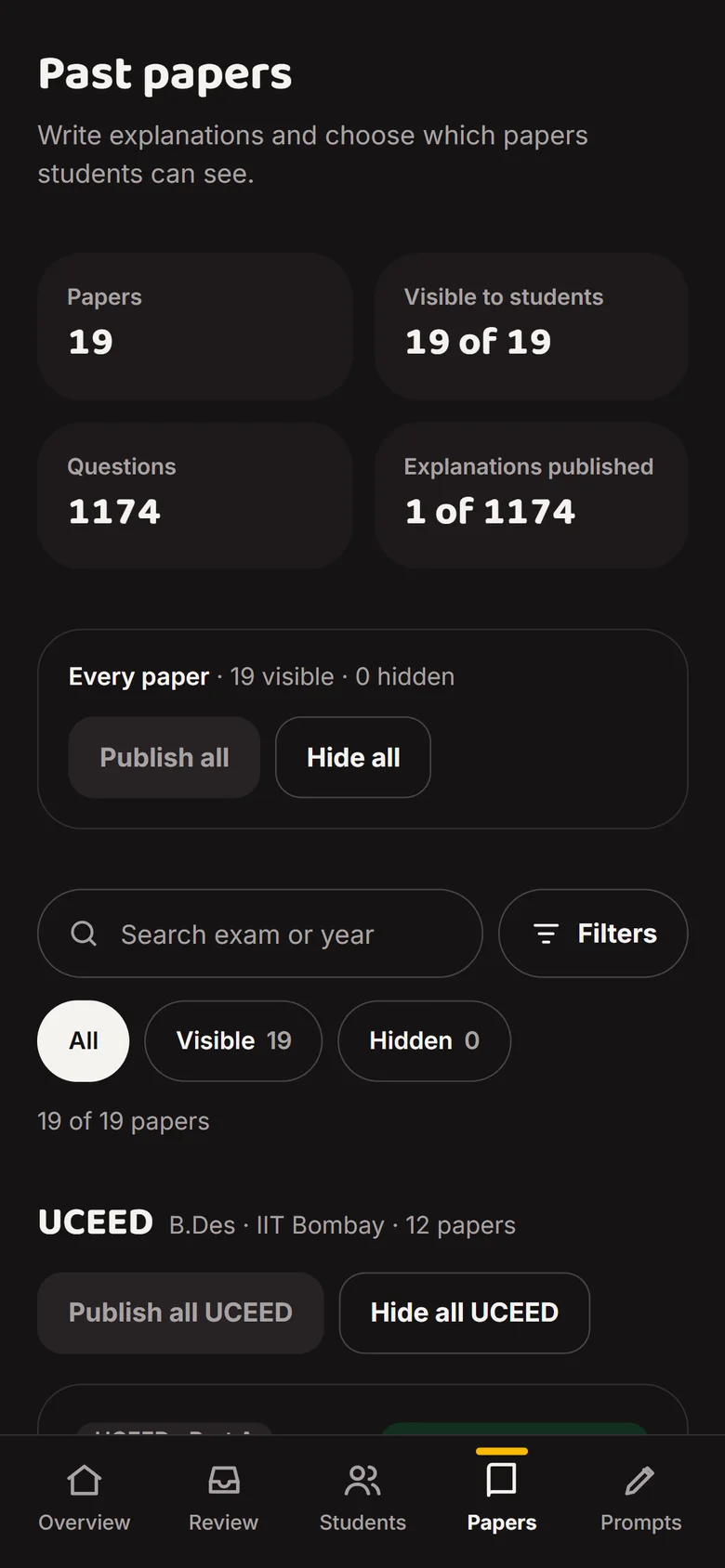
19 papers and 1,174 questions. Publish or hide a paper, and write explanations.
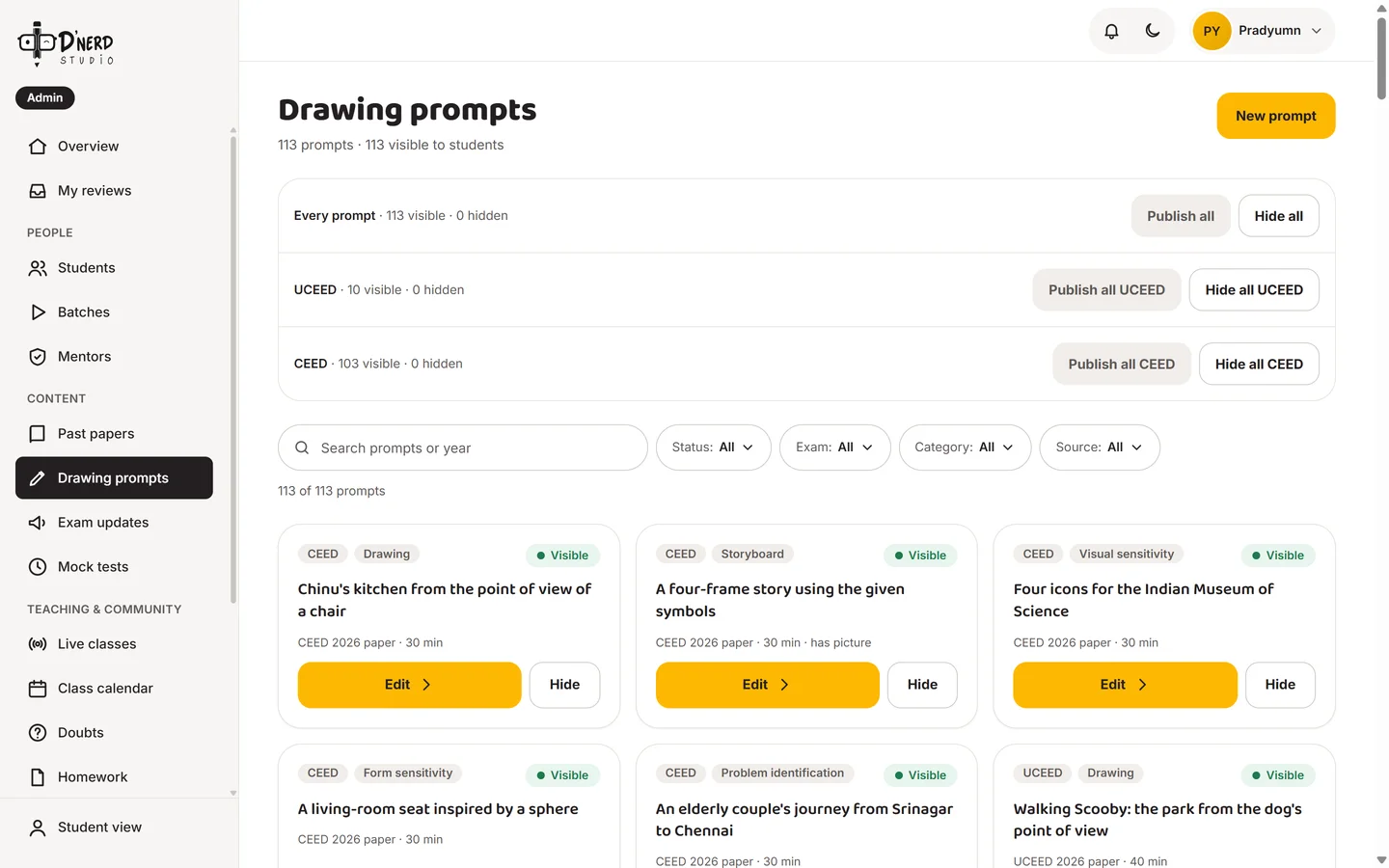
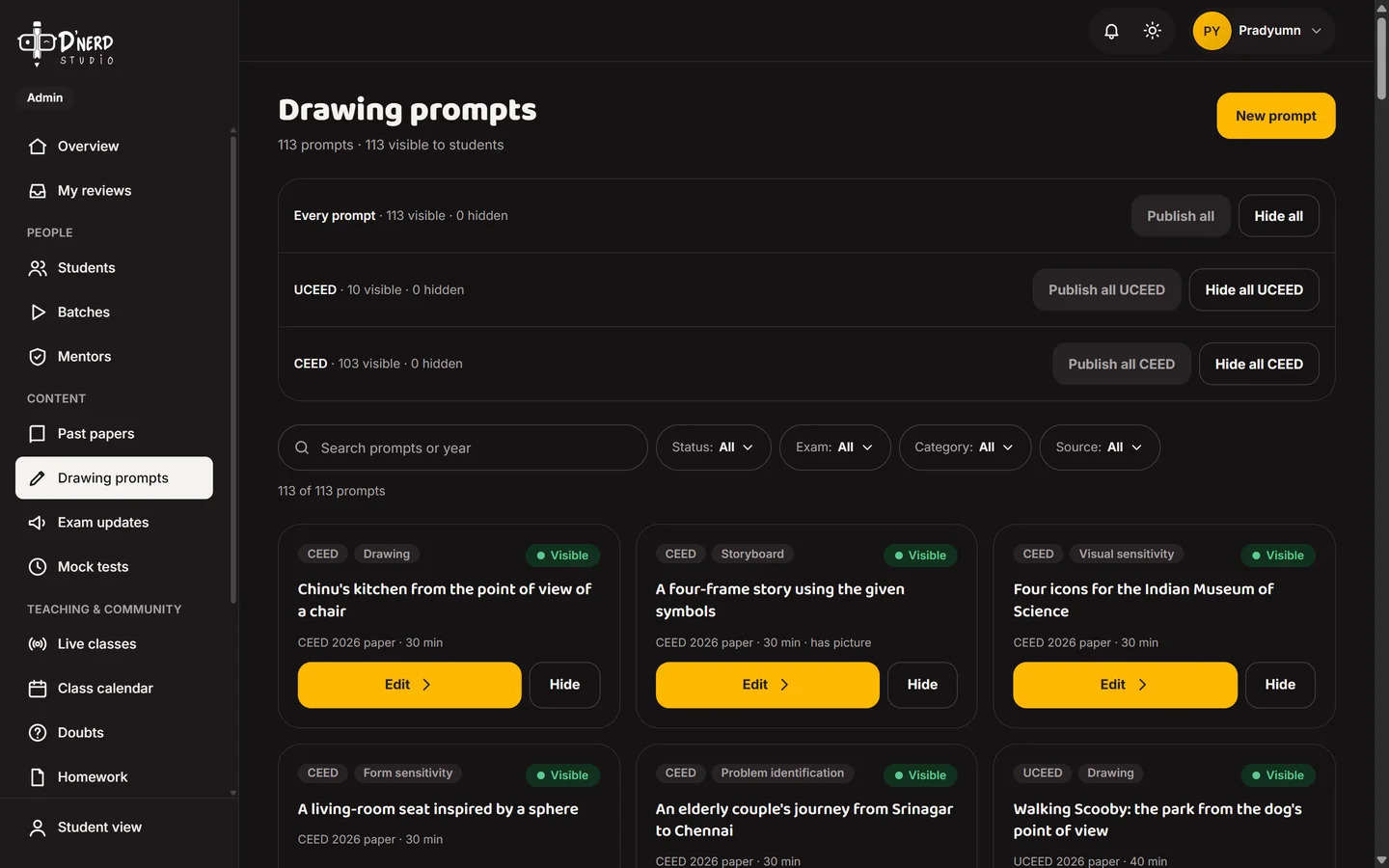
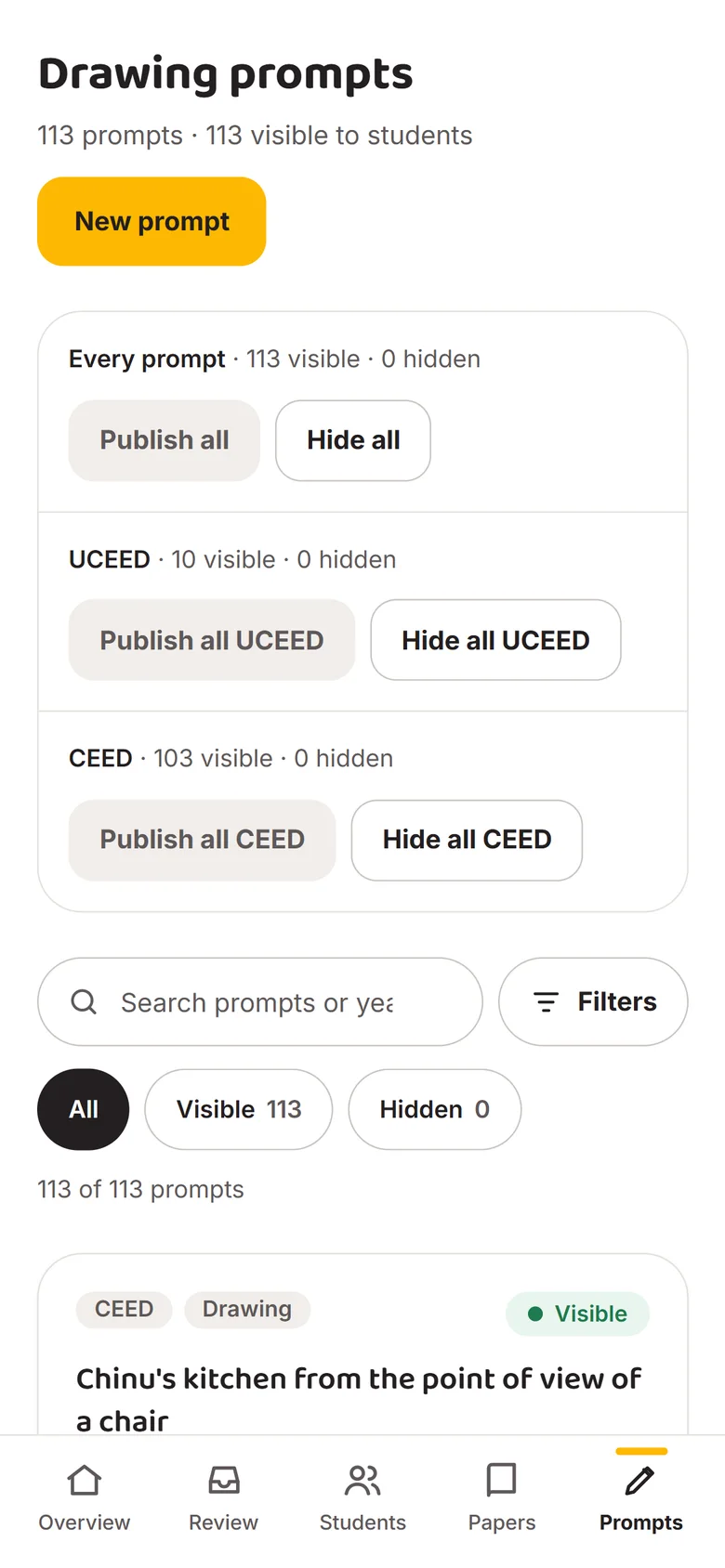
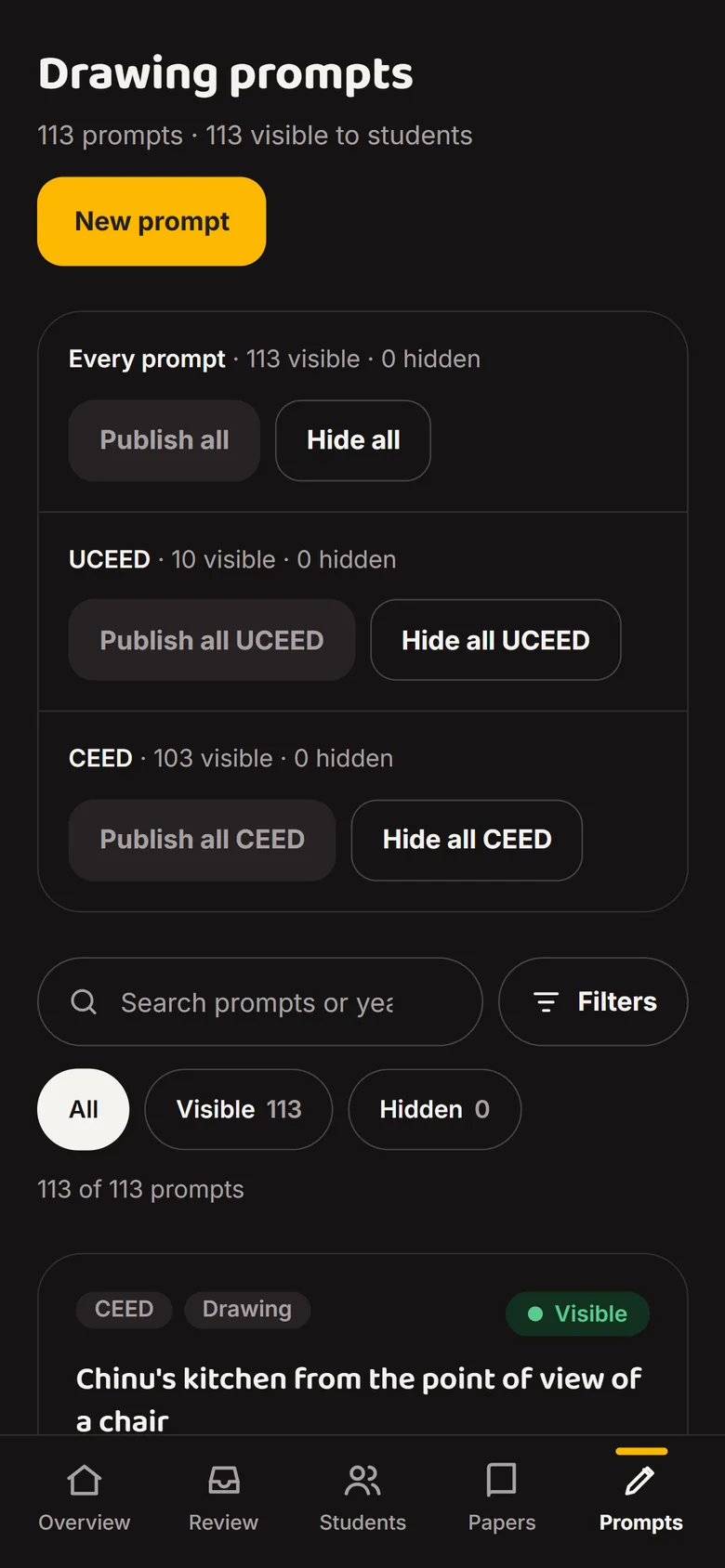
113 Part B prompts, each one can be edited, hidden or added.
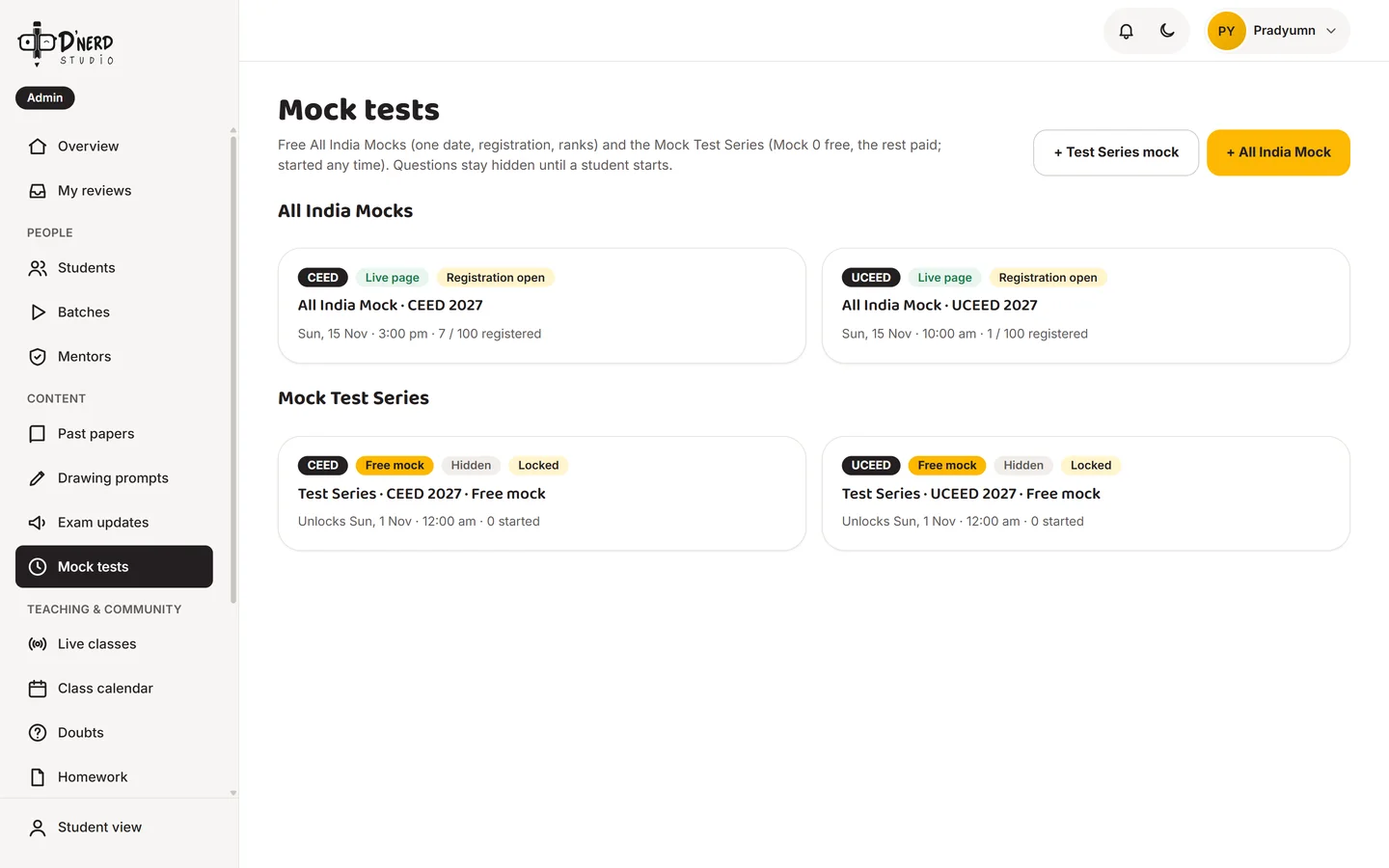
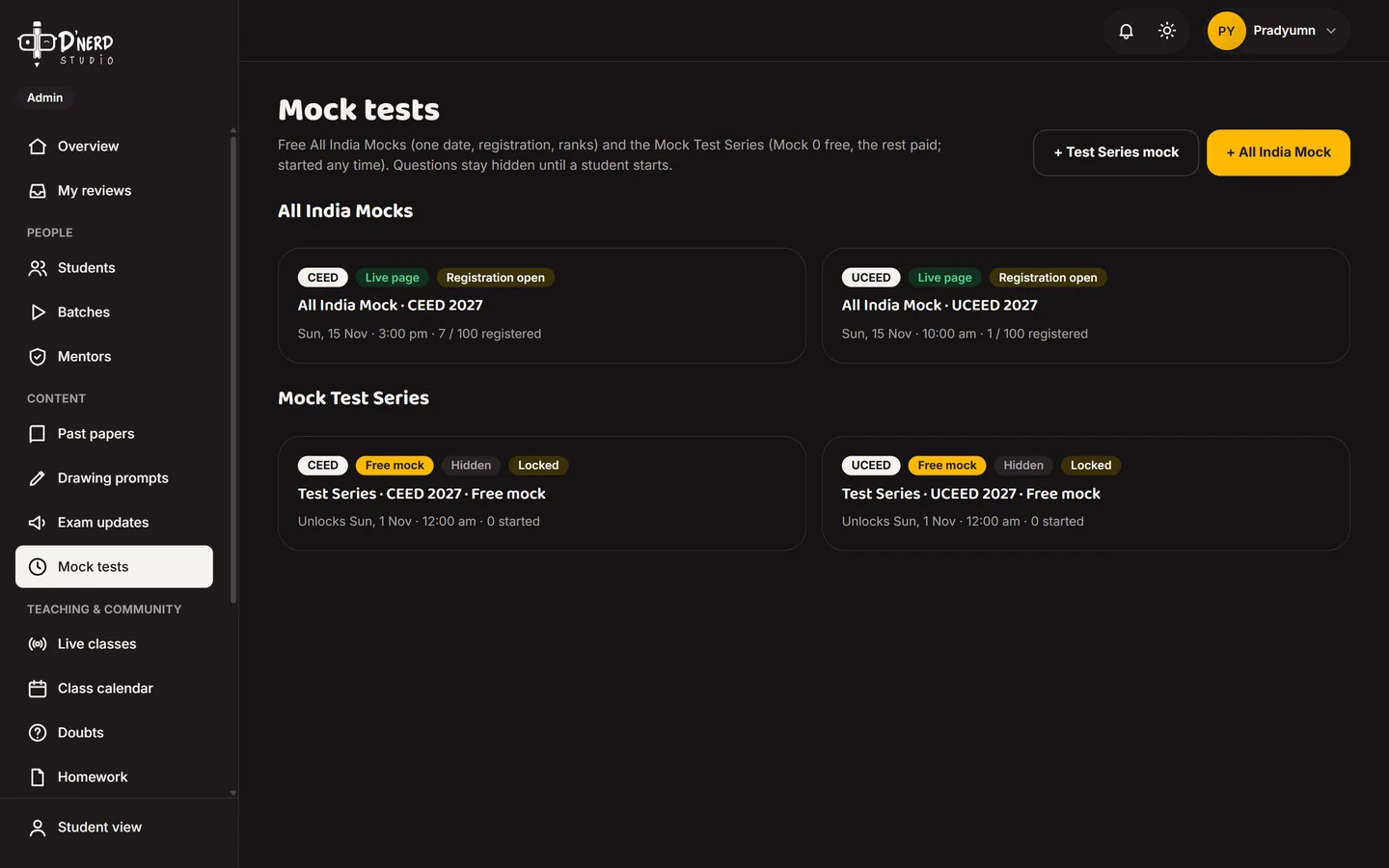
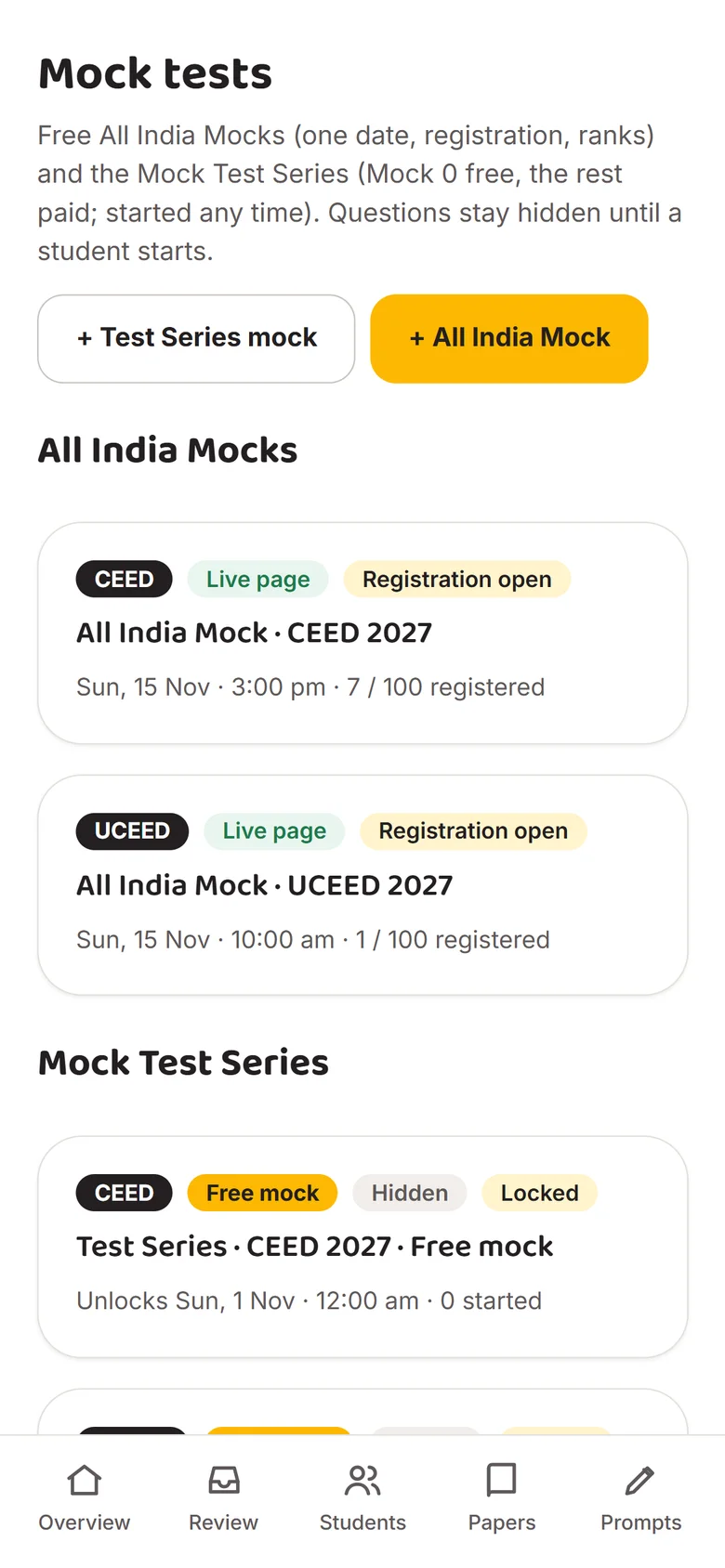
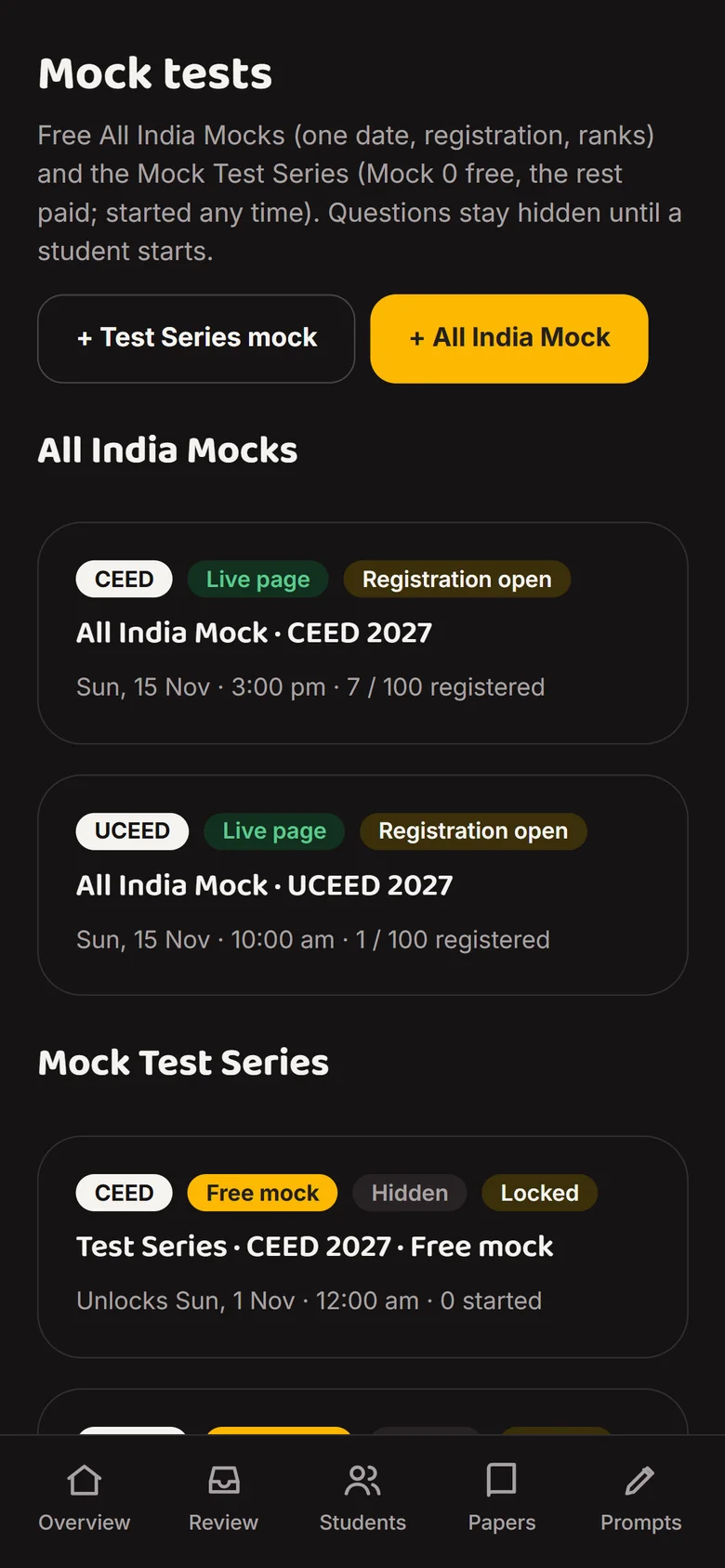
Free All India Mocks with a date and registration, and the timed Mock Test Series.
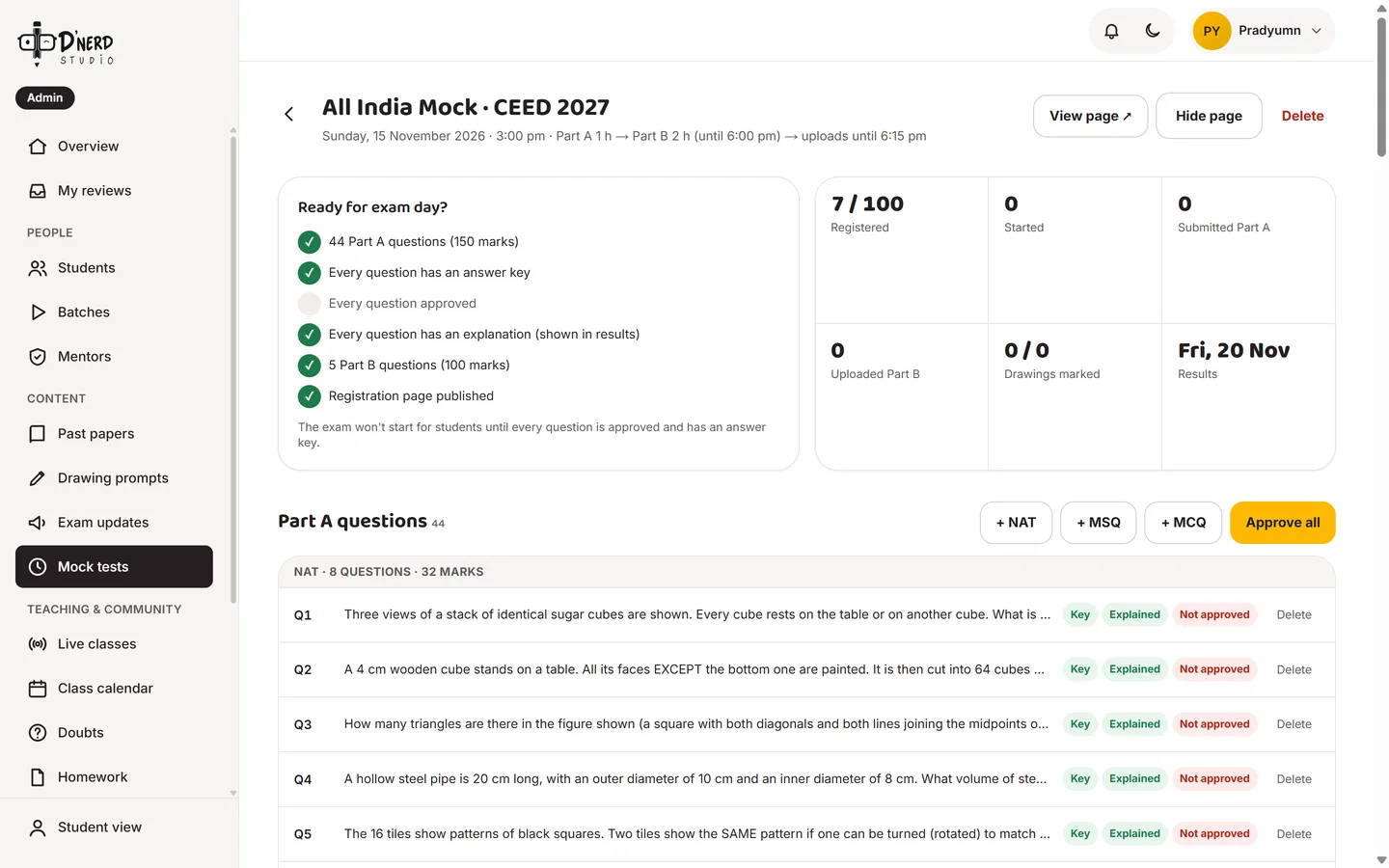
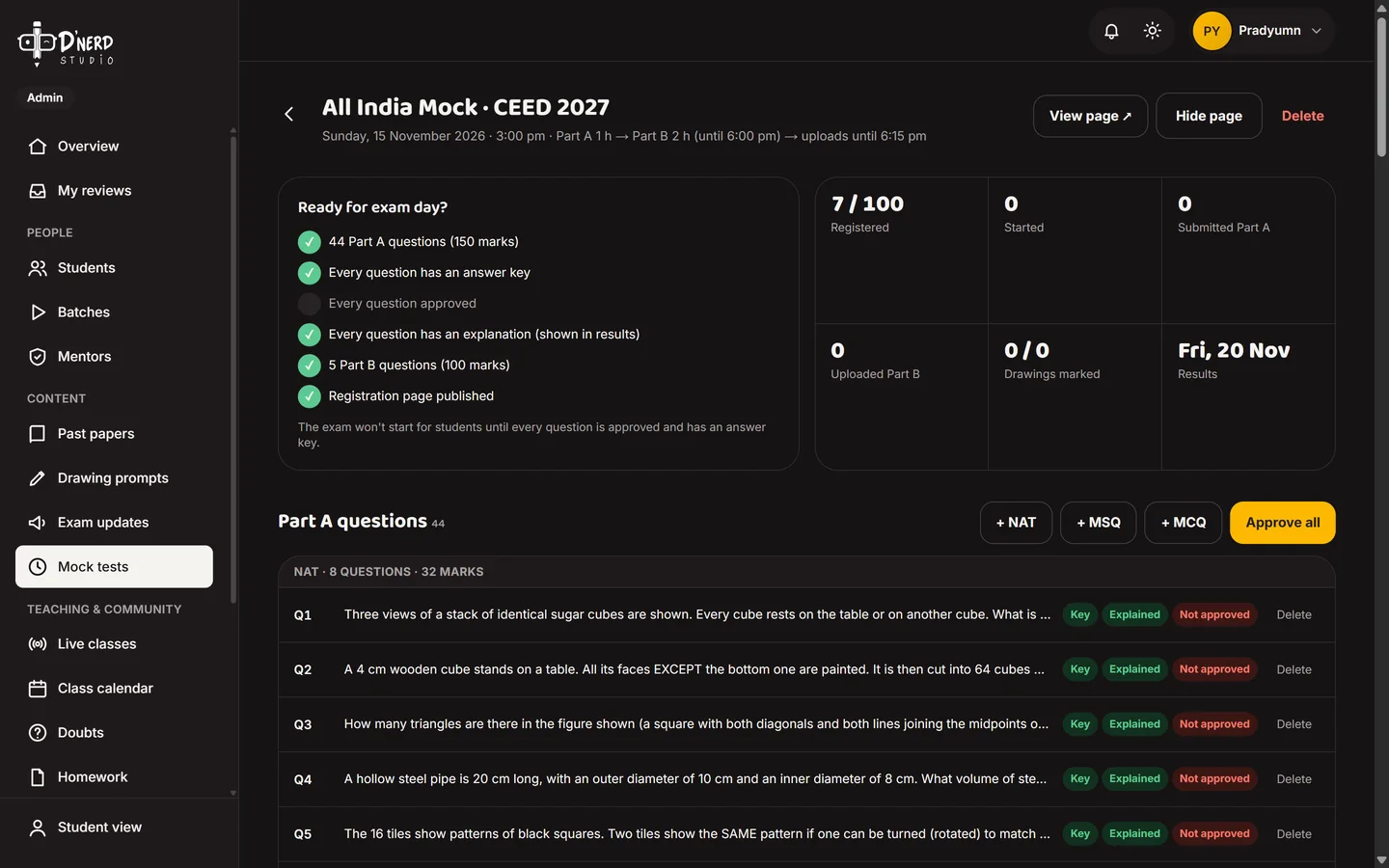
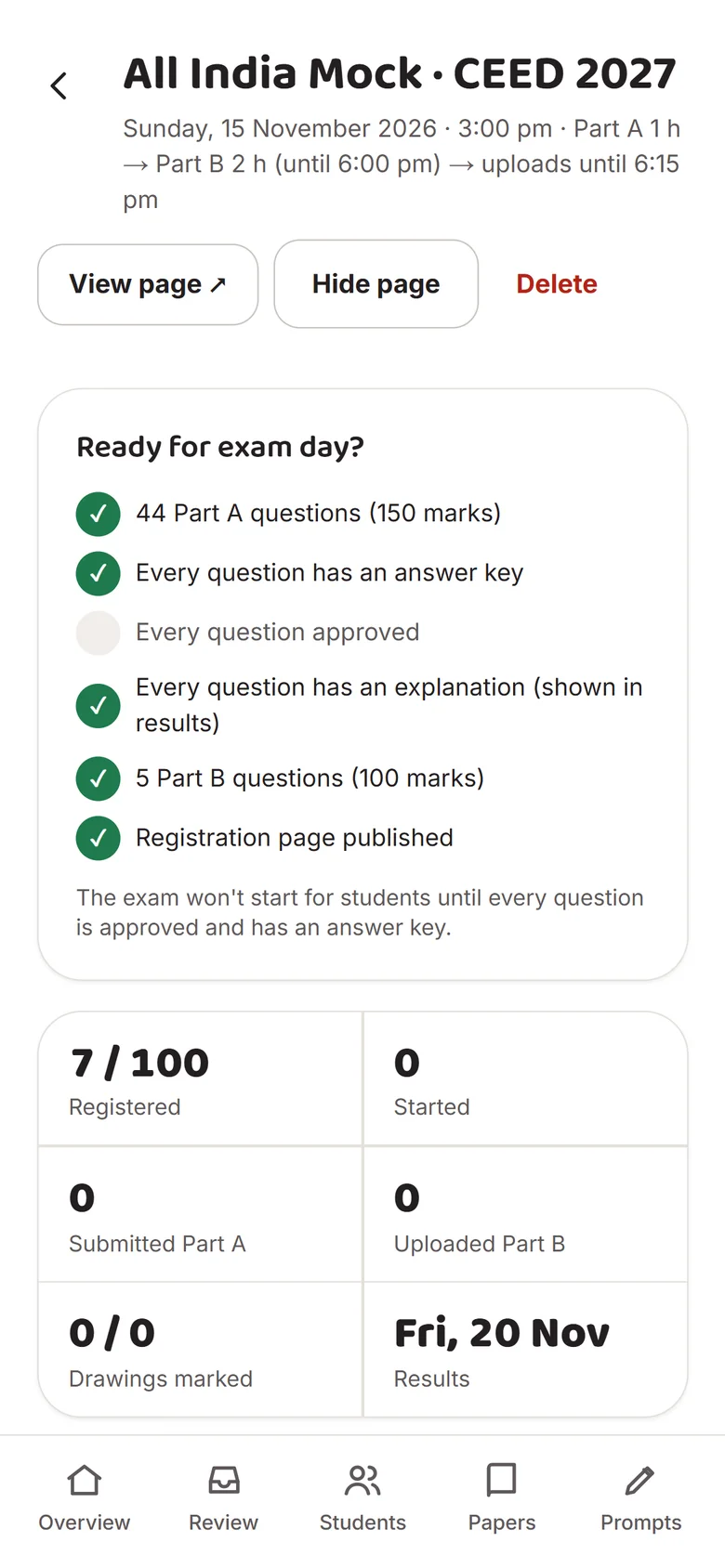
A checklist that won't let a mock start until every question has an answer key and is approved.
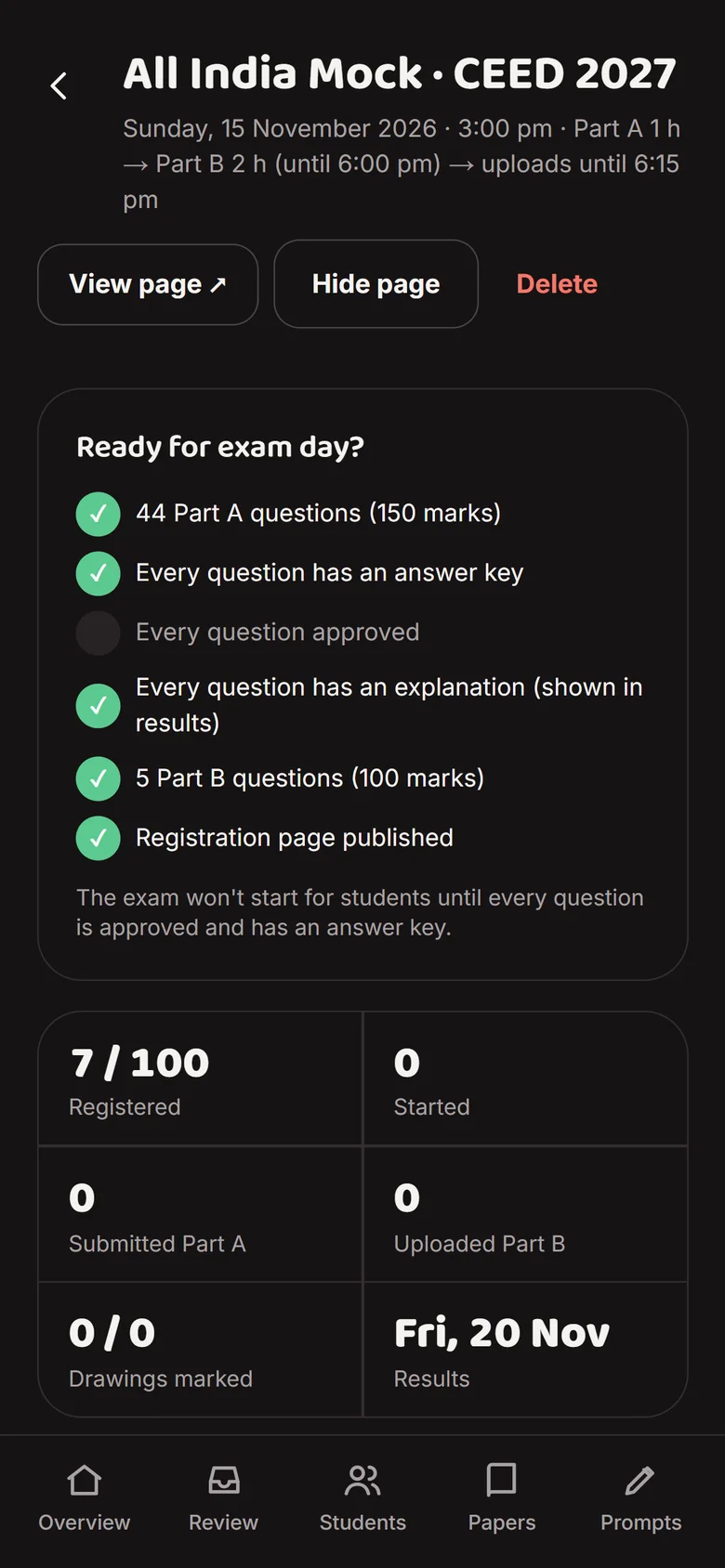
No login needed for practice, just as Decision 1 promised.
Once the batch moved in, I opened the platform to every aspirant and studied, through our own privacy-safe insights tool, how strangers actually used it. The numbers confirmed some decisions and challenged others.
Live from dnerdstudio.com
Past-paper attempts and new sign-ups per week
Sessions by device
Top interactions across all sessions
Sessions that visited the landing page
Last screen seen
Target exams picked at onboarding (several allowed)
Answers at onboarding
Method: anonymous visitor and session IDs, screen views and tap labels only. No names, emails, typed text or answers are recorded. Admin activity is excluded, and groups smaller than 3 are folded into "Other".
Each card re-checks its own number every time this page loads. The baseline is from 13 Oct 2026, before any of these fixes shipped.
Lead with "Practise a past paper now" and a live question preview, not a story about the brand.
Open practice on the heat map instead of the year list, and nudge from wrong answers: "3 more Spatial Reasoning questions?"
Ask it later, when we can use it for a countdown or study plan.
Original NID-style questions and studio-round prompts, since official NID papers often aren't public.
Open single mentor reviews with the Mock Test Series in November, then measure turnaround and "helpful" ratings.
One meeting lifecycle for financial advisors, firms and their clients: 229 screens across 6 roles.
Read the case study →